

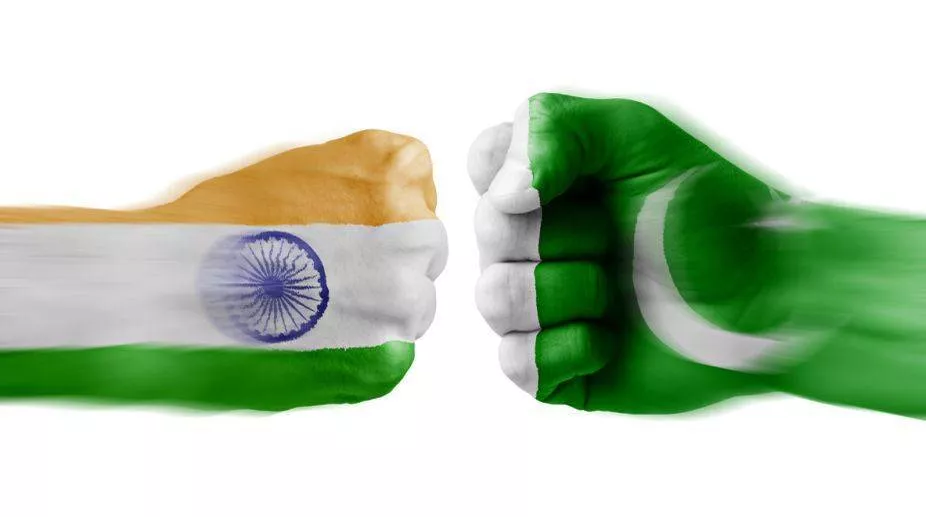
Contagion effect in south asia
The word ‘contagion’ is described by the Cambridge dictionary as a situation in which ideas, feelings and problems spread from one place to another. Mostly the ‘spread’ of these things comes through direct contact. This is applicable to nations too that share boundaries with their neighbours.Neighbouring countries often share similarities. This is because political boundaries do not prevent the spillover of cultures. For instance, the Indian state of Punjab and Pakistan’s Punjab share a lot of cultural similarities in terms of clothing, language, food habits and even customs. Same is the case with West Bengal and Bangladesh.
As good things spill over the borders and contagiously affect neighbouring countries, similarly negative things have a spill over too. One thing that has come into light and is common in the case of India, Pakistan and Bangladesh is the rise of extremist ideologies, violence and intolerance against minorities. Many a times, extremist Hindu groups in India argue and justify their violence against minority Muslims by stating that minority Hindus and temples are being attacked by extremist Muslims in both Pakistan and Bangladesh. The converse is also true.
The best example of this is the destruction of temples in Bangladesh and killing of the minority Hindu population. In 2013, more than 50 temples were destroyed, the houses of Hindus were vandalized and many got killed in violence. The streak of violence hasn’t stopped and last year too more than 10 temples were destroyed in the district of Brahmanbaria in Bangladesh.
The minority Hindu population of Bangladesh has declined from 13 per cent in 1971 to around 8 per cent now. This clearly shows the level of intolerance against Hindus in Bangladesh which has grown over the years. Since India shares its boundaries with both Pakistan as well as Bangladesh, the contagion effect is accentuated.
If one takes a look at how Pakistan has treated its minority Hindu and Sikh populations, the picture is not good, to say the least. The Hindu population has declined from 12 to just 1.6 per cent of total population as per 2017 census of Pakistan. These numbers clearly indicate how the minorities have been treated in Pakistan.
The systemic ill-treatment of Hindu minorities in both these countries which includes forced conversion to Islam as well (whose exact data is not available) has contagiously affected the ‘psyche’ of a significant Hindu population in India. The other thing that irks the extremist Hindus in India is the fact while Hindu population has significantly decreased in both Bangladesh and Pakistan, the number of Muslims in India has risen from over 9 per cent in 1951 to over 14 per cent as per 2011 census.
Though India is a constitutionally secular country, it is not anti-religious. A very large percentage of the population still identifies itself with a particular religion and takes pride in that. People are conscious of their numbers and are constantly made aware of their numbers and the numbers of other religions by political leaders.
Since India was partitioned on religious lines, people on both sides of the border look at the treatment of people of their own religion in their neighbouring countries. For e.g. Hindus in India would be interested in knowing how Hindus in Pakistan and Bangladesh are being treated and similarly Muslims in both Pakistan and Bangladesh are very much interested in knowing the conditions of Muslims in India.
Also, the majority religion in each of these three countries wants to tests the loyalties of its minorities on various matters. Often, the minorities are criticised for their silence against the ill-treatment of minorities in the neighbouring countries. For instance, it is often asked why Indian Muslims don’t criticize the ill-treatment of Hindu minorities in Pakistan and Bangladesh openly.
Not only in serious matters, but these loyalties are often tested on religious lines which are often connected to patriotism of minorities. For e.g. there have been cases where Indian Muslims have openly celebrated a cricket match victory of Pakistan against India. When these things come into light and get reported, the majority community starts looking at the minorities with a sense of ‘suspicion’ and minorities therefore are asked to prove their loyalty.
This has been seen in many cases of religious extremism in India where minority Muslims have been targeted by fringe elements. This has led to a culture of hate and violence against the minorities in the South Asian region. The extremists in all these three nations constantly feed off each other’s stupidity, hate and violence while ‘liberals’ are being targeted for being liberals.
To sum up, it’s very hard for any government to curtail the contagion effect. South Asia as a region is increasingly becoming radical and the religious violence against the minorities has increased as a result of that. These tendencies must be guarded against.
Author : Martand Jha (The writer is a junior research fellow, School of International Studies, Jawaharlal Nehru University.)



Philippines president rodrigo duterte slams unhcr
Apr 06, 2018
Oli to take up currency ban issue with pm modi
Apr 02, 2018
Curbing the khaps
Apr 01, 2018





Stay updated with The Hindu Editorial Vocab24 app, your definitive source for breaking news and comprehensive coverage from India and around the globe. Whether it's political developments, business updates, sports highlights, the latest technology trends, or current events, The Hindu brings live, accurate, and reliable news directly to your device.
Don’t fall for sensationalized or fake news shared online. Read and share accurate updates with friends and family through The Hindu Editorial Vocab24 app. Download it today!
News Coverage in The Hindu Editorial Vocab24 App
Breaking News: Receive instant notifications on breaking news stories as they unfold. Stay informed about major events and developments in India and around the world with live blogs, news in shorts videos, and concise articles.
Politics: Get the latest updates on Indian politics, including elections, policy changes, government decisions, and political events that shape the nation.
Business and Economy: Stay ahead in the economic landscape with detailed business news and market analysis. Learn about stock market trends, financial reports, corporate news, and economic developments to make informed investment decisions.
Current Events: Follow stories on social issues, policy changes, global events, and daily current affairs, tailored for UPSC and other competitive exam preparations.
Technology: Keep up with the latest gadgets, innovations, and tech trends. Read expert reviews and analyses in short, concise updates on cutting-edge technology from India and beyond.
Sports: Never miss a moment of your favorite sports. Get live scores, match reports, and expert analysis on cricket, football, tennis, and more.
International News: Stay informed about global events and geopolitical developments, including the Russia-Ukraine war, Israel-Palestine conflict, and other key international stories.
Local News: Stay connected to your community with the latest updates on city events, issues, and local news. Coverage includes hyperlocal updates from cities like Bangalore, Chennai, Delhi, Hyderabad, Mumbai, Kolkata, and more.
Trending Topics: Discover what's trending today with the most talked-about stories and hot topics across India and the world.
Experience journalism that values integrity, accuracy, and reliability. Download The Hindu Editorial Vocab24 app today and stay connected with the world.
Subscribe to our newsletter!







