

Climate change uk cities warned of wildfire risk
Last week's wildfires across London show that lessons learned tackling rural blazes must urgently be applied to built-up areas, fire chiefs say.The record-breaking heatwave, with 40C peaks, came during a prolonged spell of dry weather - and that dried out gardens, verges and green spaces.
That helped to spark the kind of blazes more commonly seen in the countryside.
More than 40 houses and shops were destroyed after a number of grass fires spread to nearby buildings.
The Met Office estimates that climate change makes the extreme heat seen last week in the UK 10 times more likely. Extreme heat and dry conditions are major factors contributing to wildfires.
According to the National Fire Chiefs Council (NFCC) there have been almost 500 wildfires so far this year alone in England and Wales, compared with 237 last year.
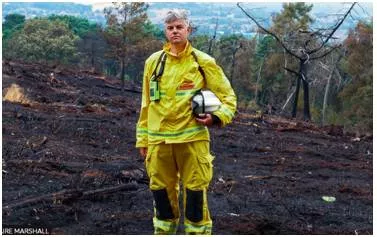
NFCC lead wildfire tactical advisor David Swallow, who is also group commander for Hereford and Worcester Fire Service, said: ‘Everything is bone-dry and services need to recognise the risk they've now got. If they don't, then they're naïve.
‘There are very urban services that think that wildfires are low down on the risk list. I understand the need to prioritise resources, but there needs to be a review.’
A fire in Dagenham destroyed several homes and vehicles after spreading from nearby grassland.
The wildfire group that Mr Swallow leads draws its members - and expertise - from firefighters in predominantly rural areas more susceptible to such blazes, like Northumberland, South Wales, the Peak District, and Wiltshire.
Mr Swallow believes that every fire service in the UK should have wildfire training. That way, forces could learn valuable tactics from firefighters more familiar with tackling blazes on grasslands, on moors and in woods.
He said that his wildfire group had for some time been preparing for the increased risk of wildfires from climate change but that the risk was now ‘immediate’.
But, last year, a report for the government's Third UK Climate Change Risk Assessment found that two out of eight fire services in the south east of England - identified as a key area at growing threat of extreme temperatures - made no reference to wildfires in their Integrated Risk Management Plans (IRMP).
IRMPs are statutory strategy documents which outline every service's priorities and determine how resources will be allocated.
Today, London Fire Brigade and Royal Berkshire Fire and Rescue Service have no reference to wildfires in their IRMPs, while Oxfordshire and Buckinghamshire services only have passing references.
All the fire services said they followed national guidelines and worked to raise awareness of the risk of wildfires locally.
A spokesman for Royal Berkshire Fire and Rescue Service said: ‘Moving forward, we will include more specific wildfire risk analysis as part of our new Community Risk Management Plan for 2023-2027.’
A London Fire Brigade spokesperson said they were ‘constantly looking at developing our equipment and procedures to meet all the new challenges that we face’.
She added: ‘We will learn lessons from the recent intense grass fires, evaluate our response and put in place any additional training that will help to keep Londoners and our firefighters safe.’
Scorched earth must be dampened down - sometimes for days - to make sure it doesn't reignite
South Wales Fire Service is seen as leading the way in its approach to wildfires.
Its station manager, Craig Hope, is another of the UK's wildfire tactical advisers. His force keeps specialised lightweight kit, off-road vehicles, a controlled burns team and a helicopter on standby.
However, 5,500 hectares of the Brecon Beacons National Park have already burned in wildfires this year.
‘It's horrific, but we have predicted it,’ he said. ‘I just don't think anyone would have predicted that it would happen so soon.’
He added that years have been spent ‘making little steps’ and that now is the time for ‘big strides, because the climate is not on our side’.
‘The fires we are seeing now are what they were getting in Spain in the 80s and 90s.’
He urges authorities to invest more in developing a UK-wide ‘national plan for wildfire’.
One solution Mr Hope proposes is that, rather than each force individually spending money on improving its response, there should be funding for a deployable central specialised unit.
Mr Hope added: ‘The solutions are there. They are complex, but we all need to work together.
‘By doing nothing, we risk losing everything.’
The BBC went to the Malvern Hills to see the kind of expertise being developed by rural fire crews working alongside landowners.
Duncan Bridges, chief executive for the Malvern Hills Trust, works with the Hereford and Worcester Fire Service to map where the local access points are, and to understand how wind and fire are likely to travel through a landscape.
The chief executive of the Malvern Hills Trust says he is strengthening plans to deal with wildfires
As part of the trust's wildlife management, the keepers also help to reduce the amount of combustible vegetation, by rolling back bracken and allowing livestock to graze the grass.
Mr Bridges says climate change means the prevention of wildfires is going to become ‘increasingly more critical’.
‘There doesn't seem to be any systematic approach across the whole country when it comes to dealing with landowners and land managers, ’ he says. ‘When dealing with fire prevention and fire safety, it's more a case of each one doing it their own way.’
Defra has included wildfire in its national climate adaptation plan, and the Home Office pointed out a plan for England it had published last December outlined plans for ‘close co-ordination... to provide an effective response to wildfire incidents.’
It added: ‘The government is committed to ensuring fire services have the resources they need to keep us safe, including from wildfires, and, overall, fire and rescue authorities will receive £2.5bn in 2022/23.’


Mikhail gorbachev last soviet leader dies aged 91
Sep 01, 2022
Rohingya and caa what is india's refugee policy
Aug 21, 2022






Stay updated with The Hindu Editorial Vocab24 app, your definitive source for breaking news and comprehensive coverage from India and around the globe. Whether it's political developments, business updates, sports highlights, the latest technology trends, or current events, The Hindu brings live, accurate, and reliable news directly to your device.
Don’t fall for sensationalized or fake news shared online. Read and share accurate updates with friends and family through The Hindu Editorial Vocab24 app. Download it today!
News Coverage in The Hindu Editorial Vocab24 App
Breaking News: Receive instant notifications on breaking news stories as they unfold. Stay informed about major events and developments in India and around the world with live blogs, news in shorts videos, and concise articles.
Politics: Get the latest updates on Indian politics, including elections, policy changes, government decisions, and political events that shape the nation.
Business and Economy: Stay ahead in the economic landscape with detailed business news and market analysis. Learn about stock market trends, financial reports, corporate news, and economic developments to make informed investment decisions.
Current Events: Follow stories on social issues, policy changes, global events, and daily current affairs, tailored for UPSC and other competitive exam preparations.
Technology: Keep up with the latest gadgets, innovations, and tech trends. Read expert reviews and analyses in short, concise updates on cutting-edge technology from India and beyond.
Sports: Never miss a moment of your favorite sports. Get live scores, match reports, and expert analysis on cricket, football, tennis, and more.
International News: Stay informed about global events and geopolitical developments, including the Russia-Ukraine war, Israel-Palestine conflict, and other key international stories.
Local News: Stay connected to your community with the latest updates on city events, issues, and local news. Coverage includes hyperlocal updates from cities like Bangalore, Chennai, Delhi, Hyderabad, Mumbai, Kolkata, and more.
Trending Topics: Discover what's trending today with the most talked-about stories and hot topics across India and the world.
Experience journalism that values integrity, accuracy, and reliability. Download The Hindu Editorial Vocab24 app today and stay connected with the world.
Subscribe to our newsletter!







