


Cause for caution not gloom
The much debated Economic Survey II presents a mixed picture of the Indian economy. It highlights some obvious strengths but “optimism about the medium-term is moderated by a gathering anxiety about near term deflationary impulses”. How valid is this? This year’s Economic Survey is innovative in more ways than one. This is the first time that a second volume is being presented containing a “backward looking review” and “historical data tables”, and it subsumes the mid-term economic analysis usually presented in December. Some key chapters included in this volume on agriculture, industry, infrastructure should normally have come in Volume I itself. These were displaced by the dominance of more preferred themes like Universal Basic Income, and “India on the Move”. Over the years both the presentation and the format of the Economic Survey have under gone fundamental changes. For most of us, the Economic Survey was a document presented on the eve of the Annual Financial Statement. It was, by and large, an analytical underpinning and precursor (antecedent) of the Budget. There was a meaningful connection between the Economic Survey and the Budget proposals. For some time, this relationship has ceased. The Economic Surveys have come to increasingly reflect the predilections (a preference or special liking for something) and preferences of its authors, raising the question whether Economic Surveys are designed to trigger intellectual debate and become incubators of nascent (just coming into existence) ideas. However, seeking a congruence and connect between the prognosis and prescriptions for the economy with the budgetary proposals would not be inappropriate. That said, this Economic Survey has transparency and candour (the quality of being open and honest). The Preface has a disclaimer to say that the update in the State of the Economy chapter in this volume “can be attributed to the CEA, with the Economic Division taking the lead for other chapters”. This can lead to contradictions and asymmetry between the different segments of the report. Rate of growth Leaving aside these issues, what are some key conclusions? One, on the growth rate, while adhering to the forecast in Volume 1 for real GDP growth of 6.75%-7.5% this year, it suggests that the balance of risk has shifted to the downward side of the range. In plain language, this means a sub-7% rate of growth. Just one day prior to the Economic Survey, the Finance Minister presented to Parliament the Medium-Term Expenditure Framework statement in pursuance of the Fiscal Responsibility and Budget Management Act, 2003. This was “essentially a vertical expansion of the aggregates of expenditure in the fiscal framework presented with the Annual Financial Statement to provide closer integration between Budget and FRBM Statements”. In this statement, some of the subsequent developments both on the revenue and expenditure side like the Goods and Services Tax (GST) and the Seventh Pay Commission have also been factored. This framework assumes that nominal GDP growth for the current (2017-18) and subsequent two years would be 11.75%, 12.3% and 12.3%, respectively. Assuming inflation to be in the acceptable range of about 4%, the expected growth would be 7% plus. No doubt, the savings and investment ratio has declined in recent years. To sustain the projected rates of growth, the savings-investment ratio would need to be increased, which is contingent (dependent) on continuation of structural reforms, reducing public dissavings through privatisations such as Air India and other measures to boost savings to earlier high figures in the mid-thirties. The demand boost inevitably comes from domestic consumption which accounted for about 96% of GDP growth in FY 2017. This is likely to continue. The projections also implicitly accept the fiscal deficit of 3.2% in the current year and 3% for the subsequent two years. Inflation targets Two, on inflation, the Economic Survey seeks to demonstrate that for sustained 14 quarters the actual inflation (WPI-CPI) has undershot the projections made by the Reserve Bank (RBI). It argues that India has moved to a low inflation trajectory, given supply-side elasticity in agriculture and long-term softening of global oil prices due to alternatives such as shale and increasing competitiveness of renewable fuels, particularly solar. It concludes that in the Indian context real neutral interest rates hover (आस-पास होना) around 1.25-1.75% and that the present rate is about 25-75 basis points above the neutral rate. In short, a deeper cut in the interest rates would be warranted, given that current inflation at 1.5% is running well below the 4% target. On monetary policy, the central bankers have all over made calculations (based on conservative assumptions) and undershot inflation targets. It is equally ironic that the data in the last two days suggest that both the consumer price index (CPI) and the whole-sale price index (WPI) have risen quickly in July primarily led by food inflation and the housing index reflecting the 7th Pay Commission recommendations, and so did the core index. Analysts now expect the underlying inflation to rest at the 4% ballpark figure, which also happens to be the RBI target. It is said that in politics a week is too long a time. This could be equally said in economics, for events in the last one week have questioned the inflationary projections made in the Survey. At any rate, monetary policy cannot be on a roller-coaster ride. Prudence (cautiousness) would prompt adherence to the analysis of the Monetary Policy Committee and judgment on interest rate calibration. Besides, multiplier benefits from low interest rate regimes are contingent on deeper structural reforms. Three, regarding the exchange rate, real effective interest rates have appreciated significantly. The RBI has the unenviable challenge of managing significant inward capital flows with exchange rates which do not penalise domestic industry through a premium on cheaper imports. However, export competitiveness needs interventions which go beyond dependence on the exchange rate by way of improved logistics, infrastructure and altering the mix of commodities and destinations to meet new demand preferences. Four, fiscal tightening by States due to Ujwal DISCOM Assurance Yojana (UDAY), farm loan waivers, declining profitability of some key sectors like power and telecom, the shadow of unresolved twin balance sheet problems and transitional issues of the GST are contributory to deflationary pressures. Normally understood, farm loan waivers, by reducing the indebtedness of farmers, enhance their income with a positive impact on consumption and demand. The constriction (the action of making something narrower) of capital expenditure for adherence to fiscal limits is somewhat mitigated by past experience. The quantum of actual farm loan waivers inevitably turns out to be somewhat smaller than the initial estimate; but more importantly, their impact on State finances is spread over a typical three-year cycle. Equally, UDAY is designed to clean up the balance sheets of electricity boards in the short run and is expected to improve management of electricity boards. Appropriate action on tariff fixation, regular billing cycles, monitoring timely collection by distribution companies is an integral part of the UDAY package. This would also benefit States’ finances. In a complex federal polity, States in financial distress may need hand-holding. Cooperative federalism entails amelioration (the act of making something better;) of the transient (क्षणिक) financial distress experienced by States. While these issues would need to be holistically (emphasizing) addressed by the 15th Finance Commission, their recommendations are two years away. Short-term State-specific measures would need to be innovatively conceived. The recent initiatives to improve the fertilizer mix through extensive soil-testing along with the Pradhan Mantri Fasal Bima Yojana will prove beneficial to stabilise farm incomes. Nonetheless, the prescriptions contained in the chapter on agriculture by way of extending assured irrigation benefits, better market linkages for producers to prolong the shelf life of perishable (likely to decay or go bad quickly.) commodities, improving the sale of commodities deserve priority action. Rekindling investment The Economic Survey II cautions policymakers of a possible deflationary cycle. Faster resolution of the twin balance sheets is critical to rekindling private investment. Equally, accelerating the pace of agricultural reforms, targeted capital expenditure, improving ease of doing business and the multiple infrastructure initiatives, particularly in roads and power, are integral to any coherent (forming a unified whole.) action. Similarly, stressed sectors like telecom and power need speedier resolution. Macroeconomic stability has been a hard-won battle. The centrepiece lies in continued fiscal rectitude (morally correct behaviour or thinking) and inflation targeting. No doubt, macroeconomic stability must also spur growth and the two objectives need constant recalibration. It has been famously said, “the basic prescription of preventing deflation is not to get into it in the first place.” These lurking (hidden) dangers and the cautionary note of the Economic Survey II are a valuable contribution.


Economic Survey promises, impact of new labour codes
Mar 16, 2026
Preparing India for a true innovation-led economy
Mar 15, 2026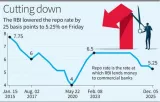
Cheaper loans likely as repo rate cut by 25 bps
Dec 08, 2025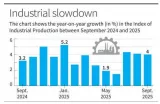
Iip growth dips to three month low of 4 in sept
Oct 31, 2025





Stay updated with The Hindu Editorial Vocab24 app, your definitive source for breaking news and comprehensive coverage from India and around the globe. Whether it's political developments, business updates, sports highlights, the latest technology trends, or current events, The Hindu brings live, accurate, and reliable news directly to your device.
Don’t fall for sensationalized or fake news shared online. Read and share accurate updates with friends and family through The Hindu Editorial Vocab24 app. Download it today!
News Coverage in The Hindu Editorial Vocab24 App
Breaking News: Receive instant notifications on breaking news stories as they unfold. Stay informed about major events and developments in India and around the world with live blogs, news in shorts videos, and concise articles.
Politics: Get the latest updates on Indian politics, including elections, policy changes, government decisions, and political events that shape the nation.
Business and Economy: Stay ahead in the economic landscape with detailed business news and market analysis. Learn about stock market trends, financial reports, corporate news, and economic developments to make informed investment decisions.
Current Events: Follow stories on social issues, policy changes, global events, and daily current affairs, tailored for UPSC and other competitive exam preparations.
Technology: Keep up with the latest gadgets, innovations, and tech trends. Read expert reviews and analyses in short, concise updates on cutting-edge technology from India and beyond.
Sports: Never miss a moment of your favorite sports. Get live scores, match reports, and expert analysis on cricket, football, tennis, and more.
International News: Stay informed about global events and geopolitical developments, including the Russia-Ukraine war, Israel-Palestine conflict, and other key international stories.
Local News: Stay connected to your community with the latest updates on city events, issues, and local news. Coverage includes hyperlocal updates from cities like Bangalore, Chennai, Delhi, Hyderabad, Mumbai, Kolkata, and more.
Trending Topics: Discover what's trending today with the most talked-about stories and hot topics across India and the world.
Experience journalism that values integrity, accuracy, and reliability. Download The Hindu Editorial Vocab24 app today and stay connected with the world.
Subscribe to our newsletter!







