

Can insecurity in asia be managed
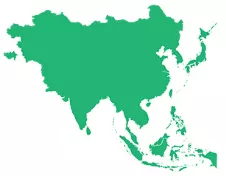
Since the end of World War II, Asia-Pacific has been the locale of direct and indirect military confrontation (in Korea and Indo-China, respectively) between the two superpowers; experienced unprecedented economic growth, which did not translate into closer integration (particularly among the countries of the Association of Southeast Asian Nations or Asean); witnessed the economic and political rise of two ancient powers (China and India); and, consequently, experienced several wars interspersed with an uneasy peace.In contrast in Europe, superpower military confrontation was avoided during the Cold War and did not lead to war; economic growth was facilitated by the generous Marshall Plan, which led to the establishment of institutions that promoted integration and cooperation; and resulted in a long and prosperous peace in the region. Consequently, Europe also emerged as a significant global player and—with the exception of Yugoslavia—was able to peacefully manage the collapse of the Soviet Union and the emergence of independent states in its region.
There are several reasons why the Asian experience was different from that of Europe, even though both were equally affected by World War II.
The post-war roots of insecurity in Asia were driven by the failure to create institutions that could accommodate former enemies, notably Japan and China as well as Korea and South-East Asia.
Japan’s inability to either apologize for its wartime role and atrocities or reconcile with its enemies meant that any regional arrangement, despite the best US efforts, was a non-starter. Consequently, Washington and the region had to contend with a series of bilateral arrangements.
Similarly, the contestation between China and India first evident in the 1950, following Beijing’s annexation of Tibet, meant that efforts to create a cooperative arrangement in Bandung with these two powers also came to naught. Whatever hope there was of a regional institution centered around China and India evaporated following the 1962 war.
While Asean did eventually emerge, its role as a regional organization was constrained by two factors: first, its unabashed anti-Communist stance during the Cold War and, second, its inability to include the regional hegemons, notably, China and India. Although this, clearly, allowed Asean to exist, it also limited its scope and appeal to just a small part of Asia.
Against this background, a recent report by an independent commission on regional security architecture established by the Asia Society Policy Institute, which included Thomas Donilon, former US national security adviser, Igor Ivanov, former Russian foreign minister, Shivshankar Menon, former Indian national security adviser, and Wang Jisi, former Chinese foreign minister, is noteworthy. Titled Preserving The Long Peace In Asia, the report identifies the challenges facing the region and suggests ways to build an effective security arrangement.
It warns that tensions between the US and China are causing a ripple effect among other Asian nations. While many still look to the US for security, they are increasingly dependent on the Chinese economy. Thus, as their economic and security interests diverge, the nations are being compelled to choose between the US and China “in uncomfortable ways”.
The report cautions that while the alphabet soup of regional organizations is “comforting”, it is also “hazardous”. The multiplicity of organizations in the region allows countries to “shop for the forum they find most suited to the issue at hand”. This trend “obviates the necessity of developing a stronger regional consensus around norms and rules of the road”.
In addition, there are at least four other challenges facing Asia’s regional architecture. These are the fast-paced political and economic transitions and the need to manage them flexibly; the growing strategic competition among key actors; the risk of instability or even conflict on account of the inability to bridge the trust deficit that permeates key bilateral relationships; and the rapid proliferation of state-of-the-art military and dual-use technologies, which in combination with the growing mistrust, are “altering military operations in a manner that further enhances risk” of conflict.
Given this suite of challenges, the report identifies five ambitious functions that regional institutions need to perform, including “play a binding role,” “mitigate against historical mistrust,” “facilitate better management of crises and disputes”, “rationalize and align the institutions and mechanisms” and have flexibility in setting a forward-looking agenda.
Predictably, none of the organizations fulfil all these functions. However, instead of suggesting the establishment of a new organization ab initio, the report calls for strengthening the East Asia Summit (EAS)—a grouping that includes Asean members plus Australia, China, India, New Zealand, South Korea, Russia, and the US. It suggests retaining the informal nature of the EAS for now but calls for greater institutionalization and an operational role in preventive diplomacy, crisis management, and confidence-building measures in the medium term. In the long term, the EAS should become a “more formal organization that brings together broader components of security cooperation across the region.”
While the report is commendable and the proposals logical, the recommendations are likely to remain on paper unless there is a political impetus to implement it. So far, given the state of relations among the principal actors, the political drive is missing.










Stay updated with The Hindu Editorial Vocab24 app, your definitive source for breaking news and comprehensive coverage from India and around the globe. Whether it's political developments, business updates, sports highlights, the latest technology trends, or current events, The Hindu brings live, accurate, and reliable news directly to your device.
Don’t fall for sensationalized or fake news shared online. Read and share accurate updates with friends and family through The Hindu Editorial Vocab24 app. Download it today!
News Coverage in The Hindu Editorial Vocab24 App
Breaking News: Receive instant notifications on breaking news stories as they unfold. Stay informed about major events and developments in India and around the world with live blogs, news in shorts videos, and concise articles.
Politics: Get the latest updates on Indian politics, including elections, policy changes, government decisions, and political events that shape the nation.
Business and Economy: Stay ahead in the economic landscape with detailed business news and market analysis. Learn about stock market trends, financial reports, corporate news, and economic developments to make informed investment decisions.
Current Events: Follow stories on social issues, policy changes, global events, and daily current affairs, tailored for UPSC and other competitive exam preparations.
Technology: Keep up with the latest gadgets, innovations, and tech trends. Read expert reviews and analyses in short, concise updates on cutting-edge technology from India and beyond.
Sports: Never miss a moment of your favorite sports. Get live scores, match reports, and expert analysis on cricket, football, tennis, and more.
International News: Stay informed about global events and geopolitical developments, including the Russia-Ukraine war, Israel-Palestine conflict, and other key international stories.
Local News: Stay connected to your community with the latest updates on city events, issues, and local news. Coverage includes hyperlocal updates from cities like Bangalore, Chennai, Delhi, Hyderabad, Mumbai, Kolkata, and more.
Trending Topics: Discover what's trending today with the most talked-about stories and hot topics across India and the world.
Experience journalism that values integrity, accuracy, and reliability. Download The Hindu Editorial Vocab24 app today and stay connected with the world.
Subscribe to our newsletter!







