

Bilateral silence
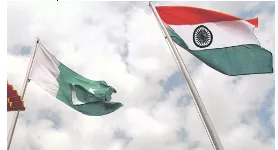
It was a cool winter morning in late December 2001 when India decided to mobilise its forces on its border with Pakistan, in retaliation (प्रतिकार) to the terror attack on the Indian Parliament on December 13 that year. The reaction, which was meant to pressure the seemingly recalcitrant (उद्दण्ड) neighbour, was the biggest troops deployment since the war in 1971. However, no lines were crossed due to foreign intervention and a realisation around the world that a conflict between the two South Asian neighbours who had gone overtly (प्रत्यक्ष रूप से) nuclear in 1998 might result in something very ugly. It was in the backdrop of this standoff (गतिरोध/रुकावट) or the earlier Kargil crisis that redlines were drawn informally. Sixteen years later, the region stands on the brink of an impending conflict with little clarity regarding the threshold and even less lucidity regarding which international player will intervene. Unlike in the past, the US may not be in a position to give its advice due to its own internal chaos, lesser interest in South Asia and an inability to develop a relationship with anyone in Islamabad. Although deterrence and an understanding of each other’s thresholds worked for almost a decade after 2002, both sides worked towards finding means to challenge the status-quo. So, India’s “cold start” doctrine was meant for Delhi to circumvent the four redlines highlighted by the head of Pakistan’s Strategic Plans Division (SPD), Lieutenant General Khalid Kidwai. Pakistan reacted to India’s plan by developing a range of battlefield tactical nuclear weapons. Since 2013-2014, all lines have become muddled (अव्यवस्थित करना/अस्तव्यस्त कर देना) and the military-strategic visibility has become poorer as both sides enjoy a certain level of confidence that any initiative will be to their advantage, not to the adversary’s. While Indian Prime Minister Narendra Modi and his party’s political gains are unquestionable, the military in Pakistan has managed to cobble (to make or repair) together a popular opinion regarding its role as the defender of the territorial and ideological integrity of the state. Voices that question the narrative no longer hold centrestage in public discourse — not to forget the tremendous confidence gained by Islamabad through finding space in the evolving regional political map as China’s partner. This description of similar levels of confidence enjoyed by the two states tends to point towards an increased threat of war and conflict. Historically, every time both India and Pakistan attained higher degrees of self-confidence, the results were not good. These are indeed interesting times when military thresholds are being re-checked in a nuclear environment. Given the absence of direct conversation, there is also little clarity as to how far the two sides will go. The Pakistan Army has stated that it is not involved in mutilating (अंग भंग करना/विकृत करना) bodies of Indian soldiers. But even if it is random militants, or someone else to blame, the question is finding a possibility to talk before things go too far out of hand. Another interesting development in the past decade or more pertains to war and conflict becoming matters in which popular opinion weigh in. While this may be a deliberate formula of the states, the issue is that the media hype around war and peace has acquired a life of its own. But this means that any escalation will result in greater public support to their respective armed forces. The recipe is dangerous especially if India tries to go beyond its claims of a surgical strike in September 2016. The fact that Pakistan did not react or admit to such strikes having happened kept things from boiling over. However, if India intended to make its response more visible, it could result in serious repercussions for the entire region. Strategic analysts have often talked about the rationality of Pakistan’s armed forces that, it is believed, may force it to not up the ante and cap it at a lower level. The question is, what if it does not follow this script? It is beyond doubt that this is one time when the two states need to engage in a dialogue through reliable interlocutors (वार्ताकार) . Understandably, Pakistan must solve its internal confusion of civil-military being on separate pages as far as a policy on India is concerned. In fact, the business tycoon Sajjan Jindal’s visit to see Nawaz Sharif did not benefit the prime minister. If anything, the narrative popularised through the media presented him as suspicious and unreliable. From a common sense perspective, this is not the best of conditions a country ought to find itself in, especially when confronted with a grave (गंभीर) situation. However, the military believes it can protect the territory and the core strategic understanding is that there can be no peace with the bigger neighbour unless outstanding disputes are resolved. It would certainly not allow a political leadership to conspire a solution without taking key stakeholders on board. The civil-military squabble (झगड़ा/तकरार) tends to hide the difference of opinion that exists within the military regarding how far negotiations between Islamabad and New Delhi should go. While some may support the idea of negotiations, there are those who would like to go the whole hog in de-Indianising their society and culture. Unfortunately, for South Asia, peace and camaraderie (सौहार्द/भाई-चारा) amongst the people is the biggest collateral damage of the present environment. The talk of action-reaction and hostility is increasingly de-sensitising people towards the idea of peaceful co-existence or building upon a shared culture of the soil. Any further increase in hostility is likely to make common people even wearier (थकाऊ/थकानेवाला) of each other. While it is understandable to see the militaries brace themselves for greater conflict, the leadership ought to find ways to talk. It is important to realise that talking is imperative.Recalcitrant (adjective)
Having an obstinately uncooperative attitude towards authority or discipline. उद्दण्ड
Synonyms: Obstinate, Recusant, In Submissive, Wayward
Example: After the economy soured, the president fired his recalcitrant advisers.
Overtly (adverb)
Without concealment or secrecy प्रत्यक्ष रूप से
Synonyms: Openly, Visibly, Seemingly
Example: Since the detective is an observant fellow, he can easily notice facts that are not overt.
Standoff (noun)
A deadlock between two equally matched opponents in a dispute or conflict. गतिरोध/रुकावट
Synonyms: Deadlock, Stalemate, Impasse, Standstill, Dead End
Example: After two hours of game they had played to a 5–5 standoff.
Muddle (verb)
Bring into a disordered or confusing state. अव्यवस्थित करना/अस्तव्यस्त कर देना
Synonyms: : Confuse, Mix Up, Jumble, Jumble Up, Disarrange, Disorganize, Disorder
Example: Because Jane has no computer skills, she has managed to muddle our accounting records.
Mutilate (verb)
Inflict serious damage on. अंग भंग करना/विकृत करना
Synonyms: Cripple, Disable, Incapacitate, Lame, Maim
Example: Invaders went to great lengths to mutilate the beautiful paintings on the temple walls, permanently destroying the displays.
Grave (adjective)
Giving cause for alarm; serious. गंभीर
Synonyms: Serious, Alarming, Solemn, Weighty, Critical
Example: This violation of company rules is a grave matter.
Squabble (noun)
A noisy quarrel about something trivial. झगड़ा/तकरार
Synonyms: Quarrel, Row, Argument, Fight, Contretemps, Altercation
Example: She decided to break up with her boyfriend after he felt the need to squabble every time she smiled at another man.
Camaraderie (noun)
Mutual trust and friendship among people who spend a lot of time together. सौहार्द/भाई-चारा
Synonyms: Friendship, Comradeship, Fellowship, Companionship, Brotherhood
Example: The cricket players had a sense of camaraderie which made them an unbeatable team.
Weary (adjective)
Exhausted in strength, endurance, vigor, or freshness. थकाऊ/थकानेवाला
Synonyms: Bored, Exhausted, Tiring, Prostrate
Example: After the long road trip, we were all so weary we fell asleep in our clothes.
Cobble (verb)
Roughly assemble or produce something from available parts or elements. Figurative - To make or repair मरम्मत करना/बनाना
Synonyms: Assemble, Construct, Create, Fabricate, Synthesize, Accomplish
Example: The book was perfectly cobbled together from two separate stories.










Stay updated with The Hindu Editorial Vocab24 app, your definitive source for breaking news and comprehensive coverage from India and around the globe. Whether it's political developments, business updates, sports highlights, the latest technology trends, or current events, The Hindu brings live, accurate, and reliable news directly to your device.
Don’t fall for sensationalized or fake news shared online. Read and share accurate updates with friends and family through The Hindu Editorial Vocab24 app. Download it today!
News Coverage in The Hindu Editorial Vocab24 App
Breaking News: Receive instant notifications on breaking news stories as they unfold. Stay informed about major events and developments in India and around the world with live blogs, news in shorts videos, and concise articles.
Politics: Get the latest updates on Indian politics, including elections, policy changes, government decisions, and political events that shape the nation.
Business and Economy: Stay ahead in the economic landscape with detailed business news and market analysis. Learn about stock market trends, financial reports, corporate news, and economic developments to make informed investment decisions.
Current Events: Follow stories on social issues, policy changes, global events, and daily current affairs, tailored for UPSC and other competitive exam preparations.
Technology: Keep up with the latest gadgets, innovations, and tech trends. Read expert reviews and analyses in short, concise updates on cutting-edge technology from India and beyond.
Sports: Never miss a moment of your favorite sports. Get live scores, match reports, and expert analysis on cricket, football, tennis, and more.
International News: Stay informed about global events and geopolitical developments, including the Russia-Ukraine war, Israel-Palestine conflict, and other key international stories.
Local News: Stay connected to your community with the latest updates on city events, issues, and local news. Coverage includes hyperlocal updates from cities like Bangalore, Chennai, Delhi, Hyderabad, Mumbai, Kolkata, and more.
Trending Topics: Discover what's trending today with the most talked-about stories and hot topics across India and the world.
Experience journalism that values integrity, accuracy, and reliability. Download The Hindu Editorial Vocab24 app today and stay connected with the world.
Subscribe to our newsletter!







