

Anti caa to farmer protests—india’s productive masses are giving real meaning to tiranga
On the occasion of India’s diamond jubilee celebration, there is a significant discussion about the importance of our national flag. The Bharatiya Janata Party has showcased the ‘Har Ghar Tiranga’ campaign along with the photo of Prime Minister Narendra Modi on its Twitter account. The Congress has showcased the national flag with the first PM Jawaharlal Nehru’s photo next to it. The Communists, as usual, have remained indifferent to the national flag debate as they love their own red flag more.The Congress and the BJP have their own party flags to hoist high and keep on their persons. And if necessary, on the top of their own ghar (home) to declare their political identities. However, it is important to look at the national flag from the point of view of India’s productive communities who, in caste terms, constitute the Shudras, the Dalits, and the Adivasis.
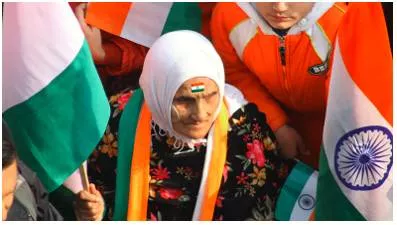
Quite interestingly, the 2019 protests against the Citizenship (Amendment) Act exclusively used the Tricolour and the Constitution. Even the recent nationwide protests against former BJP spokesperson Nupur Sharma’s remarks on Prophet Muhammad saw the national flag being used. While the 2020-2021 farmers’ movement did see the Khalistani and various associations’ flags making their way into the protests, the Indian flag flew high.
Only a few other movements in the last 75 years of Independent India have held the national flag as dear to themselves as these protestors did. These movements were a new landmark in the nationalist ownership of the Tricolour. Now, it is more genuine and authentic.
‘Saffron’ divide
The Rashtriya Swayamsevak Sangh (RSS), for a long time, opposed the current Indian flag with the Ashoka Chakra at its centre. M. S. Golwalkar, the second sarsanghchalak of the RSS, in his book Bunch of Thoughts, said: “Our leaders have set up a new flag for our country. Why did they do so? It is just a case of drifting and imitating. How did this flag come into being? During the French Revolution, the French put up three stripes on their flag to express the triple ideas of ‘equality’, ‘fraternity’ and ‘liberty’. The American Revolution, inspired by similar principles, took it up with some changes. Three stripes, therefore, held a sort of fascination for our freedom fighters also. So, it was taken up by the Congress.”
The RSS guru was opposed to the idea of liberty, equality, and fraternity, as they would dismantle the caste and varna-dharma structures that it upholds. The RSS saw the reddish saffron (different from the RSS saffron) in the Tricolour as Communist and the green as Islamic. The Communists, since the early days, have no respect for any other flag except the red flag, which symbolises the proletarian revolution. They have written hundreds of songs on the red flag, as it is the global representative of the working class.
Having approved the three colours—deep saffron, white and green—for the national flag, B.R. Ambedkar, in the Constituent Assembly debates, asked for the Ashoka Chakra to be placed at the centre of the flag instead of the charkha (spinning wheel) that many, including M.K. Gandhi, proposed. Ambedkar, by then, was inclined towards Buddhism.
The national flag was finally adopted in its current form on 22 July 1947 and hoisted at midnight on 15 August. If the BJP were around and in power then, the Tricolour with Ashoka Chakra would not have been the Indian national flag. It would have been a simple saffron flag, maybe with the swastika on it. We do not know what would have happened to India in such troubled Partition times. And we don’t know what it would have meant to the vast masses of Shudras, Dalits, or Adivasis either in such a Dvija-dominated Hindu/Hindutva environment.
Ambedkar chose the blue colour for the flag of the party floated by his Scheduled Castes Federation of India in 1942. It is now the flag colour of the Bahujan Samaj Party.
Owning the Tricolour—in a new way
The new meaning of the national flag comes from the 2020-2021 farmers’ struggle against the farm laws. The Shudras, Dalits, and Adivasis have no other flag to depend so much on as the national flag because it was only after the Tricolour was hoisted at midnight on 15 August 1947 that the victims of the varna system entered a new phase of life. This flag meant liberty, equality, and fraternity — the ideals that Ambedkar also repeatedly upheld while drafting the Constitution. From Golwalkar’s statement above, we can understand how much they hated these ideals that are the lifeblood of the Shudras, Dalits, and Adivasis today.
The deep saffron colour on the top of the Indian national flag indicates the revolution of the masses. The white represents peace that was needed to put an end to caste oppression, exploitation, untouchability, and violence. The green does not mean Islam, as the RSS intellectuals thought, but the greenery of crops, positive, eco-friendly life, food for people and cattle, and so on.
It means what the contemporary world is aiming for right now — environmentalism. Farmers are its human personification in India.
Protect the lifeblood
In modern Indian history, the most authentic representative of farmers was Jyotirao Phule. All his writings focused on the problems of farmers whom he called Shudras and Ati-Shudras. His book Gulamgiri (1873) was the first to reflect the liberty, equality and fraternity aspirations of the productive masses. Ambedkar, as I said, approved the flag by inserting the Ashoka Chakra. The farmers owned it as a part of their national self in their struggle to protect the agrarian economy.
The Constitution, the national flag, and democratic institutions should be protected and continued – they are India’s lifeblood. The freedom fighters, with their diverse views and aspirations, created a ‘modern India’ with its current democratic structures, constitutional ideology, and national symbols. The Constitution is the living embodiment of all that India stands for. The national flag is an expression of the people’s spirit.
While hoisting the flag on every house in villages, towns and buildings, we must keep the spirit of the freedom struggle alive and constantly commemorate the sacrifices of the freedom fighters.










Stay updated with The Hindu Editorial Vocab24 app, your definitive source for breaking news and comprehensive coverage from India and around the globe. Whether it's political developments, business updates, sports highlights, the latest technology trends, or current events, The Hindu brings live, accurate, and reliable news directly to your device.
Don’t fall for sensationalized or fake news shared online. Read and share accurate updates with friends and family through The Hindu Editorial Vocab24 app. Download it today!
News Coverage in The Hindu Editorial Vocab24 App
Breaking News: Receive instant notifications on breaking news stories as they unfold. Stay informed about major events and developments in India and around the world with live blogs, news in shorts videos, and concise articles.
Politics: Get the latest updates on Indian politics, including elections, policy changes, government decisions, and political events that shape the nation.
Business and Economy: Stay ahead in the economic landscape with detailed business news and market analysis. Learn about stock market trends, financial reports, corporate news, and economic developments to make informed investment decisions.
Current Events: Follow stories on social issues, policy changes, global events, and daily current affairs, tailored for UPSC and other competitive exam preparations.
Technology: Keep up with the latest gadgets, innovations, and tech trends. Read expert reviews and analyses in short, concise updates on cutting-edge technology from India and beyond.
Sports: Never miss a moment of your favorite sports. Get live scores, match reports, and expert analysis on cricket, football, tennis, and more.
International News: Stay informed about global events and geopolitical developments, including the Russia-Ukraine war, Israel-Palestine conflict, and other key international stories.
Local News: Stay connected to your community with the latest updates on city events, issues, and local news. Coverage includes hyperlocal updates from cities like Bangalore, Chennai, Delhi, Hyderabad, Mumbai, Kolkata, and more.
Trending Topics: Discover what's trending today with the most talked-about stories and hot topics across India and the world.
Experience journalism that values integrity, accuracy, and reliability. Download The Hindu Editorial Vocab24 app today and stay connected with the world.
Subscribe to our newsletter!







