

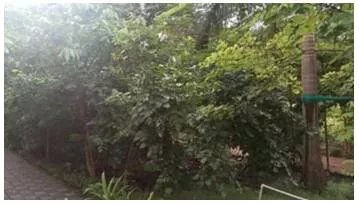
A mini forest boom is taking over mumbai it’s called miyawaki delhi is rushing in too
In January this year, BMC issued an order directing all real estate developments over 10,000 square metres to reserve five per cent of their space for Miyawaki plantations.A mini-forest boom is taking over Mumbai. It’s called Miyawaki, Delhi is rushing in too.
In January this year, BMC issued an order directing all real estate developments over 10,000 square metres to reserve five per cent of their space for Miyawaki plantations.
Bhavishya Rao, 33, has managed to find a quiet little wooded corner for evening walks with her dog, Myra. And it is right in the heart of Mumbai’s landmark Eastern Freeway in the Wadala area, with plumes of smoke and haze hovering overhead—dust from Metro construction, black smoke and ammonia spewing from the Rashtriya Chemical Fertiliser factories.
Oblivious to the circus, Rao continues to walk Myra in the sprawling Bhakti Park public garden. This thicket is one among Mumbai’s several ‘Japanese forests’—copses created with the ‘Miyawaki method’, a unique afforestation technique ideal for urban areas. “Our family of four, including a toddler and a fairly active dog, discovered this park a year ago. And it’d be fair to say that it has easily become one of our most visited places in Mumbai despite living here for over a decade,” says Rao, who appreciates this green pocket amid Mumbai’s hustle, bustle and worsening air quality index.
In the last three years, the Brihanmumbai Municipal Corporation (BMC) has grown 64 Miyawaki forests on plots ranging from 500 square metres to seven or eight acres. In a city with an abysmal per capita accessible open space ratio of 1.24 square metres and a green cover that has shrunk by 40 percent from 1991 to 2018, these mini forests have created little havens for the residents close by.
“The lush green is a welcome change from the daily hustle and bustle of the traffic…it truly is an oasis in the middle of a concrete jungle,” Rao adds.
The Miyawaki forest at Bhakti Park, which was planted on 26 January 2020, is among the first few mini forests in Mumbai. And by the end of March 2023, the BMC will finish growing four lakh trees with the Miyawaki method, says Jitendra Pardeshi, superintendent of BMC’s garden and trees department.
The Miyawaki forest at Bhakti Park, which was planted on 26 January 2020, is among the first few mini forests in Mumbai. And by the end of March 2023, the BMC will finish growing four lakh trees with the Miyawaki method, says Jitendra Pardeshi, superintendent of BMC’s garden and trees department.
The Miyawaki way
Japanese botanist Akira Miyawaki perfected his afforestation technique in the 1980s. The Miyawaki method, BMC says, can be effectively implemented on small urban plots, where native trees can be bunched together and grown. The plants grow 10 times faster than usual and eventually mimic a forest grove.
“Mumbai was among the first [cities] where the civic body got involved, actively commissioned these forests, and set aside land and funds,” says Pardeshi.
The BMC has now gone a step further. In January this year, the civic body issued an order directing all real estate infrastructure spread over 10,000 square metres to reserve five per cent of their space for Miyawaki plantations. Officials associated with the BMC’s garden department say many civic bodies, such as in New Delhi and Thane, have unofficially contacted the BMC to understand its role in encouraging Miyawaki plantations in and around Mumbai.
The Navi Mumbai Municipal Corporation and the Thane Municipal Corporation have followed in BMC’s footsteps and are now striving to create Miyawaki forests. The New Delhi Municipal Corporation has been experimenting with this method too.
Native, indigenous varieties thrive best in Miyawaki plantations. For instance, most of Mumbai’s Miyawaki trees are varieties such as Arjun (Terminalia Arjuna), Sita Ashoka (Saraca Asoka), Kadamba (Burflower), Kadulimba (Neem), Karanja (Milletia Pinnata), Umber (Cluster Fig), Banyan (Ficus Benghalensis), Peepal (Sacred Fig), Putranjiva (Putranjivaceae), Bakul (Spanish Cherry), Guava (Psidium Guajava) and Tamarind (Tamarindus Indica).
“Earlier, the BMC used to plant 50 per cent foreign varieties. But, over time, we found a lot of issues in how these foreign trees sustain. Indigenous varieties are better suited for the city,” says Pardeshi.
When residents took action
The BMC has partnered with various NGOs to create these urban woods, helping them with land and fund wherever necessary.
The micro forest at Mulund’s Hari Om Nagar was one such experiment. It all started in 2019, when the BMC hacked a few trees opposite the suburb’s R Mall. Residents objected to the improper cutting of trees and flagged the issue to BMC’s ward officer.
“Sushant Bali, who has also been involved in the movement to save the Aarey forest, was the one who met the ward officer. The ward officer suggested that if residents were serious about growing a tree cover, then the BMC is happy to give a plot in a garden and assist in building a mini forest,” says 45-year-old Uttara Ganesh, a resident involved in building the Mulund micro forest.
By September 2019, Uttara, Bali and a handful of other Mulund residents geared up to plant a Miyawaki forest on a small BMC-assigned plot.
“The BMC partially helped us with the labour and some tree species, but we had to arrange for most of the required funds. We resorted to crowdfunding, getting donations and so on,” says Uttara, a former shipping company employee now pursuing her passion in terrace gardening.
The residents responsible for planting the forest also nurtured it until last year, before the BMC took over its maintenance.
Mulund’s Miyawaki forest is sandwiched between two jogging tracks. It allows morning and evening walkers to experience a glorious green stretch replete with birds, butterflies and even reptiles, says Uttara. But while she has toiled hard to achieve this, Uttara doesn’t think that mini forests alone can increase Mumbai’s green cover.
“Some like it, some are scared of going close to it, fearing snakes because the plantation now is very tall and dense. And with people constantly walking around, and the BMC cutting the canopy jutting out on the jogging path, I fear that the habitat of the birds and reptiles that the forest attracts is [now] disturbed,” she says.
‘Not ideal, but a good solution’
Mumbai finds a mention in many global lists. It routinely features in city surveys as the metropolis with the highest population density or finds a place in lists that mark it as one of the ‘most expensive cities’ in India. But the one qualifier that Mumbai is rarely associated with is ‘greenery.’
So, when the United Nations recognised Mumbai as 2021’s ‘Tree City of the World’, BMC officials, says Pardeshi, were convinced that it was because of the civic body’s Miyawaki push.
Some experts, however, are vocal in their scepticism.
“Building a Miyawaki forest is almost like the essence of the time we live in, where there is always the need for instant gratification,” said Rishi Aggarwal, founder and director of Mumbai Sustainability Centre, an organisation that works toward sustainable development in the city.
“The BMC’s track record at maintaining or adding greenery over the past 20 years has been poor, and the Miyawakis are almost like they [BMC] are trying to absolve themselves of their sins. The city is so much more concretised right now that you need trees along roads, spread tree cover across the city. You cannot be doing an excellent job only in patches,” he added.
Debi Goenka, executive trustee of the Conservation Action Trust, has mixed feelings about Miyawaki forests too. “A high-density plantation is obviously more beneficial in terms of the number of plants you can accommodate and in terms of absorbing carbon dioxide. But, if the selection of species and soil is not proper, it can be very complicated.”
Goenka, though, is impressed with the BMC’s push to reserve portions of real estate for Miyawaki plantations.
“This way, the onus of developing and maintaining the plantation will be on the builder. And there will be more high-density plantations spread out across the city,” he adds.










Stay updated with The Hindu Editorial Vocab24 app, your definitive source for breaking news and comprehensive coverage from India and around the globe. Whether it's political developments, business updates, sports highlights, the latest technology trends, or current events, The Hindu brings live, accurate, and reliable news directly to your device.
Don’t fall for sensationalized or fake news shared online. Read and share accurate updates with friends and family through The Hindu Editorial Vocab24 app. Download it today!
News Coverage in The Hindu Editorial Vocab24 App
Breaking News: Receive instant notifications on breaking news stories as they unfold. Stay informed about major events and developments in India and around the world with live blogs, news in shorts videos, and concise articles.
Politics: Get the latest updates on Indian politics, including elections, policy changes, government decisions, and political events that shape the nation.
Business and Economy: Stay ahead in the economic landscape with detailed business news and market analysis. Learn about stock market trends, financial reports, corporate news, and economic developments to make informed investment decisions.
Current Events: Follow stories on social issues, policy changes, global events, and daily current affairs, tailored for UPSC and other competitive exam preparations.
Technology: Keep up with the latest gadgets, innovations, and tech trends. Read expert reviews and analyses in short, concise updates on cutting-edge technology from India and beyond.
Sports: Never miss a moment of your favorite sports. Get live scores, match reports, and expert analysis on cricket, football, tennis, and more.
International News: Stay informed about global events and geopolitical developments, including the Russia-Ukraine war, Israel-Palestine conflict, and other key international stories.
Local News: Stay connected to your community with the latest updates on city events, issues, and local news. Coverage includes hyperlocal updates from cities like Bangalore, Chennai, Delhi, Hyderabad, Mumbai, Kolkata, and more.
Trending Topics: Discover what's trending today with the most talked-about stories and hot topics across India and the world.
Experience journalism that values integrity, accuracy, and reliability. Download The Hindu Editorial Vocab24 app today and stay connected with the world.
Subscribe to our newsletter!







