

A closer look at the lines
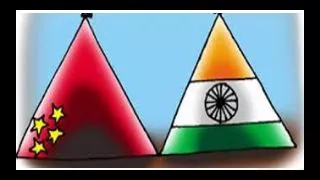
Last week, ahead of the 20th round of the now moribund ((of a thing) in terminal decline;) talks between the Special Representatives of India and China entrusted with finding an early settlement of the border question, the Chinese Foreign Minister, Wang Yi, after meeting External Affairs Minister Sushma Swaraj and the National Security Adviser, Ajit Doval, set out parameters that he implied needed to be bilaterally addressed with urgency. In sum, the remarks constitute quite a lecture. They lay the initiative for corrective measures comprehensively at New Delhi’s door and make it difficult to gloss over Try to conceal or disguise (something unfavorable) by treating it briefly or representing it misleadingly. their implications. Whereas, the statements made by New Delhi appear, in contrast, to be conciliatory and more hopeful.The set of remarks, therefore, broadly underpin the direction of ties with China in the near term. A course correction is being sought, months after the Doklam crisis has been perceived to have been set at rest.
The import
While it is not clear if it is a negotiating tactic, here is the listing, in no particular order of priority, so the import of the Wang Yi stipulations is not lost in translation: that India-China relations were at a crucial moment at present; he used the phrase “critical period” after he met Ms. Swaraj. That both countries needed to make the “correct choice regarding the future direction of bilateral relations”. That the results of the efforts made for “overall development momentum were unsatisfactory”. The most important thing to do was (emphasis added) “genuine cultivation of mutual trust”. So long as mutual trust continued to be absent, “some individual issues will keep fermenting and spilling over, thus eroding the overall situation of bilateral relations”. That the “Dong Lang incident caused by the Indian border troops’ illegal crossing of the China-India boundary into the Chinese territory was a severe test for bilateral relations… lessons should be learned to prevent similar incidents from happening again”. That the two countries “should properly control and handle problems left over from history and some specific issues in bilateral relations by putting them in the right place of China-India relations, without politicizing and complicating them to hamper the overall development of China-India relations”.
Mr. Wang also set out some tasks that needed to be undertaken: both sides should enhance strategic communications at all levels, restore established dialogue mechanisms (emphasis added), deepen practical co-operation in various fields “and meanwhile, well manage existing differences and well safeguard peace and tranquility in border areas”. He also specifically alluded to the benefits that await India were it to come aboard the Belt and Road Initiative, which New Delhi has shown some reluctance towards. Thus some of the Chinese goals and the problems have been clearly set out in public.
This is the clearest confirmation yet that the “dialogue mechanism” —where the two Special Representatives (SR) meet, and set up with so much fanfare in 2003 — may have over the last decade-and-a-half or so, been more or less transformed into an exercise in general fatuity (imbecility) . Just like the Joint Working Group that looked at clarifying the border areas before the SRs came along. In the meanwhile, four Special Representatives have changed — Brajesh Mishra, J.N. Dixit, M.K. Narayanan, as well as Shivshankar Menon. Will Ajit Doval, or the one who follows him eventually, or the one afterwards, be able to make a difference?
A slide
It is also significant that Mr. Wang’s candid remarks should come days after the tenth round of the Working Mechanism for Consultation and Co-ordination on India China Border Affairs, (WMCC) which concluded with a positive spin having been imparted to them as having been “constructive and forward looking”, but without firm dates for the next meeting.
What a slide it has been. The SR dialogue was set up after lengthy diplomatic negotiations had yielded the “Political Parameters and Guiding Principles for the Settlement of the Boundary Question”. The hard-fought principles set out that the eventually delineated boundary would “be along well-defined and easily identifiable natural geographical features” and that the due interest of the settled populations in the border areas would be taken care of. It was expected that the exploration for the framework for the boundary settlement would commence thereafter.
Clarity on the border
In the meanwhile, some of the expectations had rewritten themselves. The Joint Working Group — that had been clarifying the border areas with a view to leading up to exchange of maps on a mutually agreed scale on where the Line of Actual Control (LAC) lay in each others’ perception — had run itself into the ground (exhaust oneself by working or running very hard.). This was after sample maps were exchanged in the Middle Sector without having been able to progress to the Western and Eastern Sectors. There was a time when as many as four lines ran across the border areas: one where we perceived the LAC to be, one where the Chinese perceived the LAC to be, one where we perceived the Chinese perceived the line to be and one where the Chinese perceived where we thought our line lay. The last two lines were somewhat guess-worked from the military graffiti (writing or drawings scribbled, scratched, or sprayed illicitly on a wall or other surface in a public place.), tell-tale traces that our armies leave behind when they foray (attack) into the border areas asserting perceptional rights through patrols, the same way as animals mark territory. It is not even clear whether we have spoken of each other’s perception of the LAC for the last decade.
This after China had till the middle of the 1980s seemed open to a process that would let India keep the areas in the East while they held on to those in the West. The fond (doting) hope was of an “LAC plus” solution. That changed as well. As did the pious intention to earnestly look for an early solution. Utterances of visiting Chinese premiers introduced new nuances into the diplomatic liturgy (a form or formulary according to which something is conducted.), emphasising the complexity of the issue, underlining the difficulty of its resolution, and, thereby, leaving it to future generations to grapple with. Instead of enlarging commonalities, what is being expanded instead are the divergences: whether it is China’s opposition to India’s entry into the Nuclear Suppliers Group, or its steadfast support to Pakistan’s mollycoddling (treat (someone) in an indulgent or overprotective way.) of terrorist groups that are inimical (unfriendly; hostile.) to India, or its pointed message to encourage Bhutan to settle its boundary dispute with China in a way that would make the Indian Army’s presence in Doklam eventually redundant. Just look at the Chinese penetration of the area we consider to be our backyard: whether it is Sri Lanka, Nepal, and now the Maldives. Can Bhutan be far behind?
To this day, even though a military hotline between the two army headquarters had been agreed upon years ago, it has not materialised. This is something that would be logical, even imperative, given that both countries have improved their border infrastructure in terms of roads and accessibility in such a way that increases the possibilities of troops chancing upon each other. Therefore, transgressions (infraction) will increase in terms of frequency, duration, depth, and intensity. The aim should be to evolve a stronger mechanism to manage the border areas more effectively to ensure equilibrium. This must include a more robust code of military conduct, even though neither side has sought to alter border reality through use of force. It is time New Delhi put more effort into strengthening India’s presence in those areas where we are present, where we consider to be them as our border, and live with it rather than to wait for Beijing to alter reality again. It is easier to make provisions to better live with it than to squander energies resolving it. If we don’t let the boundary question detain us, we will be in a better position to enlarge the areas where we can more fruitfully, in the Asian Century, engage the Chinese in line with the bilateral intentions that envisaged the simultaneous rise of both China and India.




Top court quashes FIRs against Gen Z protesters
Sep 04, 2026






Stay updated with The Hindu Editorial Vocab24 app, your definitive source for breaking news and comprehensive coverage from India and around the globe. Whether it's political developments, business updates, sports highlights, the latest technology trends, or current events, The Hindu brings live, accurate, and reliable news directly to your device.
Don’t fall for sensationalized or fake news shared online. Read and share accurate updates with friends and family through The Hindu Editorial Vocab24 app. Download it today!
News Coverage in The Hindu Editorial Vocab24 App
Breaking News: Receive instant notifications on breaking news stories as they unfold. Stay informed about major events and developments in India and around the world with live blogs, news in shorts videos, and concise articles.
Politics: Get the latest updates on Indian politics, including elections, policy changes, government decisions, and political events that shape the nation.
Business and Economy: Stay ahead in the economic landscape with detailed business news and market analysis. Learn about stock market trends, financial reports, corporate news, and economic developments to make informed investment decisions.
Current Events: Follow stories on social issues, policy changes, global events, and daily current affairs, tailored for UPSC and other competitive exam preparations.
Technology: Keep up with the latest gadgets, innovations, and tech trends. Read expert reviews and analyses in short, concise updates on cutting-edge technology from India and beyond.
Sports: Never miss a moment of your favorite sports. Get live scores, match reports, and expert analysis on cricket, football, tennis, and more.
International News: Stay informed about global events and geopolitical developments, including the Russia-Ukraine war, Israel-Palestine conflict, and other key international stories.
Local News: Stay connected to your community with the latest updates on city events, issues, and local news. Coverage includes hyperlocal updates from cities like Bangalore, Chennai, Delhi, Hyderabad, Mumbai, Kolkata, and more.
Trending Topics: Discover what's trending today with the most talked-about stories and hot topics across India and the world.
Experience journalism that values integrity, accuracy, and reliability. Download The Hindu Editorial Vocab24 app today and stay connected with the world.
Subscribe to our newsletter!







