Most learners in India know far more English than they can speak. You can read a newspaper editorial, you know the grammar rules, you can even write a decent answer in an exam. But the moment someone asks a question in English, the words disappear. That gap is not a knowledge problem. It is a practice problem. Speaking is a skill, and skills come from doing.
This guide explains how to practise spoken English online with real people, how it, why it works better than apps that only make you repeat sentences, and how to start today on Vocab24 Live for free.
Why talking to real people is the fastest way to fluency
Reading and listening fill your head with English. Speaking is what makes that English available when you need it. When you talk to a real person:
- You have to think in real time. There is no pause button, so your brain learns to find words faster.
- You get a reaction. A nod, a follow-up question, a small correction. That feedback is what a recorded lesson can never give.
- You lose the fear. After a few conversations, making a small mistake stops feeling like a disaster. That is the moment fluency starts.
- You remember words. A word you used in a conversation stays with you far longer than a word you only read.
Ten minutes of real speaking every day beats an hour of silent reading. The only problem was finding people to talk to. That is exactly what Vocab24 Live solves.
What is Vocab24 Live?
Vocab24 Live is a speaking-practice space inside the Vocab24 app and website. Instead of a teacher and a timetable, it gives you people who are online right now and want to practise, just like you.
- Live speaking rooms: group audio rooms with up to 12 people. Everyone has a seat and a mic. Join a room that is live, or start your own.
- 1:1 practice calls: see who is available and call them for a one-on-one conversation. Liked talking to someone? Add them as a practice partner.
- Today's topic: a fresh topic every day with useful words, so you never sit wondering what to say.
- Listener mode: shy? Enter a room as a listener first and take the mic when you feel ready. Nobody judges here, everyone is learning.
- Streaks and levels: speak one minute a day to keep your streak. Set your level so you meet learners like you.
It works in any phone browser and inside the Vocab24 app. Login is by mobile number and OTP. No password, no forms.
How to start speaking today (3 steps)
- Open vocab24.com/spoken-english-practice or the Live tab in the Vocab24 app, and log in with your mobile number.
- Join a live room or call a partner. Rooms show the topic and how many people are inside. If you are nervous, join as a listener.
- Say one thing. Introduce yourself, answer today's topic, or ask a question. One minute is enough for day one.
A simple 7-day plan for beginners
You do not need a big plan. You need a small habit. Try this for your first week:
- Day 1: Join a room as a listener. Listen for 10 minutes. Note two phrases people used.
- Day 2: Take the mic once. Introduce yourself: name, city, what you are preparing for.
- Day 3: Answer today's topic in three sentences. Use one word from the day's word list.
- Day 4: Ask someone a question. Questions keep a conversation alive and take the pressure off you.
- Day 5: Make a 1:1 call with someone at your level. Talk about your day.
- Day 6: Tell a short story: something that happened this week, in five sentences.
- Day 7: Start your own room on any topic. Your 7-day streak also earns you a free day of unlimited practice.
10 easy topics to talk about
When you do not know what to say, pick one of these. They work in rooms and in 1:1 calls.
- Introduce yourself in five sentences.
- Describe your morning routine.
- What is your exam or job goal, and why?
- Your favourite food, and how it is made.
- A place in India everyone should visit.
- One habit you want to build this month.
- Which is better, city life or village life?
- A person who inspires you.
- What did you do last weekend?
- Explain today's editorial headline in your own words. (Read it first on Daily Editorial.)
Real people, tutors or AI: which practice works?
There are three kinds of speaking-practice apps. They are not the same thing, and the right one depends on your budget and your goal.
| Type | Who you talk to | Cost | Good for | Limits |
|---|---|---|---|---|
| Tutor apps (Cambly, Preply, italki) | A paid tutor, 1:1 | Per lesson or per minute; usually a monthly plan | Corrections and structured lessons | Expensive for daily practice; you speak only when you pay |
| AI speaking apps (ELSA, Speak and similar) | A computer voice | Subscription | Pronunciation drills, no fear | No real conversation; the AI never asks what a person would ask |
| Video lessons (YouTube) | Nobody | Free | Learning rules and phrases | You listen; you do not speak |
| Vocab24 Live | Real learners, in rooms and 1:1 calls | Free minutes every day; Prime for unlimited | Daily conversation habit, confidence, using the words you learn | No teacher correcting you; you learn by speaking and listening to others |
A tutor is useful once you already speak a little and want corrections. AI drills help with pronunciation. But the daily habit of opening your mouth and talking to a person is the part most learners skip, and it is the part that builds fluency. That is what the rooms are for.
A sample conversation you can copy
Read this aloud twice, then use it in a room with your own details.
Introduce yourself:
"Hi, I am Priya from Jaipur. I am preparing for the SSC CGL exam. I understand English well, but I do not get many chances to speak it, so I am here to practise every day."
Answer today's topic (example: "Your morning routine"):
"I wake up at six and go for a short walk. After that I read the editorial on Vocab24 and note five new words. Then I study for two hours before breakfast. Mornings are my most productive time."
Keep the conversation going with a question:
"What about you? Are you a morning person, or do you study better at night?"
If you did not understand something:
"Sorry, could you say that again a little slowly?" (This is a normal sentence. Everyone uses it.)
Speaking practice for exams and interviews
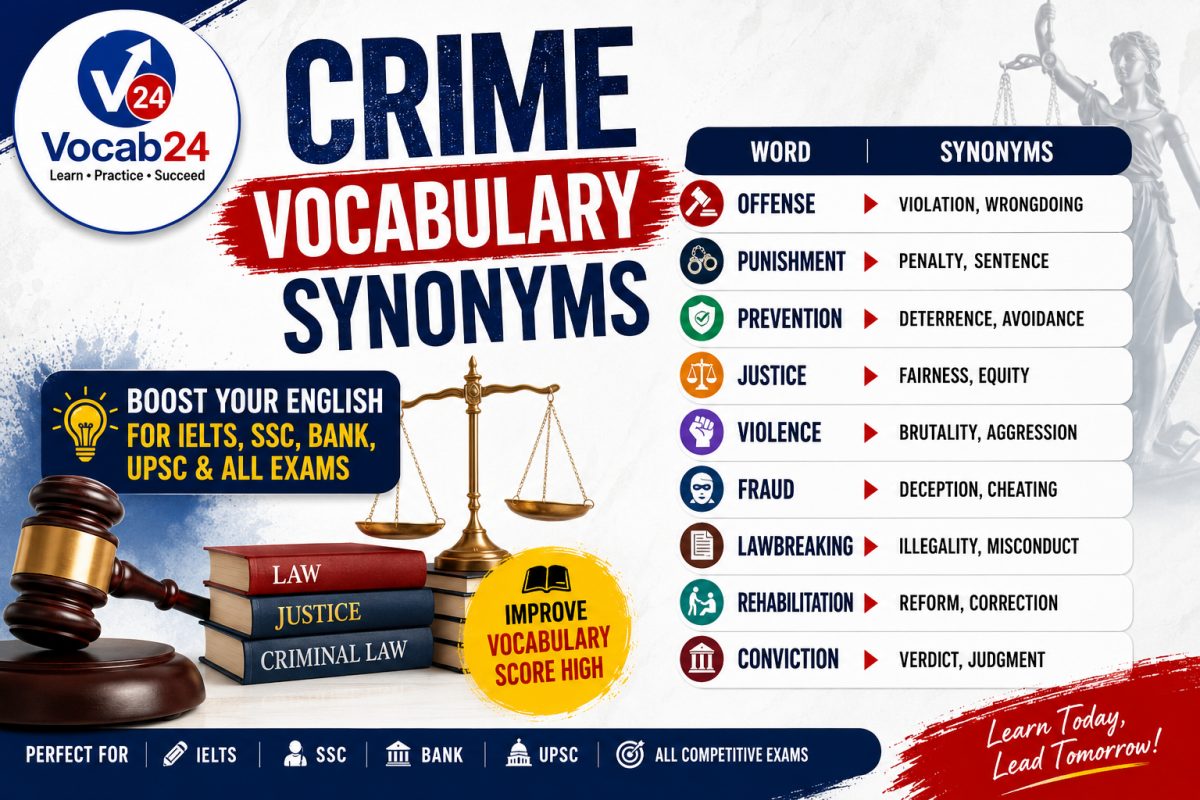
SSC, Bank, Railway: these exams test English on paper, but the vocabulary you learn from daily vocabulary sticks only when you use it. Say the day's words out loud in a room and they move from short-term memory to long-term memory.
IELTS speaking: the test is a conversation with an examiner. Rooms and 1:1 calls are the closest practice you can get. Ask your partner to play the examiner: introduction, a two-minute talk on a topic, then follow-up questions.
Job interviews: practise "Tell me about yourself", your strengths, and why you want the job. Say it to a real person five times and it stops sounding like a script.
Tips if you feel shy
- Start as a listener. There is no rule that you must speak on day one.
- Prepare one sentence before you take the mic. One sentence is a complete turn.
- Speak slowly. Slow and clear sounds more confident than fast and unsure.
- Do not stop to fix every mistake. Finish the thought, then continue. The other person understood you.
- Talk to the same people again. Familiar voices make speaking easier.
Is it free?
Yes. You get free speaking minutes every day in rooms and 1:1 calls (15 minutes a day in your first week). Vocab24 Prime removes the daily limit if you want to talk without limits, at ₹199 a month or ₹999 a year. A 7-day streak also earns you a free Prime day.
Frequently asked questions
Do I need a teacher or a partner to start?
No. Other learners are online in the rooms. Join any live room, or call someone who is marked available for a 1:1 call.
Do I need to install an app?
No. It works in your phone browser. You can also add it to your home screen, or open it inside the Vocab24 app.
What if nobody is in a room?
Start your own room on today's topic. Rooms that are live appear to everyone online, and people join within minutes.
Is my level too low?
If you can understand this article, you can practise. Set your level as beginner so you meet learners like you, and start as a listener.
How much practice is enough?
Ten minutes a day, every day, is better than an hour once a week. Keep the streak.
Start now
Fluency is not a course you finish. It is a few minutes of real conversation, every day, until speaking English feels normal. Open Vocab24 Live, log in with your mobile number, and say one sentence today.