New GDP series, charting the path ahead
A much-awaited new GDP series with the base year as 2022-23 is now available in the public domain. On February 27, 2026, the Ministry of Statistics and Programme Implementation came out with a press note on a new series of GDP estimates and related aggregates for the financial years 2022-23, 2023-24 and 2024-25. This addresses the long-standing demand for a more accurate and realistic picture of the size of the Indian economy by updating the base year. It overcomes the limitations of earlier estimates, which relied on the outdated 2011–12 base year.The overall size of the Indian economy in terms of GDP as per the new series at current prices (in rupees lakh crore) is estimated to be 261.18 (financial year 2022-23), 289.84 (FY 2023-24) and 318.07 (2024-25), respectively (first revised estimate). These aggregates are marginally (between 3% and 4%) lower than what were released earlier based on the previous series. The relative shares of primary, secondary and tertiary sectors in total Gross Value Added (GVA) at current prices during 2024-25 remained at 21.4%, 25.8% and 52.9%, respectively. The manufacturing sector depicts a high growth rate (more than 9%) in real GVA for both the years: 12.7% in 2023-24 and 9.3% in 2024-25. As regards the expenditure side estimates, the share of private financial consumption expenditure in GDP is around 56%, both at current and constant prices during the years 2023-24 and 2024-25.
Major refinements in the new series
Some of the most significant refinements in the methodology adopted in the new series include: first, segregation of activities of multi-activity enterprises belonging to non-financial private corporate sector by apportioning the total GVA of the enterprise across its business activities using the corresponding revenue share information of the company available in the form of MGT 7/7A data (as against entire GVA being allocated to the major activity of the enterprise in 2011-12 series); second, use of a separate blown up factor at the industry x size class level, based on paid-up capital, for scaling up the GVA of the reported active companies to account for the contribution of the active companies which did not file returns; third, a comprehensive coverage of Limited Liability Partnerships (LLPs) using Ministry of Corporate Affairs (MCA) data; and fourth, the use of high-frequency (annual) data on GVA per worker (GVAPW) as per the Annual Survey of Unincorporated Sector Enterprises (ASUSE) in conjunction with the estimates of the number of workers utilising the information available through Periodic Labour Force Survey (PLFS) to estimate the GVA contribution of the Household Sector. In this context, it is worthwhile to mention that in the 2011-12 series, base year (2011-12) GVA estimates at the activity level for the Household Sector were extrapolated using suitable indicators to derive GVA for subsequent years.
The new series also introduces significant improvements in the estimation of real GVA through the expanded application of ‘double deflation’ and ‘volume extrapolation’ methods, bringing the estimates more in line with international guidelines. In addition, the benchmark estimates for 2022–23 private final consumption expenditure (PFCE) are now derived more directly by utilising data from the Household Consumption Expenditure Survey (HCES 2022–23), especially for items that are widely consumed across household groups and tend to exhibit low income elasticity.
The challenges ahead
Among the four institutional sectors, namely, general government, public corporations, private corporations and households for which GVA estimates are separately computed and then aggregated, the database of the first two sectors is quite robust. Coming to the private corporate sector, particularly the private non-financial corporate segment, for which GVA is compiled using the MCA database — a critical issue lies in allocating the national-level total GVA of companies across States to derive the corresponding Gross State Value Added (GSVA), given that the primary data are available only at the enterprise level.
In the 2011-12 series, total manufacturing GVA at the national level was allocated proportionately over States by using their shares in GVA as per the Annual Survey of Industries (ASI). In the new series, apart from ASI data (confining to manufacturing sector), the GST data is also available for this purpose. A major limitation with the ASI data is the inadequacy of the ASI frame. To illustrate, the number of companies in 2011-12, as on December 15, 2014, as per the MCA database classified under ‘Manufacturing’ was 135,802 (source: Changes in Methodology and Data Sources in the New Series of National Accounts, Base Year 2011-12, Central Statistics Office, 2015) as against only 67,649 factories covered under the corporate sector in ASI, 2011-12 (Table 7, Principal Characteristics by Type of Organisation in ASI 2011-2012 (Revised)). Accordingly, the proportionate shares of different States in the total GVA derived from the ASI based on a truncated frame may not reflect the reality and hence affect the State GDP figure. Remedial measures to improve the sampling frame of ASI by utilising the MCA and GST databases can be a step in the right direction. In parallel, a properly designed sample survey of active companies could be worth exploring to derive the percentage shares of different States in total GVA by the companies.
Resolving fluctuations
As regards the Household Sector, its GVA at the activity, i.e., ‘compilation category’ level in the new series is derived as the product of GVAPW as per the ASUSE and number of workers based on the Periodic Labour Force Survey (PLFS). This necessitates that the corresponding estimates from the surveys are fairly reliable. However, available results from the ASUSE indicate a certain volatility in the estimates across the years for some industries and States.
For example, the all-India annual estimates of GVAPW (rural and urban combined) as per the ASUSE (covering both household sector and ‘quasi-corporate’ units) for the years 2021-22, 2022-23 and 2023-24 were found to be ₹163,078; ₹255,447; and ₹201,930, respectively, for the ‘manufacture of rubber and plastic products’ which is a distinct compilation category in GDP calculations.
Similarly, the annual estimates of GVAPW pertaining to the manufacturing industry in respect of Bihar were found to be ₹89,638; ₹117,021; and ₹100,101, respectively, for the three years. To address this problem, the methodology in the new series recommends the use of three years’ moving average, wherever necessary, except for the base year. However, in resolving the issue of such fluctuations in the annual estimates of GVAPW, it may be worth exploring whether a rotating panel design in the ASUSE with a substantial overlap in the samples between any two consecutive years — similar to the procedure adopted in the PLFS — can yield better estimates.
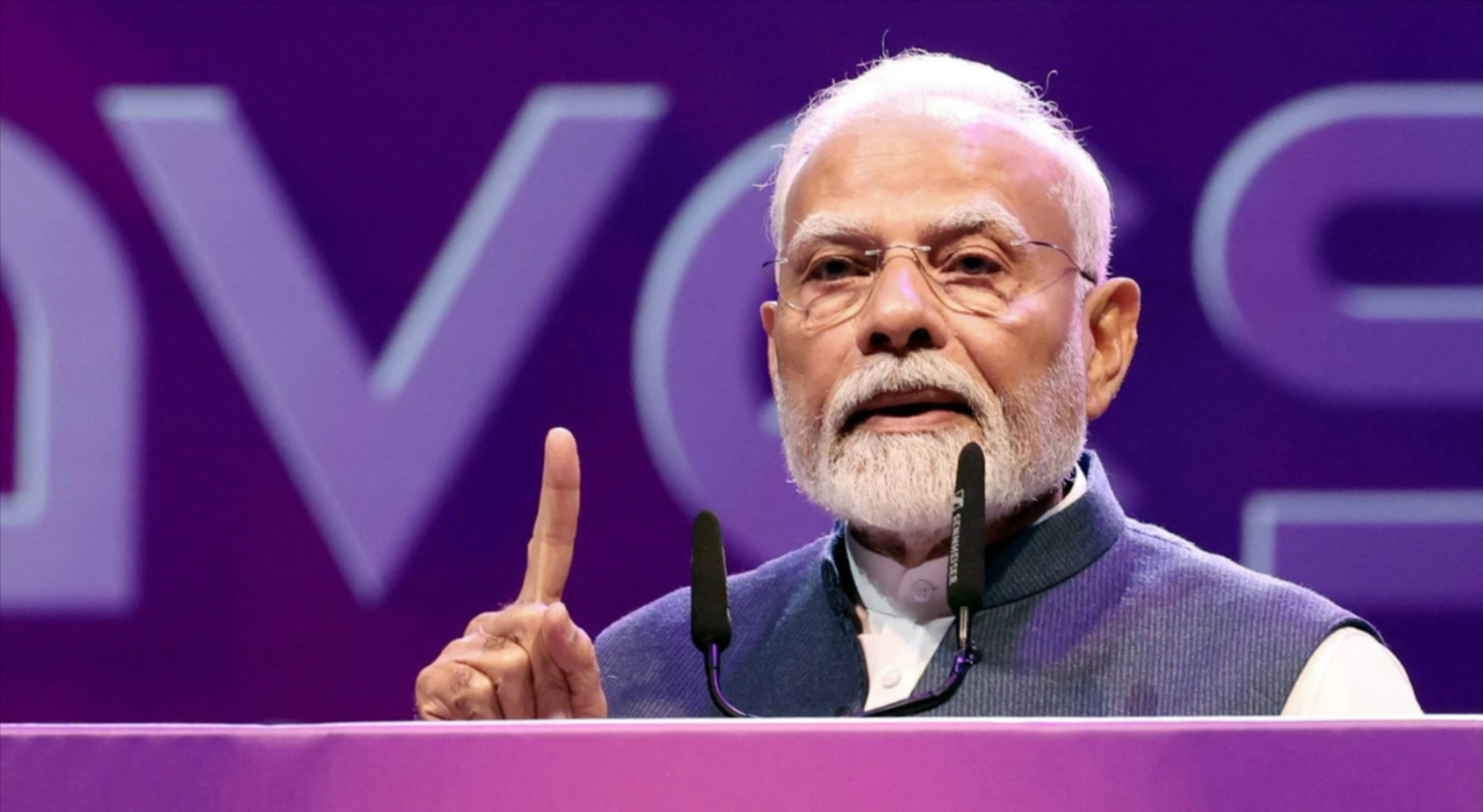
During the WAVES Summit in Mumbai, Prime Minister Narendra Modi underlined India's developing position in the global creative economic sector. During his opening address, India earned the description of an "orange economy" because cultural and creative sectors drive both financial growth and job creation. Rajnikanth and Mukesh Ambani joined

The Mahahtra government achieved a historical milestone by returning to India the historic sword of Raghuji Bhosale I during a Sotheby’s auction in London, which belonged to a notable 18th-century Maratha ruler. The state of Mahahtra achieves its first success in acquiring historical artifacts from international auctions. The bidding


Stay updated with The Hindu Editorial Vocab24 app, your definitive source for breaking news and comprehensive coverage from India and around the globe. Whether it's political developments, business updates, sports highlights, the latest technology trends, or current events, The Hindu brings live, accurate, and reliable news directly to your device.
Don’t fall for sensationalized or fake news shared online. Read and share accurate updates with friends and family through The Hindu Editorial Vocab24 app. Download it today!
News Coverage in The Hindu Editorial Vocab24 App
Breaking News: Receive instant notifications on breaking news stories as they unfold. Stay informed about major events and developments in India and around the world with live blogs, news in shorts videos, and concise articles.
Politics: Get the latest updates on Indian politics, including elections, policy changes, government decisions, and political events that shape the nation.
Business and Economy: Stay ahead in the economic landscape with detailed business news and market analysis. Learn about stock market trends, financial reports, corporate news, and economic developments to make informed investment decisions.
Current Events: Follow stories on social issues, policy changes, global events, and daily current affairs, tailored for UPSC and other competitive exam preparations.
Technology: Keep up with the latest gadgets, innovations, and tech trends. Read expert reviews and analyses in short, concise updates on cutting-edge technology from India and beyond.
Sports: Never miss a moment of your favorite sports. Get live scores, match reports, and expert analysis on cricket, football, tennis, and more.
International News: Stay informed about global events and geopolitical developments, including the Russia-Ukraine war, Israel-Palestine conflict, and other key international stories.
Local News: Stay connected to your community with the latest updates on city events, issues, and local news. Coverage includes hyperlocal updates from cities like Bangalore, Chennai, Delhi, Hyderabad, Mumbai, Kolkata, and more.
Trending Topics: Discover what's trending today with the most talked-about stories and hot topics across India and the world.
Experience journalism that values integrity, accuracy, and reliability. Download The Hindu Editorial Vocab24 app today and stay connected with the world.
Subscribe to our newsletter!