NCERT book ban, a chapter on judicial transparency
Max Boot, former Features Editor of The Wall Street Journal, authored the seminal study on the United States judiciary, ‘Out of Order: Arrogance, Corruption, and Incompetence on the Bench’ (1998). Robert H. Bork, former Solicitor General of the United States, wrote the foreword to it with a striking conclusion — “Our Courts are behaving badly and the public, to the degree it can be brought to understand that, will exert force for reform, a reform that must be structural as well as intellectual and moral.”He observed that the book’s subtitle sums up a system in distress. The book underscores the critical role that the media and citizens must play while dealing with the judicial institution in a democracy.
In February this year, the Supreme Court of India, faulting what it felt as selective reference to corruption within the judiciary, directed “a complete blanket ban”on a Class eight social science textbook published by the National Council of Educational Research and Training (NCERT). The three-judge Bench, presided over by the Chief Justice of India, further alluded to “an underlying agenda to undermine the institutional authority and demean the dignity of the judiciary”.
The Court subsequently ordered that the persons responsible for preparing the passages should be ‘disassociated’ from future projects by governments and public universities. The Court thus instantly punished them, without due process or hearing. The prohibition by the Court is problematic as it sends critical signals about the shape of India’s democracy today.
What appears to have annoyed the Bench were the passages in the book on judicial delay and corruption in judiciary. As per the news report cited by the Court, the textbook has data on the approximate number of pending cases in Indian courts. It refers to the Bangalore Principles of Judicial Conduct, which prescribe values for judicial life. It also discusses the in-house procedures evolved by the Supreme Court and the constitutional mechanism for the removal of errant judges.
An undermining of freedom
By itself, a book ban is the most egregious form of censorship. Such a move directly impacts the right to freedom of speech under Article 19, a solemn promise in the Constitution. This right could be restricted only by a law made by the state on grounds expressly provided under Article 19(2), such as “the sovereignty and integrity of India, the security of the state, friendly relations with foreign states, public order, decency or morality, or in relation to contempt of court, defamation, or incitement to an offence”. There is no law made by the state to justify the ban on the book in question. Judicial orders or judgments do not come under the realm of ‘law’ made by the state, as understood in the context of Article 19 (Naresh Shridhar Mirajkar vs State of Maharashtra, 1966).
For an act to amount to contempt of court, there must be material that scandalises the authority of the court or prejudices or interferes with judicial proceedings or the administration of justice, as defined under Section 2(c) of the Contempt of Courts Act, 1971. Whether mere references to corruption in the judiciary and case backlogs meet this high threshold for criminal contempt was a question that, unfortunately, did not form part of the Court’s deliberations. What was also not examined was whether the statements were too general in nature to suggest any malicious intent to scandalise the Court.
Further, and importantly, going by the scheme of judicial review, courts must put to constitutional scrutiny the law passed by Parliament often violating fundamental rights. When the courts take on the task of book banning, citizens are left without remedy, as constitutional courts are the last resort to safeguard fundamental rights.
Global efforts
In advanced democracies, the credibility of the court is a matter of concern, primarily for the court itself. Transparency International has conducted a number of surveys that show that there is a prevailing notion about judicial corruption. Judiciaries across the world have made efforts to address this problem. In Kenya, the reforms led by Chief Justice Willy Mutunga, between 2011 and 2013, are an illustrative example. During this period, institutions such as judicial ombudspersons, court users’ committees, and performance management committees were established.
By 2013, public trust in Kenya in the judiciary had risen to 61%, compared to 27% in 2009. The reforms continued even thereafter. This happened only by acknowledging the issues and trying to address them, rather than suppressing critical voices.
In India, the courts including the top court have acknowledged the menace of delay and corruption. Judges have repeatedly warned about the ‘bad apples’ within the system. The very existence of the in-house Procedure indicates the possibility that a minuscule number of judges may breach their oath.
In K. Veeraswami vs Union Of India And Others (1991), the Court categorically held that judges of the High Courts and the Supreme Court fall within the definition of “public servant” for the purposes of prosecution under the Prevention of Corruption Act, while also cautioning against the potential for misuse of this provision by the executive. The Court also said: “We consider that the society’s demand for honesty in a judge is exacting and absolute. The standards of judicial behaviour, both on and off the Bench, are normally extremely high. For a Judge to deviate from such standards of honesty and impartiality is to betray the trust reposed on him. No excuse or no legal relativity can condone such betrayal. From the standpoint of justice, the size of the bribe or scope of corruption cannot be the scale for measuring a judge’s dishonour. A single dishonest judge not only dishonours himself and disgraces his office but jeopardises the integrity of the entire judicial system.”
The need for introspection
Therefore, the need to eradicate corruption and delay is also in the best interest of the judiciary. In the interim order directing the book ban, the Court also pointed out that the “book also chooses not to delve into any of the transformative initiatives and measures pioneered by this Court towards overhauling legal aid mechanisms and streamlining the ease of access to justice”. Not addressing all counterarguments might render an opinion potentially incomplete. Yet, that is no reason for banning the view expressed. If the exercise of free speech is required to follow a particular form, the right itself becomes illusory. During judicial deliberations, nobody pointed out that the judiciary, like other organs of the state, must be open to dissent and reform.
The first step in fighting systemic problems such as corruption — whether in the executive or the judiciary — is acknowledging it. After all, it is imperative to curb all kinds of corruption and that civil society is educated about the institutional challenges. A court that continuously reforms itself is the bedrock of any democracy.
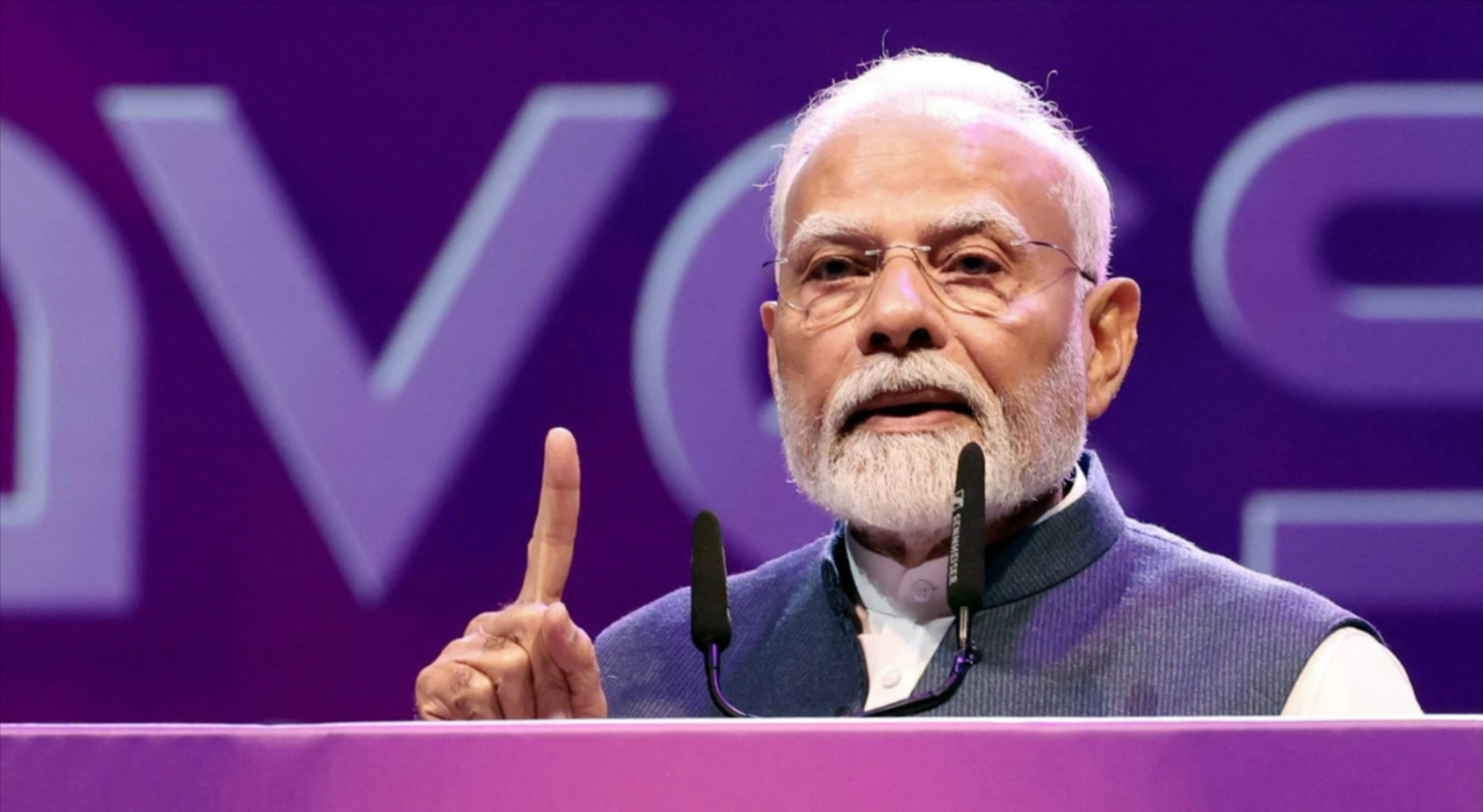
During the WAVES Summit in Mumbai, Prime Minister Narendra Modi underlined India's developing position in the global creative economic sector. During his opening address, India earned the description of an "orange economy" because cultural and creative sectors drive both financial growth and job creation. Rajnikanth and Mukesh Ambani joined

The Mahahtra government achieved a historical milestone by returning to India the historic sword of Raghuji Bhosale I during a Sotheby’s auction in London, which belonged to a notable 18th-century Maratha ruler. The state of Mahahtra achieves its first success in acquiring historical artifacts from international auctions. The bidding


Stay updated with The Hindu Editorial Vocab24 app, your definitive source for breaking news and comprehensive coverage from India and around the globe. Whether it's political developments, business updates, sports highlights, the latest technology trends, or current events, The Hindu brings live, accurate, and reliable news directly to your device.
Don’t fall for sensationalized or fake news shared online. Read and share accurate updates with friends and family through The Hindu Editorial Vocab24 app. Download it today!
News Coverage in The Hindu Editorial Vocab24 App
Breaking News: Receive instant notifications on breaking news stories as they unfold. Stay informed about major events and developments in India and around the world with live blogs, news in shorts videos, and concise articles.
Politics: Get the latest updates on Indian politics, including elections, policy changes, government decisions, and political events that shape the nation.
Business and Economy: Stay ahead in the economic landscape with detailed business news and market analysis. Learn about stock market trends, financial reports, corporate news, and economic developments to make informed investment decisions.
Current Events: Follow stories on social issues, policy changes, global events, and daily current affairs, tailored for UPSC and other competitive exam preparations.
Technology: Keep up with the latest gadgets, innovations, and tech trends. Read expert reviews and analyses in short, concise updates on cutting-edge technology from India and beyond.
Sports: Never miss a moment of your favorite sports. Get live scores, match reports, and expert analysis on cricket, football, tennis, and more.
International News: Stay informed about global events and geopolitical developments, including the Russia-Ukraine war, Israel-Palestine conflict, and other key international stories.
Local News: Stay connected to your community with the latest updates on city events, issues, and local news. Coverage includes hyperlocal updates from cities like Bangalore, Chennai, Delhi, Hyderabad, Mumbai, Kolkata, and more.
Trending Topics: Discover what's trending today with the most talked-about stories and hot topics across India and the world.
Experience journalism that values integrity, accuracy, and reliability. Download The Hindu Editorial Vocab24 app today and stay connected with the world.
Subscribe to our newsletter!