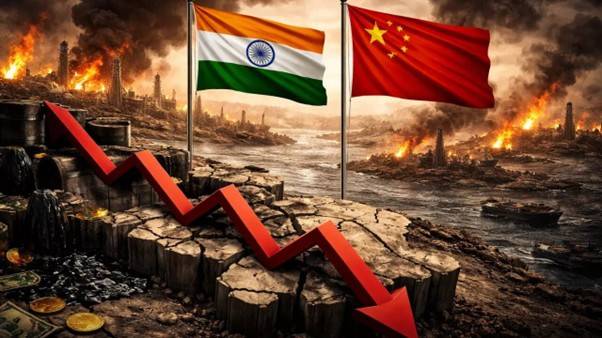
India must draw a red line on U.S. unilateral sanctions
The dust — nuclear and otherwise — has yet to settle on how the United States-Israel war against Iran will ultimately end, but its impact on India’s growth projections is evident. Already reeling from U.S. tariffs, the Indian economy has seen damage pile up due to the U.S.-Israel initiation of the war, Iran’s targeting of Gulf countries, and now the ‘double blockade’ of the Strait of Hormuz by the Islamic Revolutionary Guard Corps (IRGC) and U.S. forces — manifested in rising energy bills, higher shipping and insurance costs, supply chain disruptions, a slump in exports (down 7% in March), and mounting inflation. The rupee’s fall has resulted in India slipping from being projected to fourth spot, to sixth in terms of the largest economies rankings, according to the International Monetary Fund.Break sanction alignment
India is by no means the only country thus affected, but as the world’s most populous nation, it is bound to feel the effects more acutely. Given the little attention that the U.S. has paid to India’s economic concerns, it is surprising that the Narendra Modi government continues to pay heed to U.S. unilateral sanctions amid the war. This month, as temporary waivers on many of those sanctions come up for renewal, it is time for New Delhi to unequivocally denounce them and declare that it will no longer abide by them.
A cursory list of U.S. sanctions with which India has partially or fully complied is both illustrative and eye-opening. Since May 2019, India has not purchased any Iranian or Venezuelan oil following U.S. President Donald Trump’s demand for ‘zeroing out. India faced similar secondary sanctions from the U.S., during 2012-14, when the Barack Obama administration used them as leverage in Joint Comprehensive Plan of Action (JCPOA) negotiations (the Iran nuclear deal).
While India reduced its imports of Iranian oil from about 18.5 million tonnes in 2010-2011 to 11 million tonnes in 2013-2014, it never agreed to halt them altogether. In 2015, following the signing of the JCPOA, India stepped up its oil imports again and also signed a strategic connectivity trilateral agreement with Iran and Afghanistan to develop the Chabahar port, along with road and rail links connecting it to Afghanistan and Central Asia.
Early in his second term in 2025, Mr. Trump pushed India to end all its imports of Russian oil, adding a 25% penalty on top of existing 25% tariffs to enforce his demand. For three months — from November 2025 to February 2026 — India complied, halving its intake of about two million barrels per day (bpd) to one million bpd. As the U.S. has issued temporary sanctions waivers to deal with oil price hikes during the war with Iran, India has increased its intake of both Russian and Iranian oil, but will have to decide what to do once the waivers end.
Since the U.S. kidnapping of Venezuelan President Nicolás Maduro in January 2026 and the subsequent easing of sanctions, India’s intake of Venezuelan oil has also increased. Meanwhile, the U.S.’s waiver extension on India’s use of Chabahar port is set to expire on April 26. Mr. Trump has also said that he intends to impose sanctions on any country conducting trade with Iran or holding Iranian funds, and will sanction all BRICS members if they seek to establish a non-dollar payment mechanism among themselves
The result of all these on-again, off-again sanctions, waivers, extensions and exemptions is to defeat India’s best efforts to diversify and broad-base its energy, food and fertilizer sourcing. India’s decision not to protest the US’s decision to go to war with Iran in the first place is presumably out of concern that the U.S. may come down even more heavily on the Indian economy.
“The sui generis ‘whack-a-mole’ nature of these measures only adds to their capriciousness,” former Reserve Bank of India Governor Urjit Patel concludes in his book The Great Sanctions Hack. According to his research, the U.S. stands out as the world’s main sanctioning power, having imposed 365 sanctions in the present century, with the European Union a distant second at about 133. Only 12 counter-sanctions by China, Russia and Iran are active. According to the Office of Foreign Assets Control (OFAC) of the U.S. Department of the Treasury, the U.S. today maintains sanctions on at least 23 countries and has more than a dozen sanction regimes on specific issues (cyber-terror, non-proliferation, and foreign interference). The United Nations Security Council, in comparison, has only about 15 active sanction regimes in all.
Compliance increases coercion
It is therefore necessary to analyse India’s experience with U.S. sanctions over the past decade and draw conclusions about the pros and cons of yielding to them. There is little evidence that yielding to unilateral U.S. sanctions curbs its appetite, as India’s experience since 2019 shows; it instead leads to additional demands for compliance.
Conversely, when India ignored sanctions such as Countering America’s Adversaries Through Sanctions Act (CAATSA) and purchased Russian S-400 air defence systems in 2018, it faced no U.S. penalties and benefitted from the decision, as during Operation Sindoor (May 2025). The “opportunity costs” of complying must also be calculated — had India continued to buy discounted sweeter Iranian crude or Venezuelan oil from 2019-25, as it did with Russian oil (2022-25), the government could have saved billions, and built strategic energy reserves (as China has) that would have been useful today.
Had India not complied with sanctions against the Chabahar port, built rail and road infrastructure in Iran, and not curtailed its plans for the International North South Transport Corridor (INSTC) through Iran’s Bandar Abbas, it may have had connectivity in place that could have reduced its dependence on imports coming through the Strait of Hormuz today. Moreover, India’s compliance with U.S. international sanctions has further weakened the rules-based international order and the UN’s multilateral mandate.
Going forward, if the Indian government decides to turn course and announce a national resolve against unilateral sanctions, it will not only spur its own private sector to seek braver options but also inspire countries in the neighbourhood and the Global South to follow suit, pushing back on other coercive measures employed by big powers such as China as well.
The government has a number of avenues to pursue if it decides to do so — from building payment mechanisms such as the rupee-rial trade system with Iran, to developing national payment systems including intra-BRICS settlement arrangements, to using ‘air-gapped’ banking and financial institutions insulated from western pressure, as well as exponentially expanding renewable and alternative energy sources.
Unfortunately, by withdrawing its bid to host the United Nations Climate Conference of the Parties (COP33) in 2028, New Delhi may have lost an opportunity to lead discussions on such options in the wake of the war, but it must take advantage of other such forums to do so.
History as policy guide
Lessons from history are worth revisiting. In 1966, U.S. President Lyndon Johnson amended the United States’ ‘Food for Peace’ (PL-480) law — formally the Agricultural Trade Development and Assistance Act of 1954 — under which India, then suffering from famine, received millions of tonnes of wheat. Johnson’s amendments, called the “short-tether” policy, limited the U.S.’s grain shipments to monthly or bi-monthly approvals, leading to what was called a “ship to mouth” existence for India.
That the amendments followed closely on the heels of then Prime Minister Indira Gandhi’s visit to Moscow — where she had called on Washington to stop bombing Vietnam to make space for peace efforts — was no coincidence, although the U.S. insisted that the changes were intended to spur agricultural reforms in India.
The move, and the subsequent international pressure for a major rupee devaluation, pushed the then neophyte Prime Minister into a corner. In a national address, Mrs Gandhi vowed that India should never again find itself in such a humiliating position, and intensified efforts toward the Green Revolution and agricultural self-sufficiency. A “New Green revolution” and energy independence can only follow if New Delhi draws a red line on U.S. sanctions in the next few weeks. These sanctions do not just harm India’s economy. They also seek to bend India’s foreign policy to another’s will, and are a blow to its proudly-held tenets of strategic autonomy.
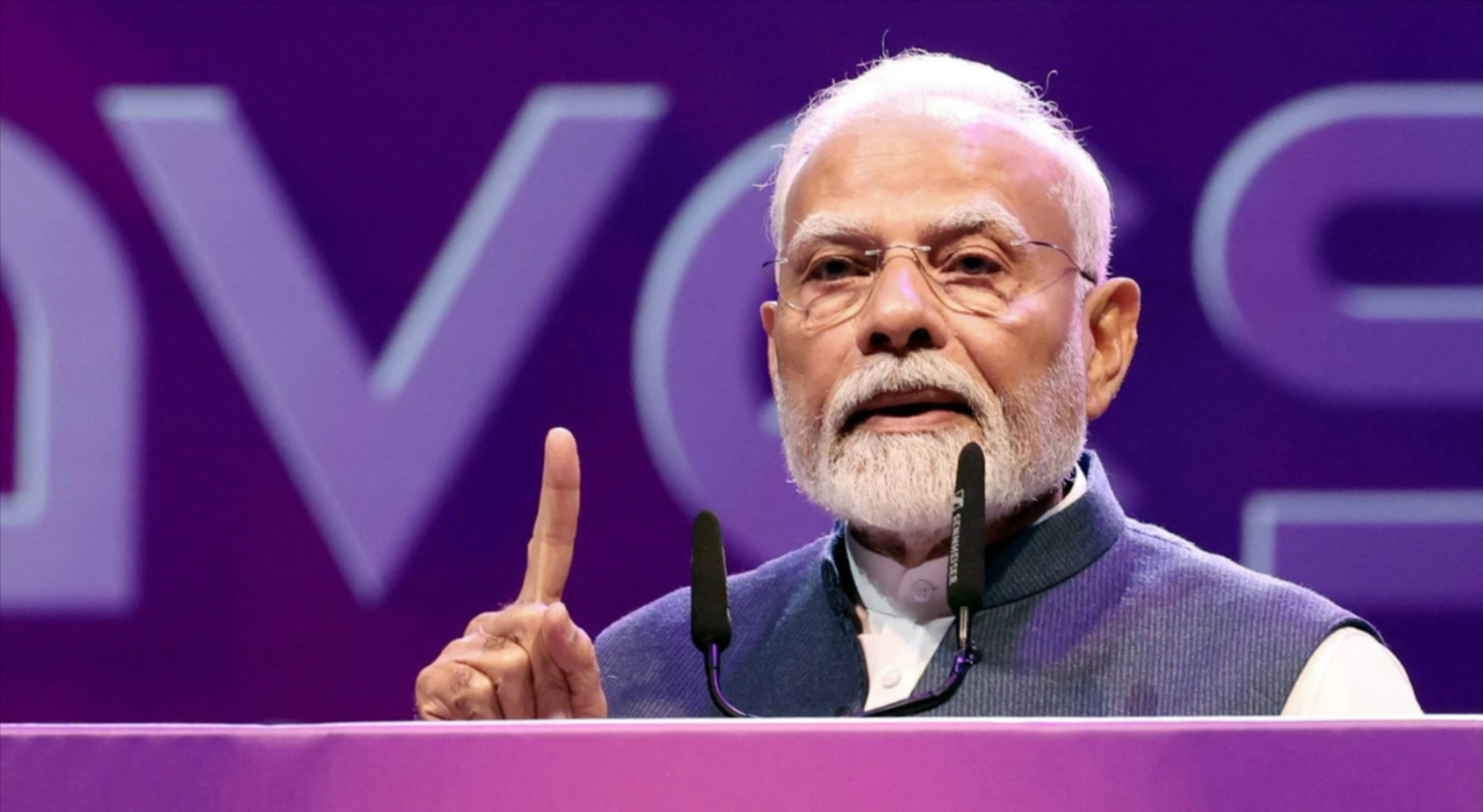
During the WAVES Summit in Mumbai, Prime Minister Narendra Modi underlined India's developing position in the global creative economic sector. During his opening address, India earned the description of an "orange economy" because cultural and creative sectors drive both financial growth and job creation. Rajnikanth and Mukesh Ambani joined
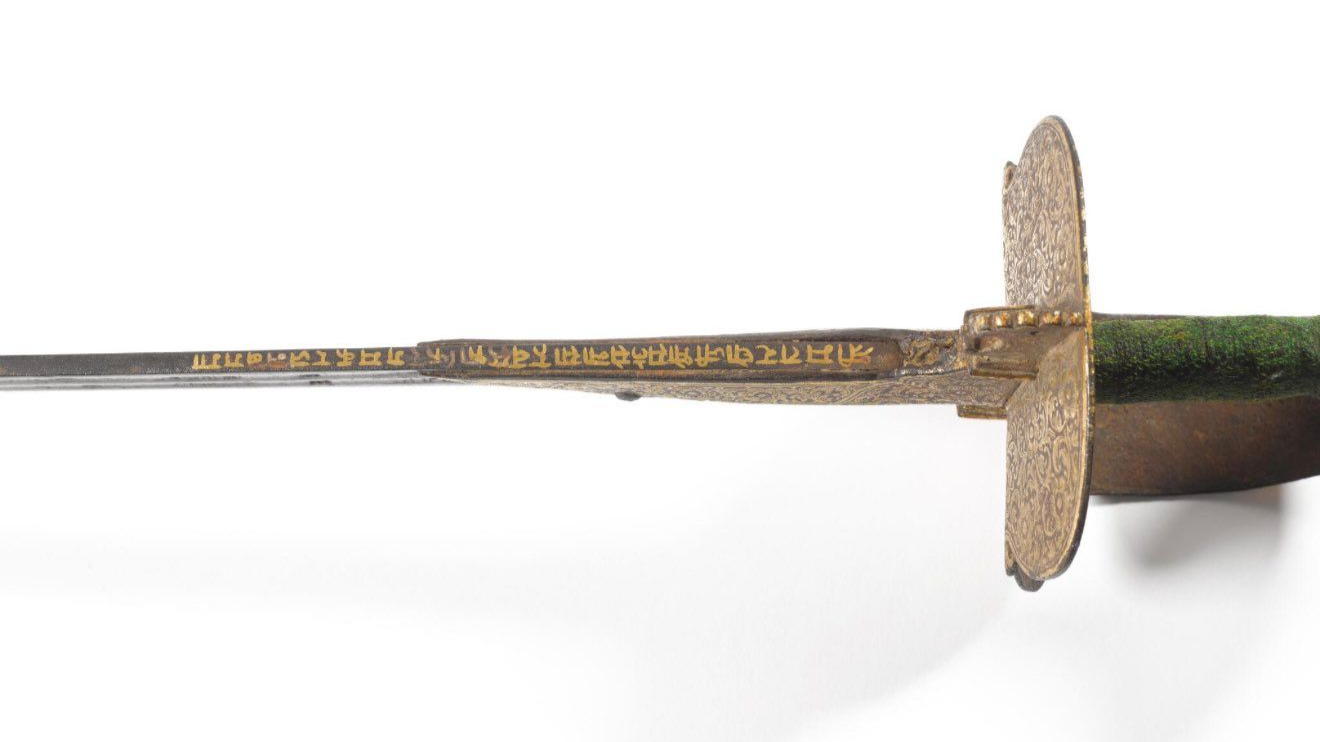
The Mahahtra government achieved a historical milestone by returning to India the historic sword of Raghuji Bhosale I during a Sotheby’s auction in London, which belonged to a notable 18th-century Maratha ruler. The state of Mahahtra achieves its first success in acquiring historical artifacts from international auctions. The bidding


Stay updated with The Hindu Editorial Vocab24 app, your definitive source for breaking news and comprehensive coverage from India and around the globe. Whether it's political developments, business updates, sports highlights, the latest technology trends, or current events, The Hindu brings live, accurate, and reliable news directly to your device.
Don’t fall for sensationalized or fake news shared online. Read and share accurate updates with friends and family through The Hindu Editorial Vocab24 app. Download it today!
News Coverage in The Hindu Editorial Vocab24 App
Breaking News: Receive instant notifications on breaking news stories as they unfold. Stay informed about major events and developments in India and around the world with live blogs, news in shorts videos, and concise articles.
Politics: Get the latest updates on Indian politics, including elections, policy changes, government decisions, and political events that shape the nation.
Business and Economy: Stay ahead in the economic landscape with detailed business news and market analysis. Learn about stock market trends, financial reports, corporate news, and economic developments to make informed investment decisions.
Current Events: Follow stories on social issues, policy changes, global events, and daily current affairs, tailored for UPSC and other competitive exam preparations.
Technology: Keep up with the latest gadgets, innovations, and tech trends. Read expert reviews and analyses in short, concise updates on cutting-edge technology from India and beyond.
Sports: Never miss a moment of your favorite sports. Get live scores, match reports, and expert analysis on cricket, football, tennis, and more.
International News: Stay informed about global events and geopolitical developments, including the Russia-Ukraine war, Israel-Palestine conflict, and other key international stories.
Local News: Stay connected to your community with the latest updates on city events, issues, and local news. Coverage includes hyperlocal updates from cities like Bangalore, Chennai, Delhi, Hyderabad, Mumbai, Kolkata, and more.
Trending Topics: Discover what's trending today with the most talked-about stories and hot topics across India and the world.
Experience journalism that values integrity, accuracy, and reliability. Download The Hindu Editorial Vocab24 app today and stay connected with the world.
Subscribe to our newsletter!