

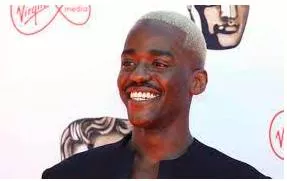
Why ncuti gatwa is an inspired choice for doctor who fans
The casting of a new Doctor prompts speculation equalled only by that surrounding the appointment of a new England manager, or the next James Bond. This is in part because the choice is seen to say something about the country. Doctor Who is, in cliche, a “national institution”, a term first applied to it by the Radio Times as long ago as 1972. And the smart casting of Ncuti Gatwa to fill these boots is a sign that the showrunner, Russell T Davies, is determined it should remain an institution well into the 21st century.For while there are undeniably ways in which Gatwa’s casting is innovative, he is equally clearly a fine actor with a strong theatrical pedigree, someone known for showy supporting television roles, but not yet as an above-the-title star. Which is a sentence that also describes most of his predecessors.
A new Doctor has been headline news for decades. Peter Davison, who played the role from 1981 to 1984, has often commented that his friends thought he had died when his picture flashed up on the BBC Nine O’Clock News in 1980. But the years since the series’ 2005 revival have seen announcements on an even grander scale. Matt Smith, Peter Capaldi and Jodie Whittaker’s castings were television events: they respectively had a special mini documentary, a live “reveal” show, and a trailer transmitted straight after the 2017 Wimbledon men’s final.
This time it was different again. Bad Wolf, the production company responsible for the next series of Doctor Who, tweeted a picture of a post made by Gatwa to his almost 3 million Instagram followers. It consisted of two hearts and a blue box. This drove hours of online speculation on both sites before Bad Wolf confirmed that Gatwa would indeed be succeeding Whittaker.
On the red carpet at the TV Baftas on Sunday, Davies, Gatwa by his side, stressed that his new lead was cast after a “blazing” audition, given when the production team had all but decided to offer the role to another actor entirely. To audition for a series lead is pretty normal for TV, but unusual for Doctor Who. Most Doctors, including Davies’ own previous two, have been people the then showrunner had already worked with. That Davies is doing something different indicates his approach to the show to which he’s returning: to innovate, to renew, to make a splash.
Of course, in these depressing times, the negative reaction from some online, rightwing culture warriors came like clockwork. Those who attempted to criticise the decision to cast Gatwa without reference to his three Bafta nominations, and Bafta Scotland win, for Netflix’s Sex Education, merely demonstrated their own estrangement from the contemporary culture on which they were affecting expertise. The truth is that there is something joyfully affirmative about a role sometimes seen as an exemplar of Britishness being played by an actor who settled in Scotland as a child, having fled Rwanda, a country very much in the news due to recent government policy. (Davies took time to criticise the government’s attitude towards both Channel 4 and the BBC.)
None of this is out of keeping with the history of Doctor Who. While the programme’s longevity makes it seem part of the establishment, its lead character topples governments and brings down empires as part of their crusade against monsters. One of 1970s’ Doctor Who’s most admired and frequent writers, Malcolm Hulke, was an activist with an MI5 file. In the 1980s, script editor Andrew Cartmel got the job after suggesting in his interview that Doctor Who was the ideal cultural vehicle to bring down Margaret Thatcher.
Gatwa is the first black actor to play the role as a series lead. The black British actor Jo Martin has played the part, but not as the lead. Further back, Tom Baker’s father was a Jewish seaman, Davison’s a Guyanese engineer turned grocer. Interestingly, the role has been disproportionately played by Catholics, to the extent that Baker and Sylvester McCoy (1987-89) both trained for life within the church before becoming actors. There are peculiar patterns in the casting, such as how several actors who have played Winston Smith in Nineteen Eighty-Four have also played the Doctor. Maybe it’s something to do with the programme’s innate anti-authoritarianism. Perhaps the role’s mystical nature is why, as well as the aspiring clergymen mentioned above, it has been filled by two actors – David Tennant and Gatwa – whose fathers were ministers.
There is certainly something in the series that appeals to those who are or have been marginalised, despite its centrality to British television culture. Davies made Vince, one of the leaders of his groundbreaking show Queer as Folk, a Doctor Who fan in acknowledgement of the overwhelmingly gay male nature of its then active fandom. But Doctor Who’s slightly penumbral relationship to the country it’s often considered to represent makes perfect sense. It was created by the Canadian Sydney Newman, and its first episode was written by an Australian, Anthony Coburn, produced by Verity Lambert, a Jewish woman, and directed by Waris Hussein, a gay Muslim born in Lucknow when India was still part of the British empire.
Gatwa’s casting is revolutionary while also being precedented. But then that’s the paradoxical nature of Doctor Who. As the late Radio 1 DJ John Peel said of his favourite band, the Fall, it’s somehow always different and yet always the same.







Stay updated with The Hindu Editorial Vocab24 app, your definitive source for breaking news and comprehensive coverage from India and around the globe. Whether it's political developments, business updates, sports highlights, the latest technology trends, or current events, The Hindu brings live, accurate, and reliable news directly to your device.
Don’t fall for sensationalized or fake news shared online. Read and share accurate updates with friends and family through The Hindu Editorial Vocab24 app. Download it today!
News Coverage in The Hindu Editorial Vocab24 App
Breaking News: Receive instant notifications on breaking news stories as they unfold. Stay informed about major events and developments in India and around the world with live blogs, news in shorts videos, and concise articles.
Politics: Get the latest updates on Indian politics, including elections, policy changes, government decisions, and political events that shape the nation.
Business and Economy: Stay ahead in the economic landscape with detailed business news and market analysis. Learn about stock market trends, financial reports, corporate news, and economic developments to make informed investment decisions.
Current Events: Follow stories on social issues, policy changes, global events, and daily current affairs, tailored for UPSC and other competitive exam preparations.
Technology: Keep up with the latest gadgets, innovations, and tech trends. Read expert reviews and analyses in short, concise updates on cutting-edge technology from India and beyond.
Sports: Never miss a moment of your favorite sports. Get live scores, match reports, and expert analysis on cricket, football, tennis, and more.
International News: Stay informed about global events and geopolitical developments, including the Russia-Ukraine war, Israel-Palestine conflict, and other key international stories.
Local News: Stay connected to your community with the latest updates on city events, issues, and local news. Coverage includes hyperlocal updates from cities like Bangalore, Chennai, Delhi, Hyderabad, Mumbai, Kolkata, and more.
Trending Topics: Discover what's trending today with the most talked-about stories and hot topics across India and the world.
Experience journalism that values integrity, accuracy, and reliability. Download The Hindu Editorial Vocab24 app today and stay connected with the world.
Subscribe to our newsletter!







