

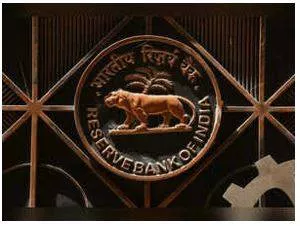
Why is rbi stimulating a healthy economy
The Reserve Bank of India's recent jumbo rate cuts took economists by surprise, as many indicators point to an economy chugging along nicely. Why then did the RBI need to frontload monetary stimulus?The RBI on June 6 cut the repo rate by 50 basis points and the cash reserve ratio by 100 bps, while also changing the monetary policy stance from ‘accommodative’ to ‘neutral,’ implying that future rate moves could be up or down.
The RBI's actions clearly confused investors. After the outsized rate cut, 10-year Indian bond yields actually jumped by around 10 bps, before receding slightly over the following weeks.
The confusion surrounding the large rate cuts is understandable, as several high-frequency indicators signal that India has a stable and improving economic trajectory.
For one, collection of goods and services tax, a proxy for corporate revenue, has been steadily inching upwards since bottoming out in late 2024. Similarly, monthly E-Way bills, an indicator of goods movement and tax compliance, have been rising by more than 13% year-over-year in the past 12 months.
The inflation trajectory appears benign as well. Food inflation, the largest component of Indian CPI, looks set to decline given forecasts for a normal monsoon season and thus a surge in food production. Low food prices would likely support urban consumption, further alleviating growth concerns.
What then drove the RBI to cut the repo rate massively and inject an additional 2.5 trillion rupees of liquidity into the banking system through the CRR cut?
RBI Governor Sanjay Malhotra partly answered the question in his post-meeting media interactions. He noted that growth was lower than the bank's ‘aspirations’, amid a challenging backdrop of global uncertainty, which compelled the Monetary Policy Committee to ease policy in order to stimulate consumption and investment growth.
HIDDEN STRESSES
‘Global uncertainty’ is only part of the story, however. What was left unsaid is that there are multiple signs that Indian consumption could be facing headwinds.
First, passenger car sales, a reliable indicator of urban consumption sentiment, remain subdued, with less than 2% year-on-year sales growth in the fiscal year ended March 2025, according to the Society of Indian Automobile Manufacturers, though growth in motorcycle and scooter sales remains strong at 9.1% y/y, implying stronger buoyancy in rural and semi-urban consumption.
More ominously, households seem to be financing their consumption by taking on more debt. Indian household debt as a proportion of GDP may not be alarming by emerging markets standards, but it has increased over the past two years from 36% to 42%, according to the Reserve Bank of India. Credit card loans have increased by 50% over the past three years. And the household savings rate has declined as a result, from 24% a decade ago to about 18% now.
DRY POWDER?
By lowering borrowing costs and thus reducing cash outlays for mortgages and personal loans, the RBI could relieve some of this household financial stress. And, in theory, the resultant increase in disposable incomes should boost both consumption and investment moving forward.
But the RBI's large cuts may not be enough to achieve this outcome. Boosting consumption typically requires raising confidence related to job security and income visibility, not just making money cheaper.
To protect against the risk of an ineffective monetary policy move, central banks usually try to keep aside some ‘dry powder’, or room for more stimulus. In a crisis, central banks may pull out the monetary ‘bazooka’, but in normal times, central banks typically err on the side of caution.
The RBI appears to have some ammunition left, but far from what would be ideal. The lowest the repo rate has been over the past decade was during the pandemic when it fell to 4%. That's 1.5 percentage points below the present level. When excluding the pandemic period, the lower bound on the repo rate has usually been only about 50 bps below where it is now. Meanwhile, the cash reserve ratio is already at a record low.
This limited monetary space could be an issue, as the RBI may already be considering more stimulus. Governor Malhotra recently suggested that more policy space could be opened up if inflation falls below the bank's projections.
Fortunately for the RBI, India's consumer inflation seems to be headed that way. Since February, CPI inflation has been resolutely below the RBI target of 4%. With the most recent print of 2.82% in May, inflation could be on its way to a decade low. This is partly because food prices have been moderating and India is increasingly importing more goods from China, which is struggling with deflation.
While it looked last week like the Israel-Iran war might complicate this picture by causing an oil price spike, that now seems less likely following the announcement of a ceasefire. Of course, the ongoing trade war could also put upward pressure on global prices while also weighing on growth.
The RBI's large rate cuts were likely intended to keep India's economy going strong, but making such big moves now means the bank could potentially find it harder to stimulate when the economy really needs it.
(The views expressed here are those of Manishi Raychaudhuri, the founder and CEO of Emmer Capital Partners Ltd and the former head of Asia-Pacific equity research at BNP Paribas Securities.)




Prices of onions pulses cotton hit 3 year low
Sep 29, 2025
Domestic coke makers flag import misuse
Sep 22, 2025





Stay updated with The Hindu Editorial Vocab24 app, your definitive source for breaking news and comprehensive coverage from India and around the globe. Whether it's political developments, business updates, sports highlights, the latest technology trends, or current events, The Hindu brings live, accurate, and reliable news directly to your device.
Don’t fall for sensationalized or fake news shared online. Read and share accurate updates with friends and family through The Hindu Editorial Vocab24 app. Download it today!
News Coverage in The Hindu Editorial Vocab24 App
Breaking News: Receive instant notifications on breaking news stories as they unfold. Stay informed about major events and developments in India and around the world with live blogs, news in shorts videos, and concise articles.
Politics: Get the latest updates on Indian politics, including elections, policy changes, government decisions, and political events that shape the nation.
Business and Economy: Stay ahead in the economic landscape with detailed business news and market analysis. Learn about stock market trends, financial reports, corporate news, and economic developments to make informed investment decisions.
Current Events: Follow stories on social issues, policy changes, global events, and daily current affairs, tailored for UPSC and other competitive exam preparations.
Technology: Keep up with the latest gadgets, innovations, and tech trends. Read expert reviews and analyses in short, concise updates on cutting-edge technology from India and beyond.
Sports: Never miss a moment of your favorite sports. Get live scores, match reports, and expert analysis on cricket, football, tennis, and more.
International News: Stay informed about global events and geopolitical developments, including the Russia-Ukraine war, Israel-Palestine conflict, and other key international stories.
Local News: Stay connected to your community with the latest updates on city events, issues, and local news. Coverage includes hyperlocal updates from cities like Bangalore, Chennai, Delhi, Hyderabad, Mumbai, Kolkata, and more.
Trending Topics: Discover what's trending today with the most talked-about stories and hot topics across India and the world.
Experience journalism that values integrity, accuracy, and reliability. Download The Hindu Editorial Vocab24 app today and stay connected with the world.
Subscribe to our newsletter!







