

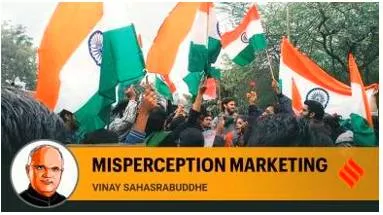
Why india is misunderstood abroad
Two recent decisions of the government, with implications for how India is perceived, are remarkable. First, the swiftness with which the government took exception to the unnecessary remarks by the Singapore prime minister deserves commendation. True, Singapore has emerged as a symbol of development and good governance. Other countries, too, have earned reputations as well-governed nations on the path of prosperity in a relatively short span of time. Factors like the effective functioning of systems, discipline and public order in such countries rightly impress all visitors. This also helps these countries to earn a fair amount of goodwill.However, governments that may be successful on the governance front could also have doubtful democratic credentials. Besides, there are many countries that officially call themselves republics but, in reality, what they have is a sham democracy. Hence, more often than not, needless commentary on the democratic functioning of one country by another amounts to interference. Even if one chooses to not be sceptical about how genuine the democratic functioning in certain well-governed countries is, the fact remains that one can’t compare a tiny country with a big and heavily populated one. Geographical expanse, linguistic diversity and innumerable legacy issues also contribute to shaping the personality of a democracy. All this makes the summoning of the Singapore envoy by the Ministry of External Affairs and getting him to realise how needless the comments were, a timely and welcome move. India is too big an international player to ignore such irresponsible comments.
The second decision is about preventing the National Overseas Scholarship recipients from seeking a scholarship to study subjects that they can better learn here. As it is, preventing brain drain has been, for decades, one of our national concerns. In addition, it is a mockery of our own educational institutions to allow Indian scholarship holders to go abroad and learn about Indian society and culture. It is like students from Saudi Arabia going to the US to study Islam. One can understand Indian scholarship holders going abroad for higher learning in subjects like technology or specialised branches of science, as we may not have such institutions here. But to send our own scholars abroad to study the society and culture of India amounts to a self-invited downgrading of our own institutions. This was allowed in total disregard of its negative impact on not just our institutions but also on our collective sense of self-respect and confidence. Through a logical step, the government has now prevented this.
This also calls for an analysis of the challenge of tackling the misperceptions that India has been facing since Independence. Why do people abroad misperceive India? Why does there remain some lack of understanding about India globally? While there may be a variety of reasons for this, three things are fundamental to the issue. First is the penchant for self-flagellation that has long gripped our intelligentsia. Second is our uncalled-for shyness in asserting our national identity, causing an immeasurable shortfall in our sense of belonging, and third is our collective failure in making global opinion-makers and journalists understand India in the proper perspective.
Self-flagellation has become a habit with a large section of our intellectuals, media persons, creative writers and also filmmakers. True, like many other countries, India too has been facing issues like caste-based social discrimination, gender inequality and injustice, as also abject poverty and economic disparities. Also, there is nothing wrong with depicting a realistic picture through not just seminar papers and newspaper articles but through films as well. However, factual portrayal also demands talking about the positive transformations and ongoing efforts to that end. Those who have written column after column on Dalit issues can’t see how the Dalit Indian Chamber of Commerce and Industry ( DICCI) has brought about a remarkable change in the lives of hundreds of Dalit youths by promoting entrepreneurship. Even to tackle the challenge of freeing manual scavengers from their hazardous tasks, DICCI has done some remarkable work that has sadly gone unnoticed by the Indian and foreign media. No matter how huge a transformation is taking place, the “misperception marketing” by some continues.
The origin of this habit of indulging in self-flagellation lies in our hesitation to assert our national identity, leading to a total lack of a sense of pride. Worse is the perverse mindset that makes not taking pride synonymous with being liberal, open-minded and progressive. This is a crass “woke” approach, to say the least.
One aspect of this issue is the clever trap laid by intellectuals, think tanks, universities and journals abroad, many of whom seem to issue a certificate of acceptance only to those who take pleasure in assailing their own country, especially when abroad. Those who get trapped, knowingly or otherwise, return wearing the badge of progressivism on their sleeves. It is not a mere coincidence that only those films that deal with the negative aspects of Indian society are generally considered for awards in global film festivals.
It is true that patriotism is not jingoism. But then, self-flagellation too can’t be equated with being liberal and progressive.












Stay updated with The Hindu Editorial Vocab24 app, your definitive source for breaking news and comprehensive coverage from India and around the globe. Whether it's political developments, business updates, sports highlights, the latest technology trends, or current events, The Hindu brings live, accurate, and reliable news directly to your device.
Don’t fall for sensationalized or fake news shared online. Read and share accurate updates with friends and family through The Hindu Editorial Vocab24 app. Download it today!
News Coverage in The Hindu Editorial Vocab24 App
Breaking News: Receive instant notifications on breaking news stories as they unfold. Stay informed about major events and developments in India and around the world with live blogs, news in shorts videos, and concise articles.
Politics: Get the latest updates on Indian politics, including elections, policy changes, government decisions, and political events that shape the nation.
Business and Economy: Stay ahead in the economic landscape with detailed business news and market analysis. Learn about stock market trends, financial reports, corporate news, and economic developments to make informed investment decisions.
Current Events: Follow stories on social issues, policy changes, global events, and daily current affairs, tailored for UPSC and other competitive exam preparations.
Technology: Keep up with the latest gadgets, innovations, and tech trends. Read expert reviews and analyses in short, concise updates on cutting-edge technology from India and beyond.
Sports: Never miss a moment of your favorite sports. Get live scores, match reports, and expert analysis on cricket, football, tennis, and more.
International News: Stay informed about global events and geopolitical developments, including the Russia-Ukraine war, Israel-Palestine conflict, and other key international stories.
Local News: Stay connected to your community with the latest updates on city events, issues, and local news. Coverage includes hyperlocal updates from cities like Bangalore, Chennai, Delhi, Hyderabad, Mumbai, Kolkata, and more.
Trending Topics: Discover what's trending today with the most talked-about stories and hot topics across India and the world.
Experience journalism that values integrity, accuracy, and reliability. Download The Hindu Editorial Vocab24 app today and stay connected with the world.
Subscribe to our newsletter!







