

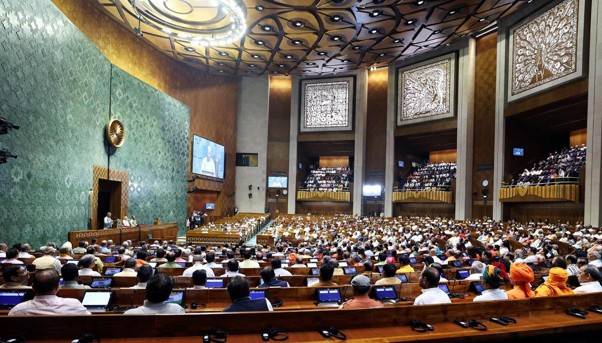
Why 543 should remain 543
Days after both Houses of Parliament were adjourned sine die on August 13, 2026, the monsoon session has yet to be formally prorogued. The delay has prompted speculation that Parliament could be reconvened for another attempt at the constitutional amendment linked to delimitation and women’s reservation. Whether or not that happens, it gives urgency to a question Parliament must confront: must delimitation necessarily mean an enlargement of the Lok Sabha?Numbers alone cannot decide
At first glance, the issue looks like arithmetic. India’s population has grown enormously since Lok Sabha seats were frozen half a century ago, so it seems natural to argue that representation must now expand correspondingly. But, constitutional design is not arithmetic alone.
Article 81 requires representation broadly to correspond to population, “so far as practicable”, while Article 82 provides for readjustment after every Census. Yet, Parliament has twice modified the mechanical application of this principle when another compelling national objective was at stake. In 1976, through the 42nd Constitutional Amendment, the inter-State allocation of seats was frozen on the basis of the 1971 Census so that States successful in family planning were not politically penalised for reducing population growth. The freeze was later extended by the 84th Amendment until the publication of figures from the first Census conducted after 2026. Parliament thus recognised that population matters, but it is not the only constitutional value at stake.
The government has reportedly suggested increasing every State’s representation by roughly 50%, arguing that this would leave each with the same ‘proportion’ of Lok Sabha seats that it has today. On the face of it, that appears to answer the fear of the southern States of losing their relative position. But ‘proportion’ tells only half the story.
Suppose Uttar Pradesh rises from 80 seats to 120, while Tamil Nadu rises from 39 to about 59. Their proportional relationship remains unchanged. Yet, the absolute gap in voting strength rises from 41 Members of Parliament (MP) to around 61. Parliament does not vote in proportions; it votes in absolute numbers. Governments are formed by numbers, and confidence motions, legislation, and constitutional amendments are decided by numbers. A 50% pro-rata increase may preserve the ratio while widening the numerical gap.
The 1976 freeze therefore embodied a federal compact: States that succeeded in population stabilisation would not see their political voice diminished for doing what national policy encouraged. That understanding should not now be thoughtlessly discarded.
There is also a misconception that delimitation and enlargement are inseparable. They are not. India has already shown that constituency boundaries can be redrawn without changing the number of seats allocated to each State. The delimitation after the 2001 Census reorganised constituencies within States while maintaining the existing inter-State allocation.
That principle can be adopted again. The 2027 Census can provide the basis for redrawing constituencies within each State so that populations are more evenly distributed. Boundaries can reflect demographic movement and urbanisation. None of this requires increasing the Lok Sabha beyond 543 or disturbing the present federal balance.
A continuously expanding legislature is also not an inevitable consequence of population growth. The United States House of Representatives has remained at 435 voting members (there were some temporary exceptions) for more than a century despite enormous population growth. Switzerland’s National Council has remained at 200 members since 1963. Going a step further, Hungary reduced its Parliament from 386 members to 199, while Italy reduced its Chamber of Deputies from 630 to 400. There is no democratic law requiring legislatures to grow whenever population grows.
Bigger House, weaker deliberation
There is another serious concern: what a larger House does to Parliament’s own functioning. Parliamentary time does not expand with the number of MPs. Even with 543 members, many MPs hardly get opportunities to speak, ask questions or raise matters of public importance. A Lok Sabha enlarged by 50%, to more than 800 members, would reduce those opportunities further. It may increase representation numerically while weakening the quality of deliberation, one of Parliament’s most important functions. Indian MPs already represent the largest average constituencies among the world’s major democracies — several times the size of a U.S. congressional district or a U.K. constituency. Freezing the House at 543 while the population keeps growing means that burden only increases after delimitation, and the case for more representatives to improve accessibility is a real one. But it does not follow that the additional representatives must sit in Parliament. Most citizens approach elected representatives over roads, schools, hospitals, local services and State administration - matters substantially within the State sphere. If population growth has made constituencies unwieldy, strengthening representation at the State level is, therefore, a more sensible solution. More MLAs and smaller Assembly constituencies can bring representatives closer to citizens without continuously enlarging the national legislature.
That expansion faces none of the federal-arithmetic constraint that makes Lok Sabha expansion fraught. A larger Assembly shifts no balance between States — each answers only to its own population. Vidhan Sabhas can therefore grow to meet accessibility needs without disturbing the inter-State balance in Parliament that the 1976 freeze was designed to protect. Then comes women’s reservation. One-third reservation for women is now being connected with delimitation, and enlargement of the Lok Sabha is presented partly as a way of accommodating women without disturbing existing political interests.
But women’s representation should not become a constitutional justification for enlarging the House. One-third of the present Lok Sabha is approximately 181 seats. Women can receive their constitutionally promised representation within the existing House of 543. The purpose of reservation is to alter who occupies parliamentary seats, not necessarily to create hundreds of additional ones.
A 50% expansion could produce a curious result: the number of women MPs would rise, which is desirable, but so would the numerical dominance of the already larger States. A reform intended to correct one representational imbalance could deepen another. Women’s representation and federal fairness are both legitimate constitutional objectives. India need not choose between them.
Preserve 543, undertake reforms
The solution is simple: retain the Lok Sabha at 543; preserve the present inter-State distribution of seats; undertake delimitation within States on updated population figures; implement women’s reservation within that structure; and expand the Vidhan Sabhas to absorb the accessibility pressure that population growth has created.
For half a century, States have pursued demographic policies knowing that successful population stabilisation would not reduce their parliamentary influence. Southern States in particular invested heavily in education, health care and family welfare and achieved fertility levels that national policy itself encouraged. To reward that success with a larger political advantage for States where population grew faster would invert the incentive the Union deliberately created.
The question, therefore, is not whether population should matter. Of course it should. The question is whether it should now mechanically rearrange the federal political balance that India consciously preserved for five decades. Twice before, Parliament amended the constitutional framework to preserve the existing inter-State allocation despite population changes. There is no reason it cannot do so a third time. The uncertainty over whether Parliament may be recalled makes this more than an academic debate. Decisions taken now could shape the federal balance of the Republic for decades.
Delimitation is necessary. Women’s representation is overdue. Updated constituency boundaries are desirable. But none of these objectives requires an 800-plus-member Lok Sabha.
Sometimes constitutional wisdom lies not in making institutions larger, but in preserving the balance that has allowed them to endure; 543 has served India for more than half a century. There is a strong constitutional, federal and democratic case for letting this number remain 543.
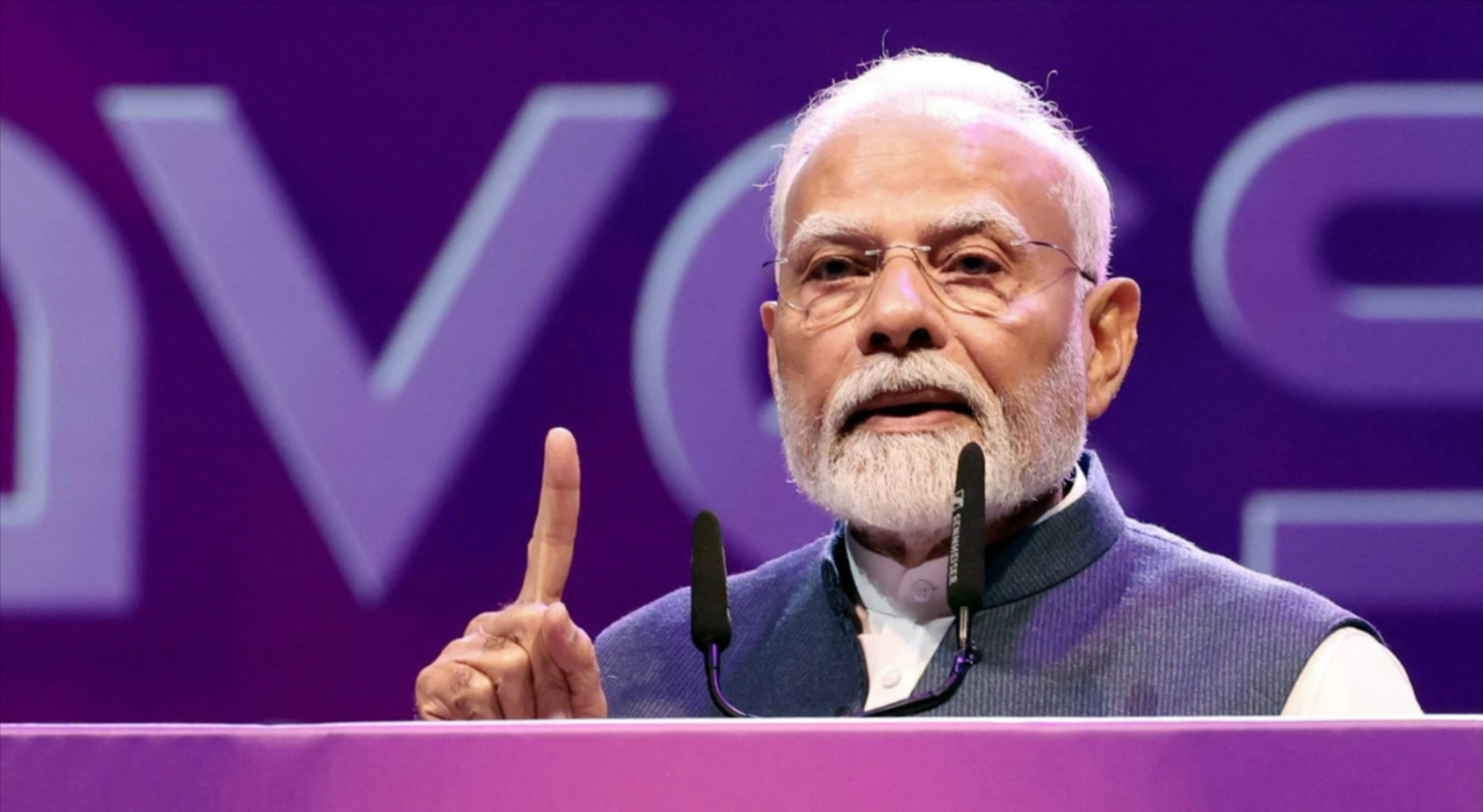
During the WAVES Summit in Mumbai, Prime Minister Narendra Modi underlined India's developing position in the global creative economic sector. During his opening address, India earned the description of an "orange economy" because cultural and creative sectors drive both financial growth and job creation. Rajnikanth and Mukesh Ambani joined
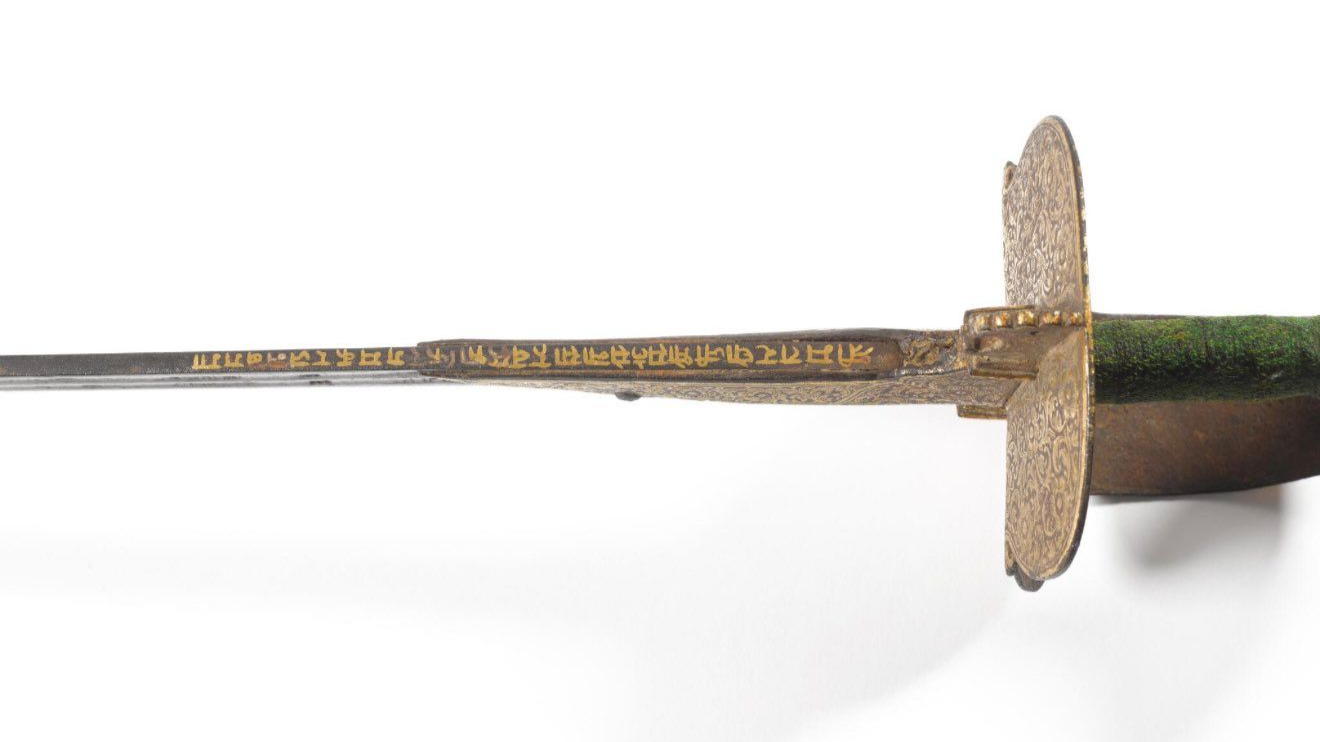
The Mahahtra government achieved a historical milestone by returning to India the historic sword of Raghuji Bhosale I during a Sotheby’s auction in London, which belonged to a notable 18th-century Maratha ruler. The state of Mahahtra achieves its first success in acquiring historical artifacts from international auctions. The bidding





Stay updated with The Hindu Editorial Vocab24 app, your definitive source for breaking news and comprehensive coverage from India and around the globe. Whether it's political developments, business updates, sports highlights, the latest technology trends, or current events, The Hindu brings live, accurate, and reliable news directly to your device.
Don’t fall for sensationalized or fake news shared online. Read and share accurate updates with friends and family through The Hindu Editorial Vocab24 app. Download it today!
News Coverage in The Hindu Editorial Vocab24 App
Breaking News: Receive instant notifications on breaking news stories as they unfold. Stay informed about major events and developments in India and around the world with live blogs, news in shorts videos, and concise articles.
Politics: Get the latest updates on Indian politics, including elections, policy changes, government decisions, and political events that shape the nation.
Business and Economy: Stay ahead in the economic landscape with detailed business news and market analysis. Learn about stock market trends, financial reports, corporate news, and economic developments to make informed investment decisions.
Current Events: Follow stories on social issues, policy changes, global events, and daily current affairs, tailored for UPSC and other competitive exam preparations.
Technology: Keep up with the latest gadgets, innovations, and tech trends. Read expert reviews and analyses in short, concise updates on cutting-edge technology from India and beyond.
Sports: Never miss a moment of your favorite sports. Get live scores, match reports, and expert analysis on cricket, football, tennis, and more.
International News: Stay informed about global events and geopolitical developments, including the Russia-Ukraine war, Israel-Palestine conflict, and other key international stories.
Local News: Stay connected to your community with the latest updates on city events, issues, and local news. Coverage includes hyperlocal updates from cities like Bangalore, Chennai, Delhi, Hyderabad, Mumbai, Kolkata, and more.
Trending Topics: Discover what's trending today with the most talked-about stories and hot topics across India and the world.
Experience journalism that values integrity, accuracy, and reliability. Download The Hindu Editorial Vocab24 app today and stay connected with the world.
Subscribe to our newsletter!







