

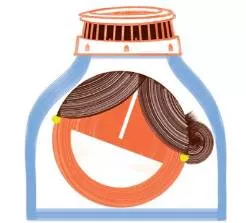
Who’s afraid of laughing women
Renuka Chowdhury’s booming laughter enraged leaders in Parliament. That one merry female parliamentarian should be singled out for ridicule is not surprising.As girls, our generation was often reprimanded (to speak in an angry and critical way to (someone who has done something wrong, disobeyed an order, etc) for walking with long, manly strides (a confident or assured walk full of purpose or arrogance) or laughing out loud. Girls from good families were only permitted to giggle when teased by fathers, brothers and uncles or when they cracked (they thought) funny jokes, but heaven help a loud female if she scowled (frown in an angry or bad-tempered way) and said it’s not funny. Or worse, burst out laughing when they were delivering a serious but silly spiel (to utter, express, or describe volubly or extravagantly). That was long ago. But judging by the nastiness that Renuka Chowdhury’s booming laughter uncorked in Parliament, it appears things have not changed much for women. If they had, one merry female parliamentarian would not have been singled out for ridicule, from among so many who also dared to laugh or raise slogans.
Laughter and women of all ages have together created a non-threatening camaraderie (mutual trust and friendship among people who spend a lot of time together). Women, as they sit working or just sunning themselves after a hard day, often mirthfully (filled with joy) swap stories about their daily humiliations: The gropings, dog whistles, the name-calling and leery beery jostlings (push, elbow, or bump against (someone) roughly, typically in a crowd) in public places everywhere. But the collective laughter in these all-women gatherings is a sort of gallows humour, Hamlet edition. And laughter being the best medicine, a sympathetic woman will cackle (laugh in a loud, harsh way) and cap one dark story with another, lest the eyes begin to glaze over with sadness.
As they mature, women learn not only to just disregard rampant sexual discrimination and the language it has spawned — a standard part of their lives. They also learn to keep such experiences limited to their own all-female groups. The shared wisdom is: Why empower the gropers, flashers and hecklers by giving them too much importance and turning grim (unpleasant or shocking to see or think about) when no one from the other sex, those who make the rules and enforce them, will actually help you. Life teaches women that such stories, if recounted to boyfriends, brothers, husbands or fathers, do not evoke sympathy or self-examination, but only walk-outs. Or worse, a grand rage of the “how-dare-he” kind. Most men will begin talking about enforcing the law (ha ha), or retaliation (a close synonym for fifty shades of honour killing, so more ha ha).
Men, who have mostly been brought up to believe that their ability to make females laugh can win them sexual favours, believe by the same logic that it is badly brought up women of “easy virtue” or women who are (even more sinisterly) their political rivals, that will dare laugh aloud when they are displaying great oratorical skills. Very few men will spot the angry suppression of female laughter immediately as a matter of power. So, let’s say it like it is: Since it is fashionable these days to begin all arguments with the Licchavi republics and the Mughals, let’s tell readers that there is a rather long civilisational line of illustrious women, both the divine and mortal, who laughed openly at men and the follies of their making. Iambe, the ancient Greek goddess of laughter born to Pan and Echo, was understandably the best mate to the patient and forever kind, Demeter, Mother Earth. In our own divine establishment, we have the merry Durga who laughs when Mahishasur makes a pass at her and then gleefully (in an exuberantly or triumphantly joyful manner) proceeds to behead him. A little later comes the lore of Draupadi who laughed when Duryodhana, smitten with envy at seeing the great palace of the Pandavas, slipped and fell, triggering the war in the Mahabharata. Marathi writer Iravati Karve, though, points out that the story was actually cooked up by Duryodhana to enrage his blind father who held the nuclear button. Anyway, the damage was done and war ensued.
There is yet another tale recounted among the followers of the Nath sect, about Mandakini, another controversial princess from the Simhala Dweep (the other being Padmini). It is said she once saw a god flying across the seas and burst out laughing when she happened to catch a glimpse of his unmentionables through his fluttering clothes. The god descended at the sound of the disrespectful laughter and cursed the girl to be banished to a Triya Raj, a kingdom of women with no males. Later lore tells us how the charismatic Matsyendranath, Guru of Gorakhnath, the founder of the Gorakhpanth, entered this mythical kingdom and forgot all his sadhana and yoga and lived happily surrounded by good-looking women. He was eventually abducted and taken back to the ashram by his obstinate chela, Gorakhnath, who broke in (do not laugh), dressed as a female percussionist.
Let’s fast-forward and see how Renuka Chowdhury’s booming laughter has once again enraged the leadership resulting, if not in a curse or a war, then in a questionable personal jibe at her. In 2018, with the country close to the next general elections, there is nothing apolitical. And since Chowdhury laughed during an important prime ministerial speech on the presidential address, the nasty aside has been immortalised as a part of it. Ever since then the matter has become the subject of a complex, layered, almost Talmudic debate both in Parliament and the media. But in the meanwhile, this may be a good opportunity to include all well-meaning rational men (yes, one realises through the social media that they exist in surprisingly large numbers) into this debate. And let us together raise the rhetorical question from The Sound of Music, “how do you solve a problem like”, well, publicly laughing women in a democracy?










Stay updated with The Hindu Editorial Vocab24 app, your definitive source for breaking news and comprehensive coverage from India and around the globe. Whether it's political developments, business updates, sports highlights, the latest technology trends, or current events, The Hindu brings live, accurate, and reliable news directly to your device.
Don’t fall for sensationalized or fake news shared online. Read and share accurate updates with friends and family through The Hindu Editorial Vocab24 app. Download it today!
News Coverage in The Hindu Editorial Vocab24 App
Breaking News: Receive instant notifications on breaking news stories as they unfold. Stay informed about major events and developments in India and around the world with live blogs, news in shorts videos, and concise articles.
Politics: Get the latest updates on Indian politics, including elections, policy changes, government decisions, and political events that shape the nation.
Business and Economy: Stay ahead in the economic landscape with detailed business news and market analysis. Learn about stock market trends, financial reports, corporate news, and economic developments to make informed investment decisions.
Current Events: Follow stories on social issues, policy changes, global events, and daily current affairs, tailored for UPSC and other competitive exam preparations.
Technology: Keep up with the latest gadgets, innovations, and tech trends. Read expert reviews and analyses in short, concise updates on cutting-edge technology from India and beyond.
Sports: Never miss a moment of your favorite sports. Get live scores, match reports, and expert analysis on cricket, football, tennis, and more.
International News: Stay informed about global events and geopolitical developments, including the Russia-Ukraine war, Israel-Palestine conflict, and other key international stories.
Local News: Stay connected to your community with the latest updates on city events, issues, and local news. Coverage includes hyperlocal updates from cities like Bangalore, Chennai, Delhi, Hyderabad, Mumbai, Kolkata, and more.
Trending Topics: Discover what's trending today with the most talked-about stories and hot topics across India and the world.
Experience journalism that values integrity, accuracy, and reliability. Download The Hindu Editorial Vocab24 app today and stay connected with the world.
Subscribe to our newsletter!







