

When every line in the book is violated
The core values of education are injured by the violence that breaks out among citizens during a riot.After a violent riot, teachers of young children have a difficult time deciding what to say in their classes when children ask awkward questions. Some of these questions arise from the news that children have heard or from the scenes they have seen on television. In some cases, they ask about what they have seen with their own eyes. There are also questions reflecting the children’s desire to verify something their parents have told them. It is not difficult to imagine the bewildering array of queries that the recent communal riots in the nation’s capital have triggered in the minds of young people. How a teacher can address them is anyone’s guess. Although cities such as Mumbai and Delhi and many provincial towns of northern India have considerable experience of living through violent riots, little effort has been made to study the response of children to such occurrences and the dilemma that teachers face when classes resume after a `riot.
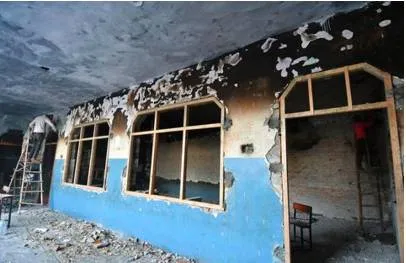
A violent riot is normally seen as a breakdown of law and order. That it indeed is, implying a weakening of the state’s moral authority and people’s trust in it. Within a few days, the state re-establishes its authority and state functionaries, such as the police and other officers, start to assume that the damage done to their credibility has been restored. In the context of education, however, the impact of a riot goes much deeper. Although schools are the main provider of education, their routine functioning is hardly an adequate measure of the state’s expectation from their role. As an institution of the state, a school — whether privately run or managed directly by the government — enables the young to imbibe the moral principle underlying the state’s authority. It is this moral principle that permits the state to exercise power over the lives of citizens. When a riot breaks out, schools are closed, mainly to protect children from aggression and violence. During the Delhi riots, a private school was set on fire and its property looted. Imagine the horror this school would have faced if children were inside it. When a riot has swept past, schools reopen and the resumption of their routine is usually perceived as the return of normalcy.
The real loss
This perception is erroneous because it does not take into account the school’s real loss in terms of its own authority to serve and perpetuate the state’s morality. Every core value of education is injured by the violence that breaks out among citizens during a riot. It takes years to explain to the young that relations among people and communities are guided by certain values. Even a specific topic such as respect for someone else’s property and publicly owned infrastructure takes a long time to teach in a manner that it would make sense to children. All this effort is wasted when children see with their own eyes that people are killing others and burning shops, houses and buses. In the case of Delhi, the damage done to children’s learning was greater as it included the incredible realisation that the police did nothing and merely watched when the killing and looting started. The magical significance of the phone number 100 is conveyed to children in their primary classes. Why didn’t the police stop the riot, children want to know.
Then and now
No wonder that teachers feel like Sisyphus when teaching resumes after a riot. Sisyphus was a king depicted in Greek mythology. He was condemned to a life of hard labour which involved routinely destroying its own accomplishment. Sisyphus was supposed to push a huge rock uphill, and when he reached the top, the rock rolled back down, forcing him to start all over again. This image captures the frustration a teacher must face after people are killed or wounded in a riot. In early November of 1984, riots broke out following Indira Gandhi’s assassination. Schools remained closed for many days. When they reopened, the government sent a specific instruction to schools, forbidding any discussion of the riots. Teachers faced a dilemma. They knew how deeply many children had been scarred. Not just Sikh children who had seen the brute killing of their own elders, but others too who had witnessed horror or heard about it. They all needed ways to express their disturbed minds and seek some solace from teachers.
Now, 36 years later, the city is back at the same juncture. Teachers feel bewildered as they face the task of explaining to the young why a part of Delhi burst into flames. Any explanation would necessarily involve telling children why the Citizenship (Amendment) Act, 2019 has proved controversial. A teacher attempting to discuss this subject is likely to get into trouble, both within and outside the school. A school in Bidar, Karnataka, recently faced police action for staging a play on the citizenship law. In the charged atmosphere that preceded the riots and still prevails, no critical thinking is likely to be tolerated. Although the official curriculum now proudly claims to promote critical thinking and foundational learning, these terms provide little scope for responding to what is happening in one’s own neighbourhood or the country. Like everything else in education, these wonderful sounding terms are now used for promoting hollow formal routines.
The Delhi riots coincided with an official visit of the American President, Donald Trump, to India, beginning February 24. His wife, Melania Trump, was scheduled to witness how a government school transacts a so-called ‘happiness’ curriculum. It was terribly ironical that she was attending a ‘happiness’ class in south Delhi while violence and fire raged in the north-eastern part of the city. We can imagine the meaning of the happiness that curriculum designers hope to impart through this innovation. In their design, happiness is another form of cynicism, marking the capacity to stay aloof and unaffected by the fate of fellow human beings.
Sanctity of education
Textbooks, teachers and principals routinely tell children that India’s religious diversity is a matter of pride. What, then, accounts for so much hatred, children must wonder. Someone will have to explain to them why there is such a sharp contradiction between real collective life and what is conveyed to them. Many children know from watching television that Delhi’s present political ethos is full of bitterness and anger. Slogans that ask for shooting down dissent have been openly shouted. In such an ethos, the official message conveyed through post-riot parent-teacher meetings that all is well now cannot reduce cynicism. The personal trauma suffered by hundreds and the bewilderment of others who have witnessed the collapse of social order and police responsibility cannot be healed by words and promises alone. Education must deal with the deeper anxieties of the young in order to retain its own sanctity and credibility. The hatred that found open expression for some days in north-east Delhi has put a question mark on the capacity of the system of education to nurture the core values a democratic order demands.
Violent riots knock down the sanctity of public education and people’s faith in it as a resource for maintaining basic human values. In a post-conflict phase, officers and teachers must decide what they will tell the young and how. To follow the modern idiom and simply ‘move on’ (i.e. put the riots behind) is to invite the usual price that unresolved trauma incurs. Its effects go deeper. The temporary social breakdown that riots signify requires a long-term strategy to restore teachers’ morale and people’s trust in schools. Simply ignoring the damage done to the sanity of young minds is tantamount to letting democracy suffer the loss of intellectual vitality that education alone can provide.

Atiqa records two top-four finishes in WSK Final Cup
Sep 05, 2026










Stay updated with The Hindu Editorial Vocab24 app, your definitive source for breaking news and comprehensive coverage from India and around the globe. Whether it's political developments, business updates, sports highlights, the latest technology trends, or current events, The Hindu brings live, accurate, and reliable news directly to your device.
Don’t fall for sensationalized or fake news shared online. Read and share accurate updates with friends and family through The Hindu Editorial Vocab24 app. Download it today!
News Coverage in The Hindu Editorial Vocab24 App
Breaking News: Receive instant notifications on breaking news stories as they unfold. Stay informed about major events and developments in India and around the world with live blogs, news in shorts videos, and concise articles.
Politics: Get the latest updates on Indian politics, including elections, policy changes, government decisions, and political events that shape the nation.
Business and Economy: Stay ahead in the economic landscape with detailed business news and market analysis. Learn about stock market trends, financial reports, corporate news, and economic developments to make informed investment decisions.
Current Events: Follow stories on social issues, policy changes, global events, and daily current affairs, tailored for UPSC and other competitive exam preparations.
Technology: Keep up with the latest gadgets, innovations, and tech trends. Read expert reviews and analyses in short, concise updates on cutting-edge technology from India and beyond.
Sports: Never miss a moment of your favorite sports. Get live scores, match reports, and expert analysis on cricket, football, tennis, and more.
International News: Stay informed about global events and geopolitical developments, including the Russia-Ukraine war, Israel-Palestine conflict, and other key international stories.
Local News: Stay connected to your community with the latest updates on city events, issues, and local news. Coverage includes hyperlocal updates from cities like Bangalore, Chennai, Delhi, Hyderabad, Mumbai, Kolkata, and more.
Trending Topics: Discover what's trending today with the most talked-about stories and hot topics across India and the world.
Experience journalism that values integrity, accuracy, and reliability. Download The Hindu Editorial Vocab24 app today and stay connected with the world.
Subscribe to our newsletter!







