

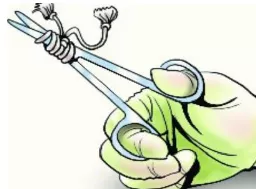
War state and martyrdom
In a democracy, national security functions cannot be shielded from critical public scrutiny. Amid the ongoing commotion (शोर-ग़ुल/हंगामा/खलबली) triggered by arrogant and puritanical (सख़्त नैतिकतावादी) claims about nationalism and patriotism, the words of Gurmehar Kaur, a Delhi University student whose online video of May 2016 has suddenly become a needless controversy, come across as profoundly wise and humane. Ms. Kaur’s moving and thoughtful statement — “Pakistan did not kill my dad, war killed him... I fight for peace between India and Pakistan. Because if there was no war between us, my father would still be here” — has, however, not gone down well with Bharatiya Janata Party (BJP) leaders and certain celebrities, among others. Kiren Rijiju, Union Minister of State for Home, suggested that someone was “polluting this young girl’s mind”, which was soon supported by his party colleague and MP Pratap Simha with an equally disgraceful tweet. Statements by these two leaders and their supporters have displayed an appalling (घटिया/भयावह) lack of nuance (a subtle difference) about the larger import and context of what Ms. Kaur was referring to when she said that it was war that killed her father. Such a ‘nationalist’ backlash against thoughtful comments should make us wonder if indeed war is profitable to some sections of society, and hence preferable to peace. In a more fundamental sense, the prevailing understating of the nation state as “father”, “mother”, etc. has de-historicised and reified (consider an abstract concept to be real) the true nature and context of the modern state, thereby condoning (अनदेखी करना/भूल जाना) the many atrocities (नृशंसता) committed by states around the world. There is therefore a need to ‘de-anthropomorphize (Not to attribute human form or personality to)’ the nation state to gain insights into its historically appropriate character. Role of violence Modern states not only monopolise and organise violence, but more importantly, violence has played a central role in their historical evolution. War-making and the use of force are intrinsic to the modern state, and this deep-seated tendency of the state should be constantly mediated by popular resistance, reasoned debates and peace-building, lest those tendencies run amok (Idiom “Behave in a frenzied, out-of-control, or unrestrained manner.”) . Nation states are not sentient (संवेदनशील) beings to be revered (profoundly honored) , but entities often controlled by powerful interest groups, whose power and control should be constantly checked and interrogated. Moreover, war is not always, as many of us believe, an undesirable evil thrust upon us by ‘immoral’ outsiders, but often something that our politicians and governments create through their actions and engage in for their own selfish political and other interests. As historian Charles Tilly reminds us, “Governments themselves commonly simulate, stimulate, or even fabricate threats of external war.” The argument here is not that we should do away with states altogether or that armed forces should be disbanded. But rather that the state’s so-called national security functions cannot be allowed to continue unquestionably, without critical public scrutiny. Notwithstanding Mr. Rijiju’s advice that “we should stop this habit of raising doubt, questioning the authorities and the police,” we must make it a habit to question the security claims and functions of our state: for our own good. States routinely use wars, or as Ms. Kaur puts it, “state-sponsored hatred”, for domestic political ends. Sometimes as diversionary war tactic — to divert our attention from domestic turmoil such as economic slowdown or rising unemployment — and sometimes for political ends like how the BJP cleverly used the ‘surgical strikes’ for electoral purposes, while advising others not to do so. The sharp spike in ceasefire violations in the Jammu sector during the Jammu and Kashmir election in 2014 is yet another example. As a matter of fact, ceasefire violations, terror attacks and military casualties have considerably increased ever since the BJP government has come to power: would it not be logical then to argue that the BJP’s political inability to make peace in Kashmir and negotiate the Kashmir dispute with Pakistan has become costly for the country? World over today, the link between conflict and huge costs to the economy is well understood. The ‘nationalist war-mongering’ by the BJP and its supporters often sounds like a ‘protection racket’, one in which many national security threats are imagined, often created by its own actions, disagreements to its national security discourse are castigated as anti-national, and then political benefits are made from the resultant turmoil (बखेड़ा/खलबली) . Then there are deep-running business interests such as politically connected promoters of the defence industry who stand to benefit from conflict and war. Myth of martyrdom As a nation, we must value the sacrifices our soldiers make by serving in difficult conditions and even getting killed in action. And yet, cloaking (छिपाना / आवरण डालना) their deaths in the hyper-glorified paraphernalia (आडंबर/ साज-सामान) of martyrdom is often a convenient excuse for waging wars, and not undertaking the difficult task of conflict resolution. Government reports and popular narratives typically talk of soldiers, even villagers on the border, embracing martyrdom when they get killed in firing, mine blasts and even vehicle accidents. How does a villager who had absolutely no intention of dying achieve martyrdom when he gets killed in firing between the two armies? The hype around martyrdom and the talk about giving a befitting response to the other side are often used as convenient excuses to not take adequate measures for resolving conflicts which cost lives in the first place: why worry about the not-so-easy process of conflict resolution when soldiers are willing to be ‘martyred’, and they or their family won’t complain as doing so would be an insult to ‘Bharat Mata’ or the result of a ‘polluted mind’? The talk of martyrdom is also misleading because it shrouds the sheer unnecessity of premature death in momentary glory, thereby diminishing the importance of a soldier’s life. The life of a soldier is worth far more than the monetary compensation or the honour of ‘shahadat’. Furthermore, it makes the rest of us, civilians, view it as their unavoidable fate: “Why join the military if you are not willing to die?” But why do they have to die if, as Ms. Kaur asked, we can “talk to each other and get the job done”? Why do societies have to “brainwash” (I use this word upon considerable reflection) youngsters to die so that others can live peacefully? Young soldiers’ lives are no less expendable than ours, and that’s precisely why we should not let the ruling classes, who have historically benefitted from wars and conflicts, glorify wars. The talk of martyrdom not only justifies getting our youngsters killed but also killing others, who are victims of similar circumstances across the border. When proudly, and even hearteningly, counting the kills on the Pakistani side becomes a national pastime, we must know there is something wrong with our society. Let’s make it somewhat simpler for politicians such as Mr. Rijiju who take figurative expressions such as ‘Bharat ka namak’ too seriously. Devoid (वंचित/विहीन) of cheap populism, Bharat is a modern state that requires better institutions, better leadership, and innovative tools for conflict resolution, none of which the BJP seems to be interested in. Problematising the concept of martyrdom is not about dishonouring our soldiers but emphasising that their lives are as sacred (पूजनीय/पवित्र) as ours. Double standards BJP leaders are adept at using ‘our soldiers and their sacrifices’ for their political ends, but when one of them (like the Border Security Force soldier, Tej Bahadur) or their relatives (like Ms. Kaur) decide to speak out, BJP leaders cry foul. Is that not a bit too convenient? It is increasingly becoming evident that the BJP is merely concerned about using ‘our jawans’ for its political ends: beneath such rhetoric, it is hardly concerned about their welfare (such as providing good working conditions), or ensuring that the country’s national security is robust (institutionally and materially) or resolving the conflicts that kill our soldiers. When Prime Minister Narendra Modi visited Lahore to make peace with Pakistan (after years of accusing the Congress party of being soft on Pakistan), BJP leaders hailed it as innovative diplomacy, but when people like Ms. Kaur call for making peace with Pakistan, BJP leaders suggest they have ‘polluted minds’. This is a classic definition of a politically convenient double standard.Commotion (adjective)
A state of confused and noisy disturbance. शोर-ग़ुल/हंगामा/खलबली
Synonyms: Racket, Uproar, Tumult, Ruckus, Clamor
Example: The locals were worried about the sounds of a commotion that emanated from the wilderness.
Puritanical (adjective)
Having or displaying a very strict or censorious moral attitude./ practicing very strict moral or religious behavior. सख़्त नैतिकतावादी
Synonyms: Priggish, Straight-Laced, Moralistic, Prudish
Example: My parents are extremely puritanical and will not allow me to date.
Atrocity (noun)
A horrific action. नृशंसता
Synonyms: Enormity, Heinousness, Nefariousness, Wickedness, Fiendishness
Example: The 911 operator’s drinking problem led to an atrocity that resulted in the deaths of three children.
Appalling (adjective)
Very bad in a way that causes fear, shock, or disgust./ very bad. घटिया/भयावह
Synonyms: Awful, Dire, Worse, Bad, Terrible, Horrible
Example: The appalling crime garnered attention worldwide.
Condone (verb)
To disregard or overlook (something illegal, objectionable, etc.)./to give tacit approval to अनदेखी करना/भूल जाना
Synonyms: Forget, Forgive, Ignore, Overlook
Example: To condone your recent absences from my class, I will need a written note from your parent or guardian.
Sentient (adjective)
Able to perceive or feel things. संवेदनशील
Synonyms: Capable Of Feeling, Aware, Responsive, Reactive
Example: Humans are not the only sentient beings, elephants are very emotional and perceptive mammals as well.
Turmoil (noun)
A state of great disturbance, confusion, or uncertainty. बखेड़ा/खलबली
Synonyms: Turbulence, Tumult, Disorder, Commotion, Disturbance, Disruption
Example: Because of the financial turmoil in our country, many people are losing their jobs.
Cloak (verb)
Hide, cover, or disguise (something). छिपाना / आवरण डालना
Synonyms: Conceal, Hide, Cover, Veil, Shroud, Screen, Mask
Example: Due to his shy nature, he cloaked his singing talent in the company.
Paraphernalia (noun)
Miscellaneous articles, especially the equipment needed for a particular activity. आडंबर/ साज-सामान
Synonyms: Equipment, Stuff, Things, Apparatus, Materials
Example: Inside of the supremacist’s camp, authorities stumbled upon a great deal of anti-government paraphernalia.
Sacred (adjective)
Dedicated to a religious purpose and so deserving veneration. पूजनीय/पवित्र
Synonyms: Holy, Hallowed, Blessed, Consecrated, Sanctified
Example: For most Christians, Christmas is a sacred holiday.








Stay updated with The Hindu Editorial Vocab24 app, your definitive source for breaking news and comprehensive coverage from India and around the globe. Whether it's political developments, business updates, sports highlights, the latest technology trends, or current events, The Hindu brings live, accurate, and reliable news directly to your device.
Don’t fall for sensationalized or fake news shared online. Read and share accurate updates with friends and family through The Hindu Editorial Vocab24 app. Download it today!
News Coverage in The Hindu Editorial Vocab24 App
Breaking News: Receive instant notifications on breaking news stories as they unfold. Stay informed about major events and developments in India and around the world with live blogs, news in shorts videos, and concise articles.
Politics: Get the latest updates on Indian politics, including elections, policy changes, government decisions, and political events that shape the nation.
Business and Economy: Stay ahead in the economic landscape with detailed business news and market analysis. Learn about stock market trends, financial reports, corporate news, and economic developments to make informed investment decisions.
Current Events: Follow stories on social issues, policy changes, global events, and daily current affairs, tailored for UPSC and other competitive exam preparations.
Technology: Keep up with the latest gadgets, innovations, and tech trends. Read expert reviews and analyses in short, concise updates on cutting-edge technology from India and beyond.
Sports: Never miss a moment of your favorite sports. Get live scores, match reports, and expert analysis on cricket, football, tennis, and more.
International News: Stay informed about global events and geopolitical developments, including the Russia-Ukraine war, Israel-Palestine conflict, and other key international stories.
Local News: Stay connected to your community with the latest updates on city events, issues, and local news. Coverage includes hyperlocal updates from cities like Bangalore, Chennai, Delhi, Hyderabad, Mumbai, Kolkata, and more.
Trending Topics: Discover what's trending today with the most talked-about stories and hot topics across India and the world.
Experience journalism that values integrity, accuracy, and reliability. Download The Hindu Editorial Vocab24 app today and stay connected with the world.
Subscribe to our newsletter!







