

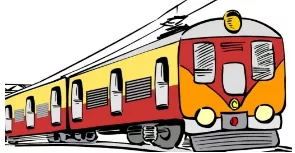
Waiting for a signal
Every time there is a change of guard in the Railway Ministry, expectations are raised that the new minister will cut the Gordian knot (an extremely difficult or involved problem.) by focussing on issues that will enable the Indian Railways to recoup (regain (something lost or expended).) from past excesses. This also holds true for the new Railway Minister, Piyush Goyal. It is not as if the problems cannot be addressed, but those who have to address them tend to focus on issues that may be important in themselves but are not necessarily the ones that will enhance the performance of the Railways. Is this out of ignorance? Or are these issues ‘insignificant’? Or are they a political hot potato? It is anybody’s guess.For decades the lack of consistent political direction has affected the Railways. The country lacks civilian expertise on railway matters and only a few politicians are interested in the railways. Railway officers are professional and have the expertise. However, results are determined by the Ministry-Railway Board relationship and how much the Minister is willing to follow professional advice, especially when it does not gel with the political compulsions of pandering (gratifying) to constituencies. The results are a haphazard (lacking any obvious principle of organization.) introduction of trains, subsidising passenger fares by overcharging freight, investment in unwanted new facilities, and modernisation and induction of new technologies without a plan. The fallout (the adverse results of a situation or action.) of all this is a balkanisation (division) of the organisation on departmental lines, with each following its own narrow interests. Decision-making revolves around pursuing immediate goals that can show the department in a good light.
Safety concerns
That this state of affairs has led to a breakdown of systems is exemplified in the case of the Puri-Haridwar Utkal Express derailment in Uttar Pradesh in August, where over 20 passengers lost their lives and scores were injured. Safety is not something that can be separated from the normal functioning of the Railways and is a window that reveals the underlying health of the system. The accident shows that the numbers of trains have now reached a level where field staff are unable to carry out maintenance without cutting corners (do something perfunctorily so as to save time or money.). In this case, track maintenance staff had decided to replace a defective glued joint even though the section control staff had refused to block trains from entering the section that was to be repaired. Repair work involved cutting out the defective joint and welding in a new one. Trying to carry this out without stopping trains was an invitation for disaster. If this was an isolated case, then the case could have been closed by punishing the guilty. But it appears that the practice of repairing tracks without blocking trains is quite widespread, which is cause for concern.
The situation is the outcome of pursuing three inconsistent goals at the organisational level. These are: moving more people by continuously adding trains even when sections are saturated; focussing on increasing speed and punctuality; and diverting freight earnings to subsidise passenger fares. These are incompatible with the declared objective of safety, especially when there is a shortage of capacity to run existing services. Unless the numbers of trains can be brought down to what the system can handle without cutting corners in track, signalling and rolling stock maintenance, there is really no way to make the system both safe and punctual. The problem is further exacerbated (make (a problem, bad situation, or negative feeling) worse.) by a lack of money to replace old assets or purchase spares. The Utkal train accident is a distressing example of how incompatible organisational goals connect to unsafe behaviour at the field level.
It can be done
The task before Mr. Goyal may be politically challenging but is doable technically. He has to make difficult political decisions such as cutting back on trains on saturated sections and putting punctuality on the back burner, at least until the system can recoup its capacities. He has to accept that time has to be allotted for maintenance systems to stabilise even at the cost of delaying trains. His aim must be to restore the strong culture that underpinned (support, justify, or form the basis for.) every decision in the field — that no unsafe condition would be allowed to exist and be addressed even at the cost of delaying or slowing down trains. For this, the judgment of the supervisory (having or relating to the role of observing and directing an activity or a person.) staff must be respected. There is also a need to restore the well-established practice of field inspections at all levels to grasp what is happening in the field. The energies of field officers should not be sapped (drain someone of (strength or power).) by meaningless drives and responding to social media as it diverts their attention from their main job of oversight and correction of divergences from standard procedures. He needs to ensure money for maintenance and replacement of aged assets. This should be done by freeing freight from subsidising passenger fares through a subvention (a grant of money, especially from a government.) from the general Budget. Which path will Mr. Goyal choose? Will he give the Railways the space to recoup or will he follow the beaten path of pushing goals that are incompatible with enhancing safety?



Top court quashes FIRs against Gen Z protesters
Sep 04, 2026







Stay updated with The Hindu Editorial Vocab24 app, your definitive source for breaking news and comprehensive coverage from India and around the globe. Whether it's political developments, business updates, sports highlights, the latest technology trends, or current events, The Hindu brings live, accurate, and reliable news directly to your device.
Don’t fall for sensationalized or fake news shared online. Read and share accurate updates with friends and family through The Hindu Editorial Vocab24 app. Download it today!
News Coverage in The Hindu Editorial Vocab24 App
Breaking News: Receive instant notifications on breaking news stories as they unfold. Stay informed about major events and developments in India and around the world with live blogs, news in shorts videos, and concise articles.
Politics: Get the latest updates on Indian politics, including elections, policy changes, government decisions, and political events that shape the nation.
Business and Economy: Stay ahead in the economic landscape with detailed business news and market analysis. Learn about stock market trends, financial reports, corporate news, and economic developments to make informed investment decisions.
Current Events: Follow stories on social issues, policy changes, global events, and daily current affairs, tailored for UPSC and other competitive exam preparations.
Technology: Keep up with the latest gadgets, innovations, and tech trends. Read expert reviews and analyses in short, concise updates on cutting-edge technology from India and beyond.
Sports: Never miss a moment of your favorite sports. Get live scores, match reports, and expert analysis on cricket, football, tennis, and more.
International News: Stay informed about global events and geopolitical developments, including the Russia-Ukraine war, Israel-Palestine conflict, and other key international stories.
Local News: Stay connected to your community with the latest updates on city events, issues, and local news. Coverage includes hyperlocal updates from cities like Bangalore, Chennai, Delhi, Hyderabad, Mumbai, Kolkata, and more.
Trending Topics: Discover what's trending today with the most talked-about stories and hot topics across India and the world.
Experience journalism that values integrity, accuracy, and reliability. Download The Hindu Editorial Vocab24 app today and stay connected with the world.
Subscribe to our newsletter!







