

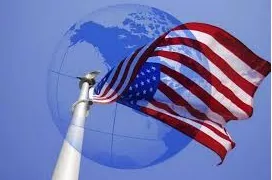
Trump and the new world disorder
Why India should be concerned about the pace of the American retreat from post-War institutionsU.S. Secretary of State Rex Tillerson’s speech on relations with India on October 18 was ambitious in scope and sought to define it for the “next hundred years,” when both countries will be “standing firm in defence of a rules-based order.” The speech has been received with justifiable enthusiasm among well-wishers of India. There is absolutely no two opinion about the desirability of long-standing commitments between the two big democracies, notwithstanding the challenges of social frictions and illiberal tendencies that they both currently face.
On schedule
For some context to the speech by Mr. Tillerson, who is currently on a South Asian visit, it would be appropriate to recall the following. Five days earlier, on October 13, President Donald Trump destabilised an international agreement that the U.S, the four other UN Security Council members and Germany had reached with Iran; on October 12, Mr. Tillerson himself had conveyed to the head of UNESCO the U.S decision to quit the organisation. In the first nine months of the Trump administration, other international commitments that the U.S. had unilaterally reneged (Go back on a promise, undertaking, or contract) on include the Paris climate agreement and the Trans-Pacific Partnership Agreement. The North American Free Trade Agreement is gasping for breath; and treaty allies South Korea, Japan and Germany have been threatened for trade surplus with America.
The rest of the world might think that the world order has been designed to America’s advantage but Mr. Trump has been categorical that he is committed to dismantling (to disassemble or pull down; take apart; to deprive or strip of apparatus, furniture, equipment, defenses) it — because he is convinced that America does not benefit from it. To understand his, and his administration’s, views on the issue, and to look for signs of what to expect now, we need to take a collective view of three events that happened over the last four weeks. Mr. Trump’s first speech to the UN General Assembly; the annual meetings of the World Bank and the International Monetary Fund (IMF); and the Chinese Communist Party’s 19th Congress in Beijing.
The UN, the World Bank and the IMF have been the instruments of American hegemony (leadership or predominant influence exercised by one nation over others) for decades. What is relevant to the current context is the last three decades. The collapse of the Soviet Union was validation for the U.S. of the power of market economy and liberal democracy. The globalising world required a gradual depreciation of the concept of national sovereignty, including the U.S.’s own, its liberals and conservatives agreed, though not from entirely overlapping perspectives. Promotion of market economy and democracy, defence of human rights and environment, etc were assumed to be part of the U.S.’s global hegemony. The U.N. and the World Bank-IMF became instruments of this American authority over the world. The World Bank and IMF through aggressive promotion of neoliberal economics, and the UN through its non proliferation (a rapid and often excessive spread or increase), climate protection, and Responsibility to Protect doctrines (A stated principle of government policy, mainly in foreign or military affairs) expanded the rules of the new order that chipped away at national sovereignty. The U.S. and its camp followers bankrolled these institutions. Moreover, the U.S.’s own example of prosperity — “the shining city upon a hill,” according to Ronald Reagan — would lead the rest of the world to accept its model of democracy and market economy, it was assumed.
Guided by the ledger
Mr. Trump calculates the price of everything and perhaps understands the value of nothing. “The United States is one out of 193 countries in the United Nations, and yet we pay 22% of the entire budget and more. In fact, we pay far more than anybody realises,” he told the UNGA. It is national sovereignty — he mentioned the words 10 times — that will safeguard the world and not globalism, he declared, upending the U.S. gospel that guided the order. “For too long, the American people were told that mammoth (immensely large) multinational trade deals, unaccountable international tribunals, and powerful global bureaucracies were the best way to promote their success… Now we are calling for a great reawakening of nations.”
At the World Bank-IMF meetings, the rift between the Trumpian world view and these institutions played out in a two-pronged (having prongs: a branch of a stream) fashion. The IMF is no longer advocating neoliberalism as its core credo, and called for more redistributive measures by governments, including higher taxes on the rich, to deal with the inequality created by market. These institutions have in recent years rolled back their trickle-down growth dogma (an official system of principles concerning faith, morals). The Trump administration is meanwhile pushing for massive tax cuts, stuck on the trickle down approach, putting it at odds with the IMF-World Bank approach.
Second, like in the case of UN, the Trump administration feels that America is paying too much for these institutions. U.S Treasury Secretary Steven Mnuchin called on the World Bank to reduce lending to middle-income countries, four days before Mr. Tillerson spoke about providing alternative financing to countries that may be coming under Chinese influence for infrastructure financing. As strategic expert Alyssa Ayres noted, Mr. Tillerson “provided no further specific proposals to sketch out in greater detail how the United States and India should work together to provide alternative financing.”
The World Bank was also upbeat about the Belt and Road Initiative (BRI), on which India and the U.S. are expected to join hands in resisting Chinese manoeuvres. Bank President Jim Yong Kim, an American appointee, said during the annual meetings, “Two things that the world needs very much right now are strong leadership and an embrace of multilateral approaches to solving difficult problems, and [BRI] is both of those things.”
It is in this context of Mr. Trump’s rejection of multilateralism and adherence (The quality or process of sticking fast to an object or surface) to a questionable economic philosophy that Chinese President Xi Jinping exhorted other countries to follow the Chinese model as opposed to Western liberalism, in his Make China Great Again speech last week at the party congress. Such a prospect is of concern for India.
Though Indian leaders repeatedly say that a strong U.S. and American leadership of the world are in India’s interest, the history of that dynamic is more layered and nuanced (Characterized by subtle shades of meaning or expression). While American leadership and ability to arm twist other countries, including China and Pakistan, have benefited India on occasions, the space for New Delhi’s global ambitions come only from America’s retreat. It was the U.S. that forced China to accede to Nuclear Suppliers Group waiver for nuclear commerce for India and forced Pakistan into resolving the Kargil conflict. But a relatively weakened U.S. is what took a more friendly view of India to begin with. “We are going to come down on those guys like a ton of bricks,” President Bill Clinton declared at an Oval Office meeting the day after India landed a blow to his non-proliferation agenda, with Pokhran 2 in May 1998. But he could not stay the course of seeking to punish India, primarily because of domestic American issues.
The change in Washington
The Trump administration’s disregard for the ‘world order’ would open opportunities for India’s ambitions to be a ‘leading power,’ but a gradual retreat of the existing order is what could benefit India. The transition from a U.S President (Barack Obama) who reminded India about its own Constitution to a leader (Mr. Trump) who does not bother much about even the U.S’s Constitution could be welcome from the perspective of the Narendra Modi government’s nationalist agenda.
However, any abrupt creation of a power vacuum in the event of American abdication of its global role would invite conflict and chaos. Having already demonstrated his inability to lead either America or the world, Mr. Trump still has the means to force his way on account of having the world’s most formidable military. More than the reassurance of order, what India should be watchful of should be the threats of conflict.



Top court quashes FIRs against Gen Z protesters
Sep 04, 2026





Stay updated with The Hindu Editorial Vocab24 app, your definitive source for breaking news and comprehensive coverage from India and around the globe. Whether it's political developments, business updates, sports highlights, the latest technology trends, or current events, The Hindu brings live, accurate, and reliable news directly to your device.
Don’t fall for sensationalized or fake news shared online. Read and share accurate updates with friends and family through The Hindu Editorial Vocab24 app. Download it today!
News Coverage in The Hindu Editorial Vocab24 App
Breaking News: Receive instant notifications on breaking news stories as they unfold. Stay informed about major events and developments in India and around the world with live blogs, news in shorts videos, and concise articles.
Politics: Get the latest updates on Indian politics, including elections, policy changes, government decisions, and political events that shape the nation.
Business and Economy: Stay ahead in the economic landscape with detailed business news and market analysis. Learn about stock market trends, financial reports, corporate news, and economic developments to make informed investment decisions.
Current Events: Follow stories on social issues, policy changes, global events, and daily current affairs, tailored for UPSC and other competitive exam preparations.
Technology: Keep up with the latest gadgets, innovations, and tech trends. Read expert reviews and analyses in short, concise updates on cutting-edge technology from India and beyond.
Sports: Never miss a moment of your favorite sports. Get live scores, match reports, and expert analysis on cricket, football, tennis, and more.
International News: Stay informed about global events and geopolitical developments, including the Russia-Ukraine war, Israel-Palestine conflict, and other key international stories.
Local News: Stay connected to your community with the latest updates on city events, issues, and local news. Coverage includes hyperlocal updates from cities like Bangalore, Chennai, Delhi, Hyderabad, Mumbai, Kolkata, and more.
Trending Topics: Discover what's trending today with the most talked-about stories and hot topics across India and the world.
Experience journalism that values integrity, accuracy, and reliability. Download The Hindu Editorial Vocab24 app today and stay connected with the world.
Subscribe to our newsletter!







