

Towards less cash agriculture
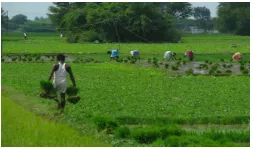
In Madhya Pradesh’s tribal districts of Dewas and Khargone, the NGO, Samaj Pragati Sahayog, discourages cash transactions for agricultural inputs. The interest rates are usurious (सूदखोर, अत्यधिक ब्याज़ॅ लेने वाला) and vary according to commodities. For fertiliser, it is dheda—loan for the stuff has to be repaid 1.5 times over by the end of the harvest season. For pesticides it is sawa, or 1.25 times. Even barter (विनिमय करना) can be extortionate (अतिशय/बहुत ज्यादा) . One quintal of seed has to be repaid duguna or twice the quantity. The grain given in repayment may not fetch the same price as seed, but could be 1.6 times the value, for a four-month period. Such transactions are more like wealth transfer operations. The dozen youth from JNU and Delhi University, who forsook (छोड़ना/त्यागना) a career in academics for rural development work inspired by Muralidhar Devidas ‘Baba’ Amte about three decades ago, therefore, continue to advocate low-input, self-reliant and sustainable (चिरस्थायी/दीर्घकालिक) agriculture, where the emphasis is not so much on productivity as on incomes. PS Vijayshankar, or Viju, one of the founders of the NGO, lists markets as one of the “threats” faced by the mainly Korku and Bhilala tribals its works with, though it has done pioneering (अग्रणी) work in getting the erstwhile (पहला/पूर्व का) Forwards Markets Commission and capital market regulator SEBI, to get farmers onto commodity exchanges to hedge price-risks. SPS discourages the use of hybrid seeds. Though high-yielding, the seeds have to be bought year after year, as saved seeds, if sown, lose hybrid vigour (पौरूष/शक्ति) . They have to be nourished with chemical nutrients, and protected with pesticide sprays, so they can deliver high output. For smallholder, rain-dependent farmers, who have little insurance against weather and price risks, such agriculture can be a slide into deeper debt. So, farmers are encouraged to use save-and-sow seeds, which have been primed for the region’s soil and climatic conditions over many generations. They are persuaded (समझाना/यकीन दिलाना) to produce own manure using vegetable shavings, crop waste and animal droppings, enhanced with bacterial cultures. Chemical pesticides are strictly prohibited, as even benign (हितकारी/लाभकारी) ones are believed to harm beneficial microbes and insects. Non-pesticide management (NPM) is a tenet (सिद्धांत/मत) of faith. Repellents (विकर्षक/दूर भगाने वाला) made from neem oil and kernel, as well as the extracts of poisonous weeds are used. There are reservations also about Bt cotton, which is genetically-engineered to be naturally toxic to bollworms, and therefore low in pesticide use. Is this leftism, with its abhorrence (विद्वेष) of the private sector and western technology, dressed up as environmentalism? How different is the elevation of native wisdom different from the right-wing glorification of tradition? “We do not agree with a single uniform mode of science,” says the CEO, a young graduate from the Indian Institute of Rural Management, who is four months into the job. “We focus on livelihoods and incomes and minimising environmental damage. We are not romanticising tradition.” The farming practices which SPS advocates are prompted by experience. Soon after dropping anchor (स्थिरक/सहारा) in Neemkheda in Dewas district’s Bagli tehsil, the pioneers focussed on watershed development, as this is a rain-dependent area, where rainy days (2.5 mm or more) are few and far between. Once the water table rose, the emphasis shifted to growing crops like soybean and maize that can do with little irrigation. To ensure that farmers retained a greater share of the output price, self-help groups were formed. The poor are unbankable because banks are not sure of their credit-worthiness. They also cannot provide collateral (गारंटी) as security. SHGs have intimate (सुपरिचित/विस्तृत) knowledge of their members—how much they can borrow and for what purpose. Peer pressure ensures there is low or no default. The banks were hesitant initially. They wanted the groups to be all-male, while those of SPS are all-female. But they have shed their reluctance (अरुचि/अनिच्छा) now. Viju believes the SHG-bank linkage model is the answer to rural indebtedness. (Though, most members of SPS are in debt, and farming is entirely based on credit. But the loans are not of the kind that drives farmers to suicide.) From the money they borrow, members repay moneylenders first. Banks used to lend only for productive purposes. But for the poor, the distinction between productive and consumption expenditure is blurred, says Viju. Shedding their dependence on traders for loans was a necessary condition for farmers to be able to aggregate their produce and sell directly in the local mandi. Earlier, they were compelled to sell to traders soon after harvest, when prices are low, to settle their dues. Chintabai Trigram was a pioneer of the local self-help group movement, 11 years ago. We catch her gleaning (बटोरने का कार्य) soybean in a harvested field. She has picked about 10 kg, which she will sell. Trigram has no land. She rears goats. She started with one and now has 11. They are like family. She remembers their birth-dates. With income from that activity, she has brought up three children on her own. She has not only repaid a loan of R40,000, but has savings of R20,000. Trigram is unlettered, but not lacking in initiative. When a mithan (male-friend in the local lingo) came to her village to propagate the virtues of SHGs, she acted as a go-between for the female folk. They thought he was selling a ponzi scheme and would decamp with their savings. It took time to win trust. Now, there are six federations of SHGs. One of them with 162 groups has formed the RamRahim Pragati Producer Company, which aggregates soybean and maize and sells them directly in local mandis. The company also takes futures positions on the NCDEX commodity exchange. In some years, it has made profits, and lost in others. The emphasis now is to get farmer-members to produce marketable quality that can be sold in standardised lots. Trigram is a director of the company. The SPS model is quite different from that of Gujarat’s Van Bandhu Kalyan Yojana for tribal upliftment. In that programme, secretary Anand Mohan Tiwari, who initiated it and stayed on for the first six years, wanted to bring high-input, high-output Green Revolution agriculture to the state’s tribal belt. It started with promise but the gains were not sustained because the programme lacks an organisation like SPS to hand-hold the farmers in new agricultural practices, provide access to less expensive finance and do the marketing. Without such networks, motivated either by altruism (परोपकारिता) or mutual profit, it is difficult to push poor farmers up the income ladder.Barter (verb)
The action or system of exchanging विनिमय करना
Synonyms: Trade, Swap, Trade Off, Exchange
Example: In the ancient times when there was no currency people used to barter the things.
Extortionate (adjective)
Much too high; exorbitant./ greatly exceeding bounds of reason or moderation अतिशय/बहुत ज्यादा
Synonyms: Exorbitant, Excessively High, Sky-High, Preposterous, Immoderate, Unreasonable, Inordinate.
Example: The Bank loan rates are extortionate, so people are used to borrow from their neighbors.
Forsake (verb)
Abandon or leave. / renounce or give up छोड़ना/त्यागना
Synonyms: Abandon, Leave, Quit, Renounce, Give Up, Relinquish
Example: In order to be a nun, you must forsake all things which might interfere with your ability to dedicate your life to Christ.
Sustainable (adjective)
Able to be maintained at a certain rate or level. सक्षम/चिरस्थायी/दीर्घकालिक
Synonyms: Continual, Viable, Unceasing, Imperishable
Example: We need to find a sustainable energy source to replace our fossils fuels because eventually there won't be any oil or gas left.
Pioneering (noun)
Develop or be the first to use or apply (a new method, area of knowledge, or activity). अग्रणी
Synonyms: Head, Inaugural, Initial, Lead, Original, Primary, Prime
Example: A lot of pioneers from Eastern Europe came to America to take up farming on the plains around the turn of the century.
Erstwhile (adjective)
Belonging to some prior time/ former पहला/पूर्व का
Synonyms: Bygone, Old, Past, Preceding, Former, Previous
Example: Before she began using a pseudonym, the author was erstwhile known by another name.
Persuade (noun)
To convince an individual or group to do something/ induce (someone) to do something through reasoning or argument. समझाना/यकीन दिलाना
Synonyms: Cajole, Coax, Convince, Induce
Example: When the salesman attempted to persuade me to buy a rundown car, I laughed in his face.
Benign (adjective)
Of a mild type or character that does not threaten health or life /not harmful in effect. हितकारी/लाभकारी
Synonyms: Benevolent, Amiable, Beneficent, Helpful
Example: The eco-friendly company will only work in areas where its practices are benign.
Tenet (noun)
A principle or belief, especially one of the main principles of a religion or philosophy. सिद्धांत/मत
Synonyms: Principle, Belief, Doctrine, Precept, Creed, Credo, Article Of Faith, Dogma
Example: The basic tenet of the diet program is the belief the consumption of an excess of fruits and vegetables will aid in weight reduction.
Abhorrence (noun)
A strong feeling of hate paired with a feeling of loathing/ a feeling of revulsion; disgusted loathing. विद्वेष
Synonyms: Abomination, Detestation, malice, Loathing, Odium
Example: Because Heather is a spoiled heiress, she looks upon homeless people with abhorrence.
Anchor (adjective)
A person or thing which provides stability or confidence in an otherwise uncertain situation. स्थिरक/सहारा
Synonyms: Mainstay, Cornerstone, Bulwark, Ballast
Example: We had to anchor our tent to heavy rocks to keep it from blowing away in the high winds on the mountainside.
Collateral (noun)
Something pledged as security for repayment of a loan, to be forfeited in the event of a default. गारंटी
Synonyms: Security, Surety, Guarantee, Guaranty, Assurance, Insurance, Indemnity
Example: If William wants to use his boat as collateral for the business loan, he needs to show proof of ownership to the bank.
Intimate (adjective)
Thoroughly acquainted through study or experience/ marked by close acquaintance, association, or familiarity. सुपरिचित/विस्तृत
Synonyms: Closeness, Familiarity, Close Association
Example: It would be difficult to have an intimate conversation at a crowded football game.
Reluctance (noun)
Unwillingness or disinclination to do something अरुचि/अनिच्छा
Synonyms: Disinclination, Unwillingness, Indisposition
Example: The child reluctantly gave the toys back to his friend when it was time to go home.
Altruism (noun)
Disinterested and selfless concern for the well-being of others. परोपकारिता
Synonyms: Benevolence, Humanitarianism, Selflessness, Magnanimity, Philanthropy
Example: The billionaire is an altruistic man who gives away millions of dollars every year to various charities.

Union budget 2017
Feb 05, 2017





Stay updated with The Hindu Editorial Vocab24 app, your definitive source for breaking news and comprehensive coverage from India and around the globe. Whether it's political developments, business updates, sports highlights, the latest technology trends, or current events, The Hindu brings live, accurate, and reliable news directly to your device.
Don’t fall for sensationalized or fake news shared online. Read and share accurate updates with friends and family through The Hindu Editorial Vocab24 app. Download it today!
News Coverage in The Hindu Editorial Vocab24 App
Breaking News: Receive instant notifications on breaking news stories as they unfold. Stay informed about major events and developments in India and around the world with live blogs, news in shorts videos, and concise articles.
Politics: Get the latest updates on Indian politics, including elections, policy changes, government decisions, and political events that shape the nation.
Business and Economy: Stay ahead in the economic landscape with detailed business news and market analysis. Learn about stock market trends, financial reports, corporate news, and economic developments to make informed investment decisions.
Current Events: Follow stories on social issues, policy changes, global events, and daily current affairs, tailored for UPSC and other competitive exam preparations.
Technology: Keep up with the latest gadgets, innovations, and tech trends. Read expert reviews and analyses in short, concise updates on cutting-edge technology from India and beyond.
Sports: Never miss a moment of your favorite sports. Get live scores, match reports, and expert analysis on cricket, football, tennis, and more.
International News: Stay informed about global events and geopolitical developments, including the Russia-Ukraine war, Israel-Palestine conflict, and other key international stories.
Local News: Stay connected to your community with the latest updates on city events, issues, and local news. Coverage includes hyperlocal updates from cities like Bangalore, Chennai, Delhi, Hyderabad, Mumbai, Kolkata, and more.
Trending Topics: Discover what's trending today with the most talked-about stories and hot topics across India and the world.
Experience journalism that values integrity, accuracy, and reliability. Download The Hindu Editorial Vocab24 app today and stay connected with the world.
Subscribe to our newsletter!







