

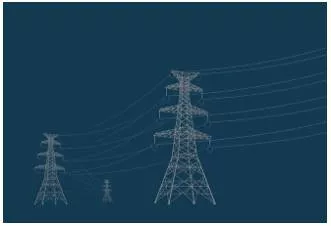
The union budget lacks the ‘power’ to transform services
While clean energy is a priority, providing power has not been linked with policy making in the development sector.India’s Union Budget 2022-23 demonstrates a clear intent to prioritise investments in clean energy and sustainable development, in line with the country’s promises made at COP26 in Glasgow last year. The Budget is also an opportunity to turn the spotlight on policy conversations — since it sets the tone for reflecting on policies, schemes, and how they are implemented on the ground. Electricity and development sectors need a more integrated approach to achieve the vision set forth in instruments such as the Union Budget that guide policy implementation at other administrative levels.
A reduction
While the health sector witnessed a 16% increase in estimated Budget allocations from last year, medical and public health spending was reduced by 45% for 2022-23. The education sector also witnessed an 11.86% increase in allocations. Interestingly, despite the push for digital education, which now includes the e-Vidya programme (to boost online learning), last year’s revised allocation saw a reduction of 35%. And despite these increases in estimates, health and education continue to share only about 2% each of budgetary allocations annually.
Budget estimates demonstrate intent, but the proof of the pudding lies in the actual expenditure which reiterates the need for greater attention to be paid to our health and education sectors. While the health sector was allocated ₹74,602 crore in 2021-22, the Government exceeded its spending by over ₹5,000 crore more (₹80,026 crore) on health, signalling a spike in demand, likely propelled by the ongoing COVID-19 pandemic. Given this scenario, a less than ₹1,000 crore increase in the Budget Estimate (₹86,606 crore) in 2022-23 when compared with last year’s Revised Estimates (₹85,915 crore) appears incongruent with the Government’s aim of providing quality public health care at scale.
Greater allocation of funds is welcome, even if marginally, but as our research on health and education policy documents at the national and State levels indicate, the aim of providing better health care gets stymied, in the absence of electricity and when power provisioning is not linked to desired outcomes.
The role of reliable energy
It is widely recognised that the availability of reliable electricity supply can improve the delivery of health and education services; 74% of the targets of the Sustainable Development Goals are interlinked with universal access to reliable energy. Despite this, 44% of schools and 25% of India’s health sub-centres and primary health centres remain unelectrified. For the Government’s proposed energy transition to succeed, these critical facilities require energy access first. These statistics only refer to the presence or absence of an electricity connection. Its reliability in terms of the number of hours that electricity is available steadily without any voltage fluctuations also plays a significant role in delivering services.
The lack of integration of electrification requirements in development sector policy documents may be partly due to lack of information about electricity and development linkages, poor coordination mechanisms between the sectors and departments, and poor access to appropriate finance. Even while electricity is considered, it is to the limited extent of being a one-time civil infrastructure activity rather than a continuous feature necessary for the day-to-day operations of these services. Departmental budgetary allocations are quite telling in terms of the extent to which electricity is prioritised by these departments; many do not even have line items to account for recurring electricity connection charges and maintenance expenditure. We must remind ourselves that while electricity is invisible and taken for granted when available, its absence is felt when it is not provided.
Think multiple policies too
Our research on development and electricity policies also demonstrates that integration need not only be at the level of a single policy. Sometimes, multiple policies can complement each other to achieve the larger sectoral objectives. For example, in Assam, the Energy Vision document that lays out the electricity and development outcomes is to be applied in tandem with the Solar Energy Policy 2017 that operationalises this vision via an action plan. To successfully integrate electricity provisioning and maintenance, policy frameworks should include innovative coordination and financing mechanisms. These mechanisms, while developing clear compliance mandates, must also allow sufficient room for flexibility to respond to local contexts. Such flexibility can be embedded in funds (such as untied funds) to provide local decision-makers with some authority to mitigate policy implementation barriers.
A successful policy outcome might be dependent on several invisible aspects that do not get the attention and the funding necessary to aid in successful policy delivery. Electricity is one of them.
This deepens exclusion
Many development policies that have objectives to improve health and education services require facilities to have access to reliable electricity as a prerequisite to qualify for benefits. This, unfairly, puts the onus of acquiring reliable electricity supply on individual facilities rather than their departments. Such requirements result in facilities and schools that are already deprived of electricity to continue to be excluded from other assistance.
Providing reliable electricity for health centres and schools should be the responsibility of centralised decision-making entities at the State or national level. Individual facilities should not be burdened with the responsibility to meet the eligibility criteria for policies or programmes.
It must also be noted that integrative policies are useful but insufficient to achieve intended developmental outcomes. For policies to become transformative, instruments that operationalise them must be in place. This is when budgetary allocations, institutional structures, finance, information and coordination mechanisms come into play.
Allocation of funds is a must to set up a robust data governance mechanism as it is critical for integrative action and evidence-based policymaking. However, as India has witnessed with other cross-sectoral and centralised statistical, planning, and implementation data governance, diverse contexts must support oversight mechanisms that ensure data credibility.
Systemic gaps
Finance is largely unavailable to ensure reliable electricity supply to schools and health facilities. Some directives, such as those governing the use of untied funds, need to be more flexible in allowing these facilities to prioritise providing reliable and sustainable electricity. The provisioning of reliable electricity, in turn, improves the delivery of health and educational services. Departmental silos in public administration have resulted in linkage gaps between critical “supply” departments (such as electricity and water) and “demand-generating departments” (such as health and education). This gap is accentuated when coordination mandates are not met with sustained finance to support human resources and common activities.




Top court quashes FIRs against Gen Z protesters
Sep 04, 2026







Stay updated with The Hindu Editorial Vocab24 app, your definitive source for breaking news and comprehensive coverage from India and around the globe. Whether it's political developments, business updates, sports highlights, the latest technology trends, or current events, The Hindu brings live, accurate, and reliable news directly to your device.
Don’t fall for sensationalized or fake news shared online. Read and share accurate updates with friends and family through The Hindu Editorial Vocab24 app. Download it today!
News Coverage in The Hindu Editorial Vocab24 App
Breaking News: Receive instant notifications on breaking news stories as they unfold. Stay informed about major events and developments in India and around the world with live blogs, news in shorts videos, and concise articles.
Politics: Get the latest updates on Indian politics, including elections, policy changes, government decisions, and political events that shape the nation.
Business and Economy: Stay ahead in the economic landscape with detailed business news and market analysis. Learn about stock market trends, financial reports, corporate news, and economic developments to make informed investment decisions.
Current Events: Follow stories on social issues, policy changes, global events, and daily current affairs, tailored for UPSC and other competitive exam preparations.
Technology: Keep up with the latest gadgets, innovations, and tech trends. Read expert reviews and analyses in short, concise updates on cutting-edge technology from India and beyond.
Sports: Never miss a moment of your favorite sports. Get live scores, match reports, and expert analysis on cricket, football, tennis, and more.
International News: Stay informed about global events and geopolitical developments, including the Russia-Ukraine war, Israel-Palestine conflict, and other key international stories.
Local News: Stay connected to your community with the latest updates on city events, issues, and local news. Coverage includes hyperlocal updates from cities like Bangalore, Chennai, Delhi, Hyderabad, Mumbai, Kolkata, and more.
Trending Topics: Discover what's trending today with the most talked-about stories and hot topics across India and the world.
Experience journalism that values integrity, accuracy, and reliability. Download The Hindu Editorial Vocab24 app today and stay connected with the world.
Subscribe to our newsletter!







