

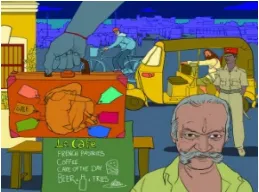
The two faces of puducherry
Spread across 20 sq. km along the Coromandel Coast of the Bay of Bengal, the former French enclave of Puducherry is yet to prep up to welcome this year’s tourists from abroad, although the Sri Aurobindo Ashram keeps getting its steady stream of devotees and weekend holidayers from neighbouring States. Away from the tranquil boulevard part of town, 17-year-old Jasmine cuts a forlorn (pitifully sad and abandoned or lonely.) figure as she stands, arms folded, in a corridor on the first floor of the government children’s observatory home in Ariyankuppam, on the outskirts of Puducherry. She has just been brought here from a shelter home in Thavalakuppam, her address since early 2017 after three years at another shelter home, for counselling.Escorted by a warden, Jasmine walks into the counselling room. Lean, and of average height, she is attired (be dressed in clothes of a specified kind.) in a bright-coloured churidar-kurta with her oiled hair neatly plaited. She sits uncomfortably on a plastic chair waiting for her mother, who needs to complete the formalities to take her home. A resident of Lawspet in Puducherry, Jasmine dropped out of school when she was in Class VI. It has been four years since she was rescued from a child sex trafficking racket involving nine policemen — exposing the hidden murky (obscure or morally questionable.) side of this global tourist destination where footfalls have officially gone up from 4.76 lakh in 2001 to 12.97 lakh in 2015 for domestic tourists while the inflow of foreign tourists rose from 22,115 to 1.06 lakh over the same period.
Jasmine and Jessy
As she waits, Jasmine begins incoherently narrating the reason she was in the shelter home. “Jessy was my friend and she knew Sheela who was her neighbour. Sheela introduced both of us to Veena. I spent more time with them since I did not like my stepfather; he used to beat me whenever I made a mistake. I was so angry with the way he treated me that I would frequently run away from home. While spending time with my friends one day, I was thirsty and asked for water. Veena offered me juice. I don’t remember what happened after that. When I woke up the next morning, I was bleeding and felt excruciating pain in my abdomen. Later, I found out that she had mixed drugs in the juice and let her client rape me while I was unconscious.”
On April 1, 2014, Jasmine, then 14, and her friend Jessy, 16, sought help from Childline, a social service organisation, by calling their helpline number (1098). Jessy later told a protection officer during one of her counselling sessions that her mother had pushed her into prostitution on several occasions.
The staff of Childline took them before the Child Welfare Committee (CWC) the very next day. On April 16, 2014, their statements were recorded at the Grand Bazaar police station before both of them were admitted for a medical examination at the Rajiv Gandhi hospital. The police records reveal that the two girls named a number of other people, including two other juveniles, who they said had pushed them into prostitution. In her deposition, Jasmine said that Sheela and Veena (who worked for a pimp) had compelled them to enter into sexual relationships with several men (including policemen and businessmen), threatening to upload video clippings of them in compromising positions with unknown persons while they were “sedated (calm (someone) or make them sleep by administering a sedative drug.) and in an unconscious state”.
For further proceedings, the case was transferred to Crime Branch, Crime Investigation Department (CB-CID). On May 8, 2014, the CB-CID questioned the girls, who said they were forced to obey the orders of a pimp and that they were made to stay at least on four occasions in Savarayalu Street Junction, one of the main commercial areas in Puducherry thronged (flock or be present in great numbers.) by tourists. Two constables, two head constables, two sub-inspectors and two inspectors (all of them have been dismissed from service), and one retired sub-inspector figure in the chargesheet after the two girls identified them. On May 19, 2014, five of the accused were remanded in judicial custody. The case, however, is still pending trial before the court. Curiously, Jessy, who was sent home when she turned 18, has now gone missing.
A quartet’s horror
Jasmine and Jessy’s tragic fate finds an eerie (strange and frightening.) parallel in that of two teenage girls from Cuddalore, 22 km from Puducherry, who were recently rescued from pimps. Having lost their parents, the two girls had left their poverty-stricken homes to reach the coastal town only to be trapped into the vicious sex trafficking nexus (a connected group or series.) of autorickshaw drivers, bus conductors and lodge owners waiting to pick up vulnerable girls. Within three days of their arrival, they were taken to three lodges on East Coast Road and New Bus Stand in Puducherry, and forced at knifepoint to engage in sex with their abductors. While the girls state that they were rescued by the police from a lodge, the police claim they rescued the girls from a street in Vambakeerapalayam, which comes under Odiansalai police station limits.
Of average height, broad-faced and with wide eyes, an agitated Prema, 17, from Cuddalore recounts the horror: “My father died from snakebite when I was a year old. My mother died during (the 2004) tsunami. I grew up in my aunt’s house. They didn’t like my boyfriend so I left home and came to Puducherry with another girl. While we were standing at the bus stand, we met two other young girls who had left their homes in Puducherry. After a while a group of auto drivers came and took us to a lodge. They paid Rs. 2,000 to one girl who had sex with them… Later, the police rescued us.”
On April 13, 2017, the Child Welfare Committee forwarded the case to the Odiansalai police station. A case under the Immoral Traffic (Prevention) Act and Protection of Children from Sexual Offences (POCSO) Act was registered on April 19, 2017, and the CB-CID was roped in (joined to work in) about three months later. While the case is still under investigation, there have been six arrests so far, a majority of them autorickshaw drivers.
Prema was sent to Jawaharlal Institute for Postgraduate Medical Education and Research (JIPMER) for counselling as she had turned violent and started attacking the staff at a government-recognised shelter home she was taken to. She was treated as an in-patient for more than a week before her statement was recorded by the police. Of the rest of the quartet (a set of four people or things.), while two girls were sent home with their relatives, the third girl has been enrolled in a vocational course and put up in a hostel after her family refused to take her in.
A proliferating network
The rescue of the quartet coincided with the police busting an online sex trafficking racket in March this year, rescuing one woman from Kerala, two from Bengaluru and one from Puducherry. These women claimed that they came to Puducherry after reading an advertisement for jobs in beauty parlours. The women have been sent back to their native places and four persons have been arrested by the police. Rajiv Ranjan, Senior Superintendent of Police (Law and Order), Puducherry, however believes the busted online racket is only the tip of the iceberg. “There is a large network involved and the main accused in this case heads one of these networks. They have contacts in Bengaluru and Chennai and they even bring girls from West Bengal. The accused in this case is a pimp and runs gambling and prostitution rackets in Puducherry. He has been arrested for both these offences in the past,” he says.
Between 2013 and 2017, the CWC reported eight cases under the Immoral Trafficking Act and POCSO: two in 2013, two in 2014, and four in 2017. Child Welfare Committee Chairperson Vidyaa Ramkumar corroborates Ranjan. “Some children we rescue have a history of being trafficked several times for sex work. After being rescued, they are brought to the shelter homes. While tracing their background, we find out there is a wide common network involved,” she says.
An autorickshaw driver throws light on the trafficking nexus involving his tribe, saying many drivers at the Puducherry bus stand, Perumal Koil Street or East Coast Road act as go-betweens, taking vulnerable girls to lodges or directly to clients. “They are well connected with lodge owners, pimps and even clients from different States who come to Puducherry during weekends. This network thrives since many cases go unreported to police stations,” he adds.
Commercial sexual exploitation is not confined to the brothels (a house where men visit prostitutes.) anymore. It happens in hotels, lodges and homestays where the service is booked online. SSP Ranjan adds that with the development of technology, the prostitution network has become more sophisticated. A random Internet search throws up several results, with links purportedly for ‘Women seeking men in Puducherry’, ‘erotic services’, ‘call girls’, ‘escorts’, ‘college girls’, ‘foreign women’ — and even ‘cute and sexy royal VIP personal female escort services’.
Beginnings of a crackdown?
In July this year, six young women from Karnataka, Tamil Nadu and Puducherry were rescued when the police raided Traditional Style Beauty and Ayurveda Clinic in Nellithope; four arrests were made as well. Sensing that spas and beauty parlours were being used clandestinely (in a secretive and illicit way.) for prostitution, issuing of trade licences to them was stopped. “We have cancelled licences of many spas and beauty parlours. The municipality has passed an order that we would issue trade licences only if they are routed through the police. Since then, no one has received any request for new licence or for renewal,” says Municipal Commissioner S. Ganessin.
Child rights activists and NGO workers claim that several unlicenced homes — as opposed to 63 licenced homes — in Puducherry are forcing children including young boys in their homes into sex work. It was due to the proactive involvement of CWC that 37 tribal children were rescued in January 2017 in a raid on a home that was used to provide accommodation to foreign tourists. The children, who were made to entertain the guests, reported physical and mental abuse. Following this raid, there has been no full-fledged investigation into unlicenced children homes except for an attempt to survey the number of such homes functioning here.
Some medical professsionals, on condition of anonymity, claim that several children below the age of 18 with sexually transmitted diseases are being treated in private clinics. “They are not taken to the government hospitals and private clinics do not keep a medical record of their patients,” says one. Pondicherry AIDS Control Society Project Director S. Jayanthi says that it is impossible to get age-wise data since it is collated (collect and combine (texts, information, or data).) from several medical institutions. “They segregate the data into four categories: below 20 years, 20-24, 25-44 and above 45 years old,” she says.
Children rescued from trafficking are taken either to a government observatory home or government-licenced shelter homes run by NGOs. These shelter homes can accommodate girls until they turn 18, after which they are sent to their parents or relatives. While a few are taken back by their parents or relatives, others without any support are forced to return to sex work, with no system in place for their phased reintegration into society: “We do not have government-run shelter homes for victims of sex trafficking,” admits Puducherry Women’s Commission Chairperson K. Sundari. But more than systemic inadequacies, it’s the refusal to acknowledge the scale of the problem on the part of some that rankles ((of a comment or fact) cause continuing annoyance or resentment.). “Though trafficking for commercial sexual exploitation is not rampant (flourishing or spreading unchecked.) in Puducherry, we cannot completely deny its presence. We don’t have records to show that children are being taken from here,” says a police officer.
In Ariyankuppam, as Jasmine leaves with her mother, her parting words reverberate: “I have to look for a job. I do not want to depend on my mother or stepfather. I don’t know what to do.”




Top court quashes FIRs against Gen Z protesters
Sep 04, 2026







Stay updated with The Hindu Editorial Vocab24 app, your definitive source for breaking news and comprehensive coverage from India and around the globe. Whether it's political developments, business updates, sports highlights, the latest technology trends, or current events, The Hindu brings live, accurate, and reliable news directly to your device.
Don’t fall for sensationalized or fake news shared online. Read and share accurate updates with friends and family through The Hindu Editorial Vocab24 app. Download it today!
News Coverage in The Hindu Editorial Vocab24 App
Breaking News: Receive instant notifications on breaking news stories as they unfold. Stay informed about major events and developments in India and around the world with live blogs, news in shorts videos, and concise articles.
Politics: Get the latest updates on Indian politics, including elections, policy changes, government decisions, and political events that shape the nation.
Business and Economy: Stay ahead in the economic landscape with detailed business news and market analysis. Learn about stock market trends, financial reports, corporate news, and economic developments to make informed investment decisions.
Current Events: Follow stories on social issues, policy changes, global events, and daily current affairs, tailored for UPSC and other competitive exam preparations.
Technology: Keep up with the latest gadgets, innovations, and tech trends. Read expert reviews and analyses in short, concise updates on cutting-edge technology from India and beyond.
Sports: Never miss a moment of your favorite sports. Get live scores, match reports, and expert analysis on cricket, football, tennis, and more.
International News: Stay informed about global events and geopolitical developments, including the Russia-Ukraine war, Israel-Palestine conflict, and other key international stories.
Local News: Stay connected to your community with the latest updates on city events, issues, and local news. Coverage includes hyperlocal updates from cities like Bangalore, Chennai, Delhi, Hyderabad, Mumbai, Kolkata, and more.
Trending Topics: Discover what's trending today with the most talked-about stories and hot topics across India and the world.
Experience journalism that values integrity, accuracy, and reliability. Download The Hindu Editorial Vocab24 app today and stay connected with the world.
Subscribe to our newsletter!







