

The superbugs of hyderabad
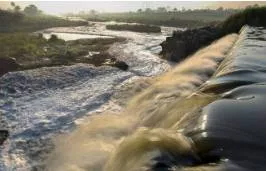
Deep inside the Kazipally industrial area of Hyderabad, the capital of Telangana, is an open well, about 20 feet across. Into it empties a thin stream of murky fluid, changing colour from black to brown to a dull green as it flows. Its vapours are mildly pungent (having a sharply strong taste or smell.) at first, but get nauseating within 15 minutes. Yet a man stands beside it, suctioning out the fluid through a pipe attached to a bright red tanker marked ‘Industrial Effluent’. This tanker will transport the fluid to Patancheru Enviro Tech Limited (PETL), an effluent treatment plant around20 km away, where it will be treated and released into Hyderabad’s Musi river.Things don’t always go according to plan, though. For one, the Kazipally well, a temporary containment facility for toxic effluents from a dozen pharmaceutical companies, is not leak-proof. A natural rivulet (a small stream of water or another liquid.) takes the fluid in the well to the nearby Gandigudem lake, where Kazipally’s residents — mostly farmers and some pharma industry workers — raise fish to sell. On most days, the rivulet is a mere trickle (flow in a small stream.). But on October 3 this year, when heavy rains lashed Hyderabad, it flooded, poisoning around 2.3 lakh fish in the lake.
Fish kills aren’t new in Kazipally. Since the pharmaceutical industry took root in the city in the 1970s, environmental pollution has threatened agriculture, aquaculture and the health of Hyderabadis. But new research in the last few years shows this pollution to be a threat of a larger, more terrifying scale.
A new species of danger
The Kazipally well, along with ditches, lakes and rivers around the pharmaceutical cluster (a group of similar things or people positioned or occurring closely together.), receives large doses of antibiotics, along with the traditionally monitored pollutants. When these antibiotics come in contact with pathogenic bacteria (which cause disease in humans), the latter learn to resist the former, making human infections by these pathogens extremely hard to treat.
Antibiotic resistance is arguably the biggest threat to global health in the 21st century. In 2014, around 700,000 people across the world died due to infections that evaded antibiotics, a number that is estimated to touch 10 million by 2050.
A big driver of resistance is the overuse of these drugs. When people take antibiotics they don’t need, for a viral flu, for instance, the bacteria in their body learn to tolerate these drugs by acquiring resistance genes. But resistance genes don’t come out of nowhere — some of them have existed for decades in soil and water, helping environmental bacteria fight natural antibiotics.
Forced evolution
Studies in Hyderabad’s pharmaceutical cluster now show that the large doses of man-made antibiotics in pollution hotspots like Kazipally force these environmental bacteria to evolve by boosting the numbers of resistance genes. When human pathogens like Staphylococcus aureus (which causes skin and respiratory infections), mix with these environmental bacteria, they borrow these genes freely, making them potential killers.
Hyderabad’s pharmaceutical industry has responded to the science linking antibiotic pollution with resistance by questioning the motives of the researchers. Much of the research in the Patancheru, Kazipally and Pashamylaram industrial areas comes from research groups in Sweden, while one study comes from Germany. Officials from pharmaceutical companies argued that these groups were trying to revive the flailing (floundering) European manufacturing sector by maligning Indian drug makers. Calling the finding of high antibiotics in the environment “doubtful”, P. Eshwar Reddy, executive director of Bulk Drug Manufacturers Association (BDMA) said, “Most of the reports are from foreign countries. We have to cross-check them ourselves.”
Shocking findings
In 2005, Cecilia de Pedro, a student of environmental sciences at Sweden’s University of Gothenburg, began testing the effects of industrial waste water on a tiny transparent crustacean, the water flea. She decided to use samples from PETL’s plant, which was already in the eye of a storm for being a big polluter. In fact, the entire Patancheru region — home to drug, pesticide and paint makers — is considered one of the most toxic environments in the world. And so, when de Pedro found out how poisonous the treated discharge from PETL was to the flea, no one was surprised. What wasn’t clear, however, was what chemicals were causing the toxicity.
De Pedro’s findings intrigued D.G. Joakim Larsson, an eco-toxicologist at the same university. He decided to find out if the culprits were pharmaceuticals. PETL’s core process to treat effluent remains the same today: the plant mixes effluent with some domestic sewage, aerates the mix to allow sewage bacteria to break down organic pollutants, and removes the broken-down sludge. The treated water is let out. Larsson’s team tested this treated output for 59 pharmaceuticals. The findings were a bombshell.
The team found 11 drugs in high quantities, of which six were antibiotics. But the real surprise was the quantity of antibiotics found. While typical measurements of drugs in sewage from households and hospitals across the world were around a microgram per litre, PETL was dumping ciprofloxacin at a rate of 31,000 micrograms per litre. It was more than the concentration of ciprofloxacin in the blood of people who were being treated with the drug.
The finding was a turning point for Larsson. “When we found out that the highest drug levels were in fact antibiotics, I changed my line of research,” he said. Instead of looking at whether pharmaceuticals were toxic to fish, he began to study antibiotic resistance due to environmental pollution.
In the next few years, Larsson collaborated with other researchers to publish a series of papers analyzing data from Hyderabad. First they looked for antibiotic-resistant bacteria in the PETL discharge, and found plentiful. While these were mostly environmental bacteria, like Bacillus thuringiensis, that don’t hurt humans, there were also opportunistic pathogens (which cause infections in already ill people). For example, strains of Providencia rettgeri, which causes urinary tract infections in people wearing catheters (a flexible tube inserted through a narrow opening into a body cavity, particularly the bladder, for removing fluid.), were resistant to over 30 antibiotics. It was like nothing Larsson had ever seen before. “The bacteria in these polluted environments are exceptionally multiresistant, more so than in any other investigated environment I am aware of,” he said.
But merely finding antibiotics along with resistant bacteria doesn’t prove that the former caused the latter. So, the researchers did another study, comparing lakes in Kazipally with the Himayath Sagar and Osman Sagar lakes of Hyderabad, both far from the pharma industry and unlikely to be as polluted. For good measure, they sampled two unpolluted Swedish lakes too. The analysis was telling. Neither the Indian nor Swedish controls had resistant bacteria in numbers as high as the lakes in the pharma cluster.
That wasn’t all. The microbes in the Kazipally lake had integrons and plasmids, which are bits of genetic material that let resistance genes hop from one bug to another. When lake bacteria were mixed in the lab with the Escherichiacolibacterium (some strains of which can cause diarrhoeal disease in humans), the genes jumped across alacrity (brisk and cheerful readiness.), turning the E. coli multidrug resistant.
“This is scary,” says Larsson. Some plasmids carried resistance genes that they had never been known to carry before — which meant that these genes had newly acquired a way to travel from one bacterium to another.
Rebuttal (denial) by pharma companies
In May this year, the BDMA published a rebuttal which, according to them, challenged the idea that pharmaceutical pollution causes resistance. For the study, Dayananda Siddavattam, a professor at the University of Hyderabad, collected water and soil samples from near the facilities of companies like Aurobindo Pharma, Hetero Drugs and Virchow Laboratories. He then cultured bacteria from them, and tested for resistance against ten antibiotics. For comparison, he carried out the same exercise in the Nallagandla lake, 50 km away from these companies.
The report says that there was no difference in the numbers of antibiotic-resistance bacteria near the companies and away from them. “Antimicrobial resistance is a problem, but it cannot be attributed to the pharma industry,” Reddy told The Hindu , citing the report.
But other experts, including Larsson, said this conclusion was a leap. Larsson pointed out that the study doesn’t show what the association claims it does. For one ,the study didn’t quantify the resistant bacteria according to the antibiotics they were resistant to, he said. This would have thrown up differences between polluted and unpolluted sites.
In general, evidence that antibiotic pollution leads to resistance is strong enough to take action, said Sumanth Gandra, a researcher who studies the problem at New Delhi’s Centre for Disease Dynamics, Economics and Policy. Larsson’s work forms only one part of this evidence. A review of metagenomic data (genetic data that gives a picture of all bacterial species in an ecosystem) from 864 places across the globe found that environments polluted with pharmaceuticals beat every other place in both the numbers and types of antibiotic-resistance genes.
Cleaner, but not clean enough
During interviews with The Hindu, industry officials argued that pollution from pharma companies was a thing of the past. Since 2006, when Larsson’s group began its work, much has changed in the Hyderabad cluster. Around 86 of the 220 bulk drug makers in Hyderabad today have zero liquid discharge facilities, which means that they recycle all the liquid effluent. The only waste they generate is solid, which is incinerated (destroy (something, especially waste material) by burning.) or buried in landfills.
Meanwhile, PETL has spruced up (to refurbish or renew) too. Today, it does not dump its discharge into the local Isakavagu creek, shipping it instead in an 18 km pipeline to a domestic sewage treatment plant near the Musi river. Here the discharge is mixed with treated sewage and diluted before being released into the Musi. The quality of effluent that comes to PETL today is more tightly controlled too, as pharma companies pre-treat it. Large firms like Dr. Reddy’sLaboratoriesand Mylan Pharmaceuticals, who have zero liquid discharge, don’t send anything to PETL.
How effective these measures have been, though, is disputed.
To begin with, zero liquid discharge is good, but not a panacea (a solution or remedy for all difficulties or diseases.) for pollution. For example, after the Gandigudem fish kill in October this year, the Pollution Control Board shut power supply to several companies that had allowed contaminated water to flow into the Kazipally well. At least one of the penalised drug makers, Lee Pharma, employs zero liquid discharge, despite which contamination from its facility escaped into the environment.
The seepage (the slow escape of a liquid or gas through porous material or small holes.) of contaminated water from drug manufacturers is common during rains, said Thatikonda Shashidhar, an assistant professor of civil engineering at IIT Hyderabad, who also serves on the Telangana State Pollution Control Board. Such seepage could be why pollution persists in ponds and lakes, despite the upgrades of the last decade. In 2017, a German study published in the journal Infection found sky-high concentrations of the antifungal fluconazole in the Kazipally well, unmatched anywhere else in the world. The concentration of several other antibiotics in sewers in Patancheru were also enough to promote resistance.
If seepages still plague the pharma industry, so does the illegal dumping of effluents. Companies without zero liquid discharge, which are required to ship their effluent to common treatment plants like the PETL, don’t always toe the line (accept the authority, policies, or principles of a particular group, especially unwillingly.). One reason is that they are hoping to cut costs. It costs around Rs. 7,000 to treat a 10 kilolitre tank of effluent with low levels of dissolved solids at PETL. For a company generating around 20 kilolitres of effluent a day, the costs can add up quickly. “So, it is much more convenient for them to dump in open drains,” said Anil Dayakar, an environmental activist who runs Gamana, an NGO that has been fighting to protect waterbodies in Hyderabad for 15 years now.
Dayakar is unconvinced about the changes in PETL too. Rather than cut pollution, the 18 km pipeline from PETL is only transferring contaminants to Musi, he said. In 2016, to combat the perception that the plant was still dumping antibiotics, the Telangana State Pollution Control Board tested its discharge for four antibiotics. They found all drugs to be undetectable. But this finding is contradicted by the independent research of one of the board’s own members, Thatikonda Shashidhar.
From a river to a sewage canal
Forty-year-old Shashidhar began to conduct experiments in the Musi after he joined IIT Hyderabad in 2011. The Patancheru region was already known to be polluted, he said, and so he decided to focus on the river.
The Musi originates west of Hyderabad in the Anantagiri hills, cuts across the city and joins the river Krishna before emptying into the Bay of Bengal. From a river that inundated (overwhelm (something) with/Flood) great parts of Hyderabad city in a major flood in 1908, the Musi has turned into a drain today. The Osman Sagar and Himayath Sagar dams that were constructed to prevent a recurrence of a 1908-like event have tamed its flow to a trickle, meaning that the river consists almost entirely of sewage.
It is to this river that a pipeline brings treated discharge from PETL today. First, the discharge goes into the Amberpet Sewage Treatment plant, where it mixes with domestic sewage or waste from households, as well as discharge from two other effluent treatment plants that contain pharma waste. These are then treated, and the blend enters the river.
Shashidhar and his doctoral student Rithu Gothwal collected samples from the inlet to the Amberpet plant, which includes PETL water, as well as from the outlet. In addition, they collected water and sediment from 16 points along the shore of the Musi, starting from the Osman Sagar reservoir, and ending where the Krishna meets the sea.
They found that while the Osman Sagar reservoir, west of the city, contained small amounts of antibiotics, by the time the river reached Musarambagh, in the centre of the city, concentrations exploded. Musarambagh is far from the pharmaceutical clusters of Hyderabad, with no industries nearby. Meanwhile, the Amberpet plant inlet, which contains PETL and other pharma discharges, was even worse, with around 5,528 micrograms per litre of ciprofloxacin.
It is plain from these findings that PETL and other common effluent treatment plants are still pumping out large amounts of antibiotics, said Shashidhar, because the levels in the Amberpet inlet cannot be explained by domestic sewage.
What’s also evident is that companies are dumping effluent illegally into the Musi, which explains the levels at Musarambagh. “You never know who is dumping effluent where. The catchment area of Musi is really big,” said Shashidhar. There are several cases of companies dumping illegally in and around Hyderabad’s outer ring road, which encircles the city and cuts across the Musi, according to him. All effluent can be washed into waterbodies and Musi’s tributaries through rainwater.
Reining (keep under control) in the industry
Even as evidence of antibiotic pollution builds up, government regulations are taking time to catch up with it. As of today, India does not limit antibiotics in pharma waste water. Few countries do. India’s first concrete move to tackle the problem was the 2017 National Action Plan for Antimicrobial Resistance, which talks about imposing limits on antibiotics in industrial waste. But a member of the Central Pollution Control Board, tasked with deciding on these limits, told The Hindu that these regulations are at least three years away.
What India needs to keep in mind, though, is that the cost of antibiotic resistance will be enormous for both the country and the world. One estimate puts the expense of treating a resistant bloodstream infection at Rs. 42,000 more than a susceptible infection. This could devastate the health-care system, which today takes antibiotics for granted. In contrast, the cost of better pollution-control isn’t that high. Even companies in Hyderabad admit that complying with pollution norms doesn’t need more than 3-4% of the production cost. “The cost isn’t the issue,” said Eshwar Reddy of BDMA. The issue is whether pharma companies are willing to listen to the science.
The bacteria in these polluted environments are exceptionally multi resistant, more so than in any other investigated environment I am aware of.
D.G. Joakim Larsson
Eco-toxicologist, University of Gothenburg
Antimicrobial resistance is a problem, but it cannot be attributed to the pharma industry.
P. Eshwar Reddy
Executive director, Bulk Drug Manufacturers Association




Top court quashes FIRs against Gen Z protesters
Sep 04, 2026







Stay updated with The Hindu Editorial Vocab24 app, your definitive source for breaking news and comprehensive coverage from India and around the globe. Whether it's political developments, business updates, sports highlights, the latest technology trends, or current events, The Hindu brings live, accurate, and reliable news directly to your device.
Don’t fall for sensationalized or fake news shared online. Read and share accurate updates with friends and family through The Hindu Editorial Vocab24 app. Download it today!
News Coverage in The Hindu Editorial Vocab24 App
Breaking News: Receive instant notifications on breaking news stories as they unfold. Stay informed about major events and developments in India and around the world with live blogs, news in shorts videos, and concise articles.
Politics: Get the latest updates on Indian politics, including elections, policy changes, government decisions, and political events that shape the nation.
Business and Economy: Stay ahead in the economic landscape with detailed business news and market analysis. Learn about stock market trends, financial reports, corporate news, and economic developments to make informed investment decisions.
Current Events: Follow stories on social issues, policy changes, global events, and daily current affairs, tailored for UPSC and other competitive exam preparations.
Technology: Keep up with the latest gadgets, innovations, and tech trends. Read expert reviews and analyses in short, concise updates on cutting-edge technology from India and beyond.
Sports: Never miss a moment of your favorite sports. Get live scores, match reports, and expert analysis on cricket, football, tennis, and more.
International News: Stay informed about global events and geopolitical developments, including the Russia-Ukraine war, Israel-Palestine conflict, and other key international stories.
Local News: Stay connected to your community with the latest updates on city events, issues, and local news. Coverage includes hyperlocal updates from cities like Bangalore, Chennai, Delhi, Hyderabad, Mumbai, Kolkata, and more.
Trending Topics: Discover what's trending today with the most talked-about stories and hot topics across India and the world.
Experience journalism that values integrity, accuracy, and reliability. Download The Hindu Editorial Vocab24 app today and stay connected with the world.
Subscribe to our newsletter!







