

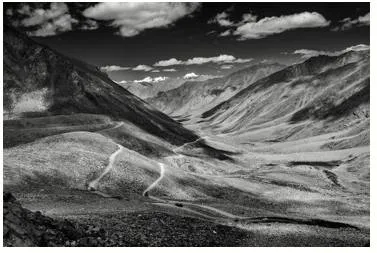
The perils of an unresolved boundary
Nirupama Rao looks at the India-China relationship of the 1950s-60s, the border issue, and negotiations on Tibet.The India-China relationship is in a difficult place, with the past shadowing the present. The period from 1949 to 1962 is crucial as Jawaharlal Nehru sought, albeit unsuccessfully, to establish a workable relationship with the Chinese. Nirupama Rao, former Foreign Secretary and Ambassador to China, traces the history of Tibet, the genesis of the McMahon Line, Communist China’s military takeover and domination of Tibet, and the border row between India and China in her new book, The Fractured Himalaya. An excerpt from the book:
It was to be over a year before negotiations between India and China on relations between India and Tibet opened in Beijing. These commenced on December 31, 1953. Jawaharlal Nehru’s approach to frontier questions between India and China was already well-entrenched by then. Tibet had become more a ‘psychological’ buffer from a political one during British rule — psychological because Nehru was convinced that any military attack on India from Tibet was not feasible. For him, while the status of Tibet and Tibetan autonomy, as also Indian interests in Tibet inherited from the British were issues for discussion with China, the frontier, as his biographer S. Gopal noted, ‘was firm, well-known and beyond dispute’.
Loosely put, Nehru’s attitude was that there was no room for controversy over the McMahon Line: ‘Our maps show that the McMahon Line is our boundary and that is our boundary — map or no map. That fact remains and we stand by that boundary, and we will not allow anybody to come across that boundary.’ Gopal notes that this assertion of rights was more definite regarding the eastern sector of the boundary.
Flawed advice
The problem lay in the fact that, except for Sikkim, the border had not been demarcated — jointly with China — on the ground; the boundary in the western and middle sectors had not been defined in detail by treaty and only, as Nehru stated, by custom, usage and tradition. The McMahon Line was shown only on a map that the Chinese government had initialled in 1914 but not subsequently accepted. The Chinese would set their strategy in such a way subsequently, when the officials of the two sides met in 1960, to seek ‘fresh acceptance of every stretch’ of the boundary. K.M. Panikkar, without the benefit of hindsight, only had this advice to give Nehru: the issue would pose no difficulty. Could Panikkar [the first Indian Ambassador to China] have sensed the actual Chinese attitude? In retrospect, his advice to Nehru would have serious repercussions for India. As advice, it was fatally flawed.
Throughout his stay in China, Panikkar took the stand that the Tibetan issue was a simple one. Leaders like Zhou Enlai, in his view, recognised the ‘legitimacy’ of India’s trade and cultural interests in Tibet and only suggested that the political office in Lhasa, ‘an office of dubious legality’ in Panikkar’s words, should be regularised by its transformation into an Indian Consulate-General. Other posts and institutions like the telegraph lines set up in the British era, the military escort at Yadong in the Chumbi Valley, ‘were to be abolished quietly in time’, and the trade agents in Tibet and their subordinate agencies brought ‘within the framework of normal consulate relations’. In his seeming obsession with the big picture of two big Asian nations forging deeper understanding and cooperation, Panikkar was content to say that he left ‘no outstanding issue’ pending at the time of his departure. It was a strategic miscalculation which would have serious consequences.
When Zhou Enlai told Panikkar in September 1951 in a ‘shrouded sentence’ that the question of the stabilisation of the Tibetan frontier — a matter of common interest to India, Nepal and China — could be settled by discussion between the three countries, it was assumed, in diplomatic guesswork, that stabilisation meant that there was no territorial dispute between India and China.
‘Cunning’ move
Many records indicate that the view of the officials in the Ministry of External Affairs was that while negotiations for an agreement between India and China on Tibet were necessary, they should also include a border settlement. There should be a quid pro quo for India’s recognition of Chinese sovereignty over Tibet. A note by the Foreign Secretary, K.P.S. Menon on April 11, 1952 observed that the Chinese government’s attitude was far from straightforward, and could, in fact, be termed ‘cunning’. A child could see through the game, said Menon. Zhou Enlai had suggested in September 1951 that India’s position in Tibet should be regularised and the ‘boundary with Tibet stabilised’. India had said immediately that ‘we were ready for discussions’ but there had been no response from the Chinese. The latter were saying that ‘they [the Chinese] have been in Tibet only for a short while and want more time to study the problem.’ Menon was suspicious of Chinese irredentism, and a whispering campaign was already doing the rounds in Lhasa that not only Tibet, but Sikkim and Bhutan, and even the Darjeeling-Kalimpong area ‘would soon be liberated.’ This would encourage the Tibetans to lay their hands on Tawang and other disputed areas to the south of the McMahon Line. ‘The Chinese have long memories; irredentism has always played a part in the policy of the Chinese government whether imperial, Guomindang or Communist.’ India was clearly inviting trouble when it was decided that the border issue would not figure in the negotiations on Tibet. Responding positively to the Chinese move for an agreement on Tibet was seen essentially as a means of reducing Chinese pressure on the border, and as ‘helping’ the Tibetans within a larger policy framework of coaxing the Chinese out of their isolation.
Piecemeal solution
The ‘knight-administrator’ (called thus because of his British knighthood and being a member of the Indian Civil Service) Sir Girija Shankar Bajpai was by now the Governor of Bombay. He continued to be in the picture regarding Tibet. He had noticed that the list of pending issues proposed for discussion with the Chinese did not include the question of the frontier with Tibet. His view, as expressed to the Foreign Secretary, was that ‘This business of Sino-Indian relations over Tibet, would, in my judgement, be best handled comprehensively and not piecemeal’, implying that the question of the border should not be left aside. Perhaps, as a result of Bajpai’s letter, the Prime Minister in a note to the Foreign Secretary on 23 July, expressed his inclination that the frontier should be mentioned in the talks with the Chinese. Panikkar’s reasons for not advancing this subject, be what they may, were appreciated but Nehru felt ‘that our attempt at being clever might overreach itself’ and that it was better to be absolutely straight and frank about the issue with the Chinese.
Nehru’s misgivings
This was not the first time that Nehru had expressed some misgivings on the issue. In June of the same year, he had in a message to Panikkar said it ‘was odd’ that Zhou Enlai had made no reference to the frontier in his discussions with the Ambassador. He did not like Zhou’s silence in the matter, he added, since the Indian government had made it clear in Parliament that not only the direct frontier with Tibet, but also the frontiers of Nepal, Bhutan and Sikkim, should remain unchanged. Panikkar’s response was to state that the Chinese were aware of India’s interest in the integrity of Nepal and had not raised any question about it. Neither had they objected to the PM’s public statements on the issue. Panikkar said he did not want to make this a subject for further discussion. India should stick to the position that the frontier had been defined ‘and there is nothing for us to discuss’. It would be legitimate ‘to presume that Chou En Lai’s silence on this point and his NOT having even once alluded to Sikkim or Bhutan at any time even indirectly during our conversation would mean acquiescence in, if NOT acceptance of our position.’ The Prime Minister did not demur further.




Top court quashes FIRs against Gen Z protesters
Sep 04, 2026







Stay updated with The Hindu Editorial Vocab24 app, your definitive source for breaking news and comprehensive coverage from India and around the globe. Whether it's political developments, business updates, sports highlights, the latest technology trends, or current events, The Hindu brings live, accurate, and reliable news directly to your device.
Don’t fall for sensationalized or fake news shared online. Read and share accurate updates with friends and family through The Hindu Editorial Vocab24 app. Download it today!
News Coverage in The Hindu Editorial Vocab24 App
Breaking News: Receive instant notifications on breaking news stories as they unfold. Stay informed about major events and developments in India and around the world with live blogs, news in shorts videos, and concise articles.
Politics: Get the latest updates on Indian politics, including elections, policy changes, government decisions, and political events that shape the nation.
Business and Economy: Stay ahead in the economic landscape with detailed business news and market analysis. Learn about stock market trends, financial reports, corporate news, and economic developments to make informed investment decisions.
Current Events: Follow stories on social issues, policy changes, global events, and daily current affairs, tailored for UPSC and other competitive exam preparations.
Technology: Keep up with the latest gadgets, innovations, and tech trends. Read expert reviews and analyses in short, concise updates on cutting-edge technology from India and beyond.
Sports: Never miss a moment of your favorite sports. Get live scores, match reports, and expert analysis on cricket, football, tennis, and more.
International News: Stay informed about global events and geopolitical developments, including the Russia-Ukraine war, Israel-Palestine conflict, and other key international stories.
Local News: Stay connected to your community with the latest updates on city events, issues, and local news. Coverage includes hyperlocal updates from cities like Bangalore, Chennai, Delhi, Hyderabad, Mumbai, Kolkata, and more.
Trending Topics: Discover what's trending today with the most talked-about stories and hot topics across India and the world.
Experience journalism that values integrity, accuracy, and reliability. Download The Hindu Editorial Vocab24 app today and stay connected with the world.
Subscribe to our newsletter!







