

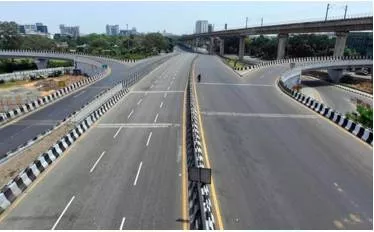
The perils of an all out lockdown
If the poor must stay at home, they need income support and essential services.As the novel coronavirus spreads, a double crisis looms over India: a health crisis and an economic crisis. In terms of casualties, the health crisis is still very confined (seven deaths in a country where eight million people die every year), but the numbers are growing fast. Meanwhile, the economic crisis is hitting with full force, throwing millions out of work by the day. Unlike the health crisis, it is not class-neutral, but hurts poor people the most.
India slows down
Migrant workers, street vendors, contract workers, almost everyone in the informal sector — the bulk of the workforce — is being hit by this economic tsunami. In Maharashtra, mass lay-offs have forced migrant workers to rush home, some without being paid. Many of them are now stranded between Maharashtra and their homes as trains have been cancelled. The economic standstill in Maharashtra is spreading fast to other States as factories, shops, offices and worksites close with little hope of an early return to normalcy. With transport routes dislocated, even the coming wheat harvest, a critical source of survival for millions of labouring families in north India, may not bring much relief. And all this is just a trailer.
This economic crisis calls for urgent, massive relief measures. Lockdowns may be needed to slow down the epidemic, but poor people cannot afford to stay idle at home. If they are asked to stay home, they will need help. There is a critical difference, in this respect, between India and affluent countries with a good social security system. The average household in, say, Canada or Italy can take a lockdown in its stride but the staying power of the Indian poor is virtually nil.
Tap social schemes
Since time is of the essence, the first step is to make good use of existing social-security schemes to support poor people — pensions, the Public Distribution System (PDS), midday meals, and the Mahatma Gandhi National Rural Employment Guarantee Act (MGNREGA), among others. Initial measures could include advance payment of pensions, enhanced PDS rations, immediate payment of MGNREGA wage arrears, and expanded distribution of take-home rations at schools and anganwadis. Some States have already taken useful steps of this sort, but the scale of relief measures needs radical expansion. That, in turn, requires big money from the Central government. It also requires the government to avoid squandering its resources on corporate bailouts: most crisis-affected sectors of the economy will soon be lobbying for rescue packages.
Meanwhile, there is a danger of people’s hardships being aggravated by a tendency to shut down essential services. Public transport, administrative offices, court hearings, MGNREGA projects and even immunisation drives have already been suspended to varying degrees in many States. Some of these interruptions are certainly justified, but others are likely to be counter-productive. Remember, we are dealing not only with a health crisis but also with an economic crisis. Even if discontinuing public services helps to contain the health crisis, the economic consequences need to be considered.
To assess the case for various precautionary measures, we must bear in mind the dual motive for taking precautions. When you decide to stay at home, there are two possible motives for it: a self-protection motive and a public-purpose motive. In the first case, you act out of fear of being infected. In the second, you participate in collective efforts to stop the spread of the virus.
Some people think about precautions as a matter of self-protection. What they may not realise is that the individual risk of getting infected is still tiny — so small that it is hardly worth any self-protection efforts (except for special groups such as health workers and the elderly). Four hundred thousand people die of tuberculosis in India every year, yet we take no special precautions against it. So why do we take precautions when seven people have died of COVID-19? The enlightened reason is not to protect ourselves, but to contribute to collective efforts to halt the epidemic.
Display creativity
A similar reasoning applies to the case for shutting down public services as a precautionary measure. Self-protection of public employees is not a major issue (for the time being), the main consideration is public purpose. Further, public purpose must include the possible economic consequences of a shutdown. If a service creates a major health hazard, public purpose may certainly call for it to be discontinued (this is the reason for closing schools and colleges). On the other hand, services that help poor people in their hour of need without creating a major health hazard should continue to function as far as possible. That would apply not only to health services or the Public Distribution System, but also to many other public services including administrative offices at the district and local levels. Poor people depend on these services in multiple ways, closing them across the board at this time would worsen the economic crisis without doing much to stem the health crisis.
Keeping public services going in this situation is likely to require some initiative and creativity. An explicit list of essential services (already available in some States) and official guidelines on coronavirus readiness at the workplace would be a good start. Many public premises are crying for better distancing arrangements. Some services can even be reinvented for now. For instance, anganwadis could play a vital role of public-health outreach at this time, even if children have to be kept away. Many public spaces could also be used, with due safeguards, to disseminate information or to impart good habits such as distancing and washing hands.
The urgent need for effective social security measures makes it all the more important to avoid a loss of nerve. The way things are going today, it will soon be very difficult for some State governments to run the Public Distribution System or take good care of drinking water. That would push even more people to the wall, worsening not only the economic crisis but possibly the health crisis as well. This is not the time to let India’s frail safety net unravel.




Top court quashes FIRs against Gen Z protesters
Sep 04, 2026







Stay updated with The Hindu Editorial Vocab24 app, your definitive source for breaking news and comprehensive coverage from India and around the globe. Whether it's political developments, business updates, sports highlights, the latest technology trends, or current events, The Hindu brings live, accurate, and reliable news directly to your device.
Don’t fall for sensationalized or fake news shared online. Read and share accurate updates with friends and family through The Hindu Editorial Vocab24 app. Download it today!
News Coverage in The Hindu Editorial Vocab24 App
Breaking News: Receive instant notifications on breaking news stories as they unfold. Stay informed about major events and developments in India and around the world with live blogs, news in shorts videos, and concise articles.
Politics: Get the latest updates on Indian politics, including elections, policy changes, government decisions, and political events that shape the nation.
Business and Economy: Stay ahead in the economic landscape with detailed business news and market analysis. Learn about stock market trends, financial reports, corporate news, and economic developments to make informed investment decisions.
Current Events: Follow stories on social issues, policy changes, global events, and daily current affairs, tailored for UPSC and other competitive exam preparations.
Technology: Keep up with the latest gadgets, innovations, and tech trends. Read expert reviews and analyses in short, concise updates on cutting-edge technology from India and beyond.
Sports: Never miss a moment of your favorite sports. Get live scores, match reports, and expert analysis on cricket, football, tennis, and more.
International News: Stay informed about global events and geopolitical developments, including the Russia-Ukraine war, Israel-Palestine conflict, and other key international stories.
Local News: Stay connected to your community with the latest updates on city events, issues, and local news. Coverage includes hyperlocal updates from cities like Bangalore, Chennai, Delhi, Hyderabad, Mumbai, Kolkata, and more.
Trending Topics: Discover what's trending today with the most talked-about stories and hot topics across India and the world.
Experience journalism that values integrity, accuracy, and reliability. Download The Hindu Editorial Vocab24 app today and stay connected with the world.
Subscribe to our newsletter!







