

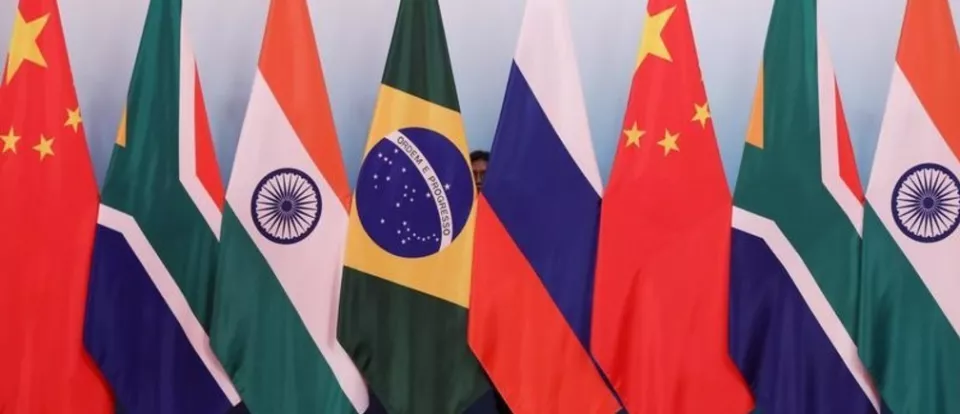
The next ten years of brics will the relationship last
The first decade of BRICSBRICS' first decade saw each of the members laying down groundwork for cooperation, from identifying areas of convergence on political issues to improving economic ties. The level of engagement between its members, ranging from high-level summit and ministerial meetings to various working groups and conferences, has only deepened over that time.
Today there is a fair degree of cooperation on issues such as trade, infrastructure finance, urbanisation and climate change. Moreover, the five members have made modest progress in people-to-people connections. Platforms such as the BRICS Academic Forum and Business Council have proved to be useful in improving their understanding of each other’s industry, academia and government.
Undoubtedly, the two most notable achievements of the BRICS have been the institutionalization of the New Development Bank (NDB) and the Contingency Reserve Arrangement.
The importance of these institutions cannot be understated. For one thing, they mark a shift from political rhetoric to delivering concrete results, alleviating some of the skepticism surrounding the BRICS initiative. More importantly, they represent a partial fulfilment of BRICS' core raison d’être: to offer credible alternatives to the Atlantic system of global governance.
While such institutions are unlikely to ever replace the IMF or the World Bank, they represent a fundamentally different governance paradigm. By giving equal voting rights to its founding members and improving reliance on local currencies, the BRICS members are attempting to create a new, non-Bretton Woods template for the developing world to emulate.
The end of innocence
Despite achieving a moderate level of success over the last decade, two recent events have brought the divergence between the BRICS members into sharp focus.
The first is the recent military standoff between India and China on the Doklam plateau, which has effectively brought to an end the naive notion that a comfortable political relationship is always possible amongst the BRICS members. The second is China’s efforts at creating a ‘BRICS plus’ model, a thinly veiled attempt to co-opt nation states, which are integral to its Belt and Road Initiative, into a broader political arrangement.
Both of these events highlight how the foundational principles of BRICS - respect for sovereign equality and pluralism in global governance - are liable to be tested as the five member countries pursue their own national agendas.
However, instead of derailing the BRICS project, these developments are likely to inject a level of pragmatism into the initiative. While BRICS itself is unlikely to form the lynchpin of foreign policy for any of its members, it will continue to be an important instrument in their toolkit.
Essentially, the BRICS members are now likely to realise that the group itself is a ‘limited purpose partnership’ in which political barriers will always limit the partnership's full economic potential.
The next decade?
If BRICS is to remain relevant over the next decade, each of its members must make a realistic assessment of the initiative's opportunities and inherent limitations.
BRICS did well in its first decade to identify issues of common interests and to create platforms to address these issues. However, new political realities require the BRICS nations to recalibrate their approach and to recommit to their founding ethos.
For one, they must reaffirm their commitment to a multipolar world that allows for sovereign equality and democratic decision-making. Only by doing so can they address the asymmetry of power within the group and in global governance generally. Only this approach will strengthen multilateralism.
Second, they must build on the success of the NDB and invest in additional BRICS institutions. It will be useful for BRICS to develop an institutional research wing, along the lines of the OECD, which can offer solutions distinct from western-led knowledge paradigms and which is better suited to the developing world.
Third, they should consider a BRICS-led effort to meet their commitments under the Paris Agreement on climate change and the UN's sustainable development goals. This could include, for example, setting up a BRICS energy alliance and an energy policy institution. Similarly, the NDB in partnership with other development finance institutions could be a potent vehicle to finance progress towards the sustainable development goals amongst the BRICS members.
Fourth, the BRICS nations can also consider expanding the remit of their cooperation to address emerging areas of global governance such as outer space, the oceans and the internet.
Finally, the BRICS members must encourage direct interactions between their constituents. In the digital age, seamless conversations amongst people, business and academia can foster relationships, which are more likely to cement the future of this alliance than any government efforts.
For the first decade of its existence, the group was powered by a top-down approach with large investments of political capital. The second decade must ride on the energy and entrepreneurship of the citizens and communities that reside within the BRICS countries.






Stay updated with The Hindu Editorial Vocab24 app, your definitive source for breaking news and comprehensive coverage from India and around the globe. Whether it's political developments, business updates, sports highlights, the latest technology trends, or current events, The Hindu brings live, accurate, and reliable news directly to your device.
Don’t fall for sensationalized or fake news shared online. Read and share accurate updates with friends and family through The Hindu Editorial Vocab24 app. Download it today!
News Coverage in The Hindu Editorial Vocab24 App
Breaking News: Receive instant notifications on breaking news stories as they unfold. Stay informed about major events and developments in India and around the world with live blogs, news in shorts videos, and concise articles.
Politics: Get the latest updates on Indian politics, including elections, policy changes, government decisions, and political events that shape the nation.
Business and Economy: Stay ahead in the economic landscape with detailed business news and market analysis. Learn about stock market trends, financial reports, corporate news, and economic developments to make informed investment decisions.
Current Events: Follow stories on social issues, policy changes, global events, and daily current affairs, tailored for UPSC and other competitive exam preparations.
Technology: Keep up with the latest gadgets, innovations, and tech trends. Read expert reviews and analyses in short, concise updates on cutting-edge technology from India and beyond.
Sports: Never miss a moment of your favorite sports. Get live scores, match reports, and expert analysis on cricket, football, tennis, and more.
International News: Stay informed about global events and geopolitical developments, including the Russia-Ukraine war, Israel-Palestine conflict, and other key international stories.
Local News: Stay connected to your community with the latest updates on city events, issues, and local news. Coverage includes hyperlocal updates from cities like Bangalore, Chennai, Delhi, Hyderabad, Mumbai, Kolkata, and more.
Trending Topics: Discover what's trending today with the most talked-about stories and hot topics across India and the world.
Experience journalism that values integrity, accuracy, and reliability. Download The Hindu Editorial Vocab24 app today and stay connected with the world.
Subscribe to our newsletter!







