

The multiple crises in indian universities
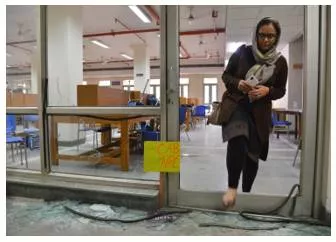
Universities need greater funding, autonomy, and tolerance of activities by students and faculty.Are Indian universities under deliberate siege? Spending on higher education (as a % of government expenditure) has stagnated at 1.3-1.5% since 2012. Meanwhile, the Ministry of Education continues to push higher education institutions to increase their intake capacity by 25% (in a push to implement the 10% quota for economically weaker sections), while the Ministry of Finance has sought to ban the creation of new teaching posts (Mohanty Basant Kumar, September 2020). At the central level, student financial aid was cut to ₹2,078 crore in FY 2022-23 from ₹2,482 crore in FY 2021-22; allocations for research and innovation were down by 8%, reaching ₹218 crore. Our once-great institutions of learning are beset by multiple crises – a financial crunch at the university level, a deficit in research opportunities for faculty, poor infrastructure and learning outcomes for students; with any protests hit hard by police brutality and campus repression. Is an apathetic, bureaucratic state preventing universities from blooming?
Cash-strapped institutions
Investments in university infrastructure have shrunk. Most Indian universities and colleges have overcrowded classrooms, poor ventilation and sanitation, and unsatisfactory hostel accommodation. The Higher Education Financing Agency (HEFA), which provides funding for all infrastructure loans to institutions, saw its budget reduced from ₹2,000 crore in FY 20-21 to ₹1 crore in FY 21-22. Instead, universities have been forced to take loans, but have few avenues to tap into.
Even day-to-day running costs are hard to meet. The University Grants Commission (UGC) was allocated ₹4,900 crore in FY 2022-23 versus ₹4,693 in FY 2021-22, but stifled cash flow has led to delays in salary payments for deemed/central universities. Hence, most universities are running on a deficit — Madras University saw an accumulated deficit of over ₹100 crore, forcing it to seek a ₹88 crore grant from the State government (Raman A. Ragu, March 2022). Twelve colleges of Delhi University have seen a financial shortfall, with allocations by the state reduced by nearly half (for example, Deen Dayal Upadhayaya College was allocated ₹28 crore versus a requirement of ₹42 crore in 2021). Faculty members have faced salary delays for months, with salaries coming in weeks later (examples include Shri Lal Bahadur Shastri National Sanskrit University, Delhi University, Visva-Bharati University, Nagaland University and Jharkhand University (Mohanty Basant Kumar, February 2021; Ara Ismat, November 2020). This has led to cuts in discretionary spending – many colleges in Delhi are unable to afford subscriptions to basic databases and journals. There is an urgent need to increased funding, along with establishing dedicated funding streams for infrastructure grants/loans and financial aid. Universities can also be freed up to utilise other revenue streams such as start-up royalties and advertising.
Research grants have also shrivelled up. Grants under the UGC’s minor and major research project schemes have declined from ₹42.7 crore in FY 2016-17 to ₹38 lakh in FY 2020-21 (Mohanty Basant Kumar, February 2022). India has over 1,040 universities, but just 2.7% offer PhD programmes, given paltry funding and poor infrastructure. The National Research Foundation (NRF), to improve research infrastructure in universities, has not yet been approved, and may have a limited budget ($5-6 billion spread over five years). Clearly, funding for research needs to rise significantly, with institutions like the NRF supplementing (and not replacing) existing schemes (including those from the Ministry of Science). Funding should also be allocated to enable course-based research experiences for undergraduates.
Fall in standards
Meanwhile, academic standards and processes are not being maintained. Examination paper leaks have become common – the Hindi examination of the National Eligibility Test of the UGC, which enables post-graduate students who pass to teach in State and Central colleges, was leaked in June 2021. Candidates have anecdotally highlighted examination centre operators charging ₹3 lakh per candidate to help them pass (Baruah Sukrita, July 2021). More recently, Veer Narmad South Gujarat University rescheduled exams for select B.Com and B.A courses after a paper was leaked. Such institutions have failed to protect the sanctity of their examinations. Improving this will require a decentralised approach, with universities allowed to take decisions on academic programmes, promotions, cohort size, etc.
India’s universities have historically been bastions of free expression and a hub of nationalism. The Central Hindu College (Delhi), inaugurated by Madan Mohan Malaviya, was a centre for political debate during the freedom struggle, with students and teachers joining the Quit India movement, and involved in the defence of Rash Behari Bose and Lala Har Dayal in 1915. Students from the college were also involved in helping resettle partition refugees in 1947. Queen Mary’s College, Chennai, is noted to have witnessed multiple pro-Quit India Movement protests. Students involved in these would often be detained on Marina Beach road penitentiary. More recently, students from Jawaharlal Nehru University, Banaras Hindu University, Delhi University, and Jamia Millia Islamia were associated with the anti-corruption movement, led by Anna Hazare. This delicate balance between the right to free expression and nationalism has been fostered across political regimes, with the leadership aware of the role of universities in strengthening democracy and civil society. And yet, of late, institutional apathy has given way to repression. Police action against students of select universities (JNU, Jamia Millia, for instance) for campus protests, along with arrests and incarceration, have cast a pall on free expression in campuses. Students and faculty members are routinely castigated as ‘anti-national’, among other epithets. We need to embrace tolerance for a diversity of views in our campuses – our students have formative experiences there and must have the space to define themselves as individuals. If free expression is not fostered, how will our universities champion critical thinking?
India’s higher education institutions exist in a funerary state. This is reflected in global rankings – there are just eight Indian universities in the Top 500 in the QS World University Rankings. The National Education Policy (2020) has sought to foster critical thinking and problem solving, along with social, ethical and emotional capacities and dispositions. Enabling this will require an encouraging ecosystem, with greater funding, autonomy and tolerance of universities (and activities by students/faculty). Without this, talented Indian citizens will continue to escape abroad, while policymakers lament India’s brain drain.




Top court quashes FIRs against Gen Z protesters
Sep 04, 2026







Stay updated with The Hindu Editorial Vocab24 app, your definitive source for breaking news and comprehensive coverage from India and around the globe. Whether it's political developments, business updates, sports highlights, the latest technology trends, or current events, The Hindu brings live, accurate, and reliable news directly to your device.
Don’t fall for sensationalized or fake news shared online. Read and share accurate updates with friends and family through The Hindu Editorial Vocab24 app. Download it today!
News Coverage in The Hindu Editorial Vocab24 App
Breaking News: Receive instant notifications on breaking news stories as they unfold. Stay informed about major events and developments in India and around the world with live blogs, news in shorts videos, and concise articles.
Politics: Get the latest updates on Indian politics, including elections, policy changes, government decisions, and political events that shape the nation.
Business and Economy: Stay ahead in the economic landscape with detailed business news and market analysis. Learn about stock market trends, financial reports, corporate news, and economic developments to make informed investment decisions.
Current Events: Follow stories on social issues, policy changes, global events, and daily current affairs, tailored for UPSC and other competitive exam preparations.
Technology: Keep up with the latest gadgets, innovations, and tech trends. Read expert reviews and analyses in short, concise updates on cutting-edge technology from India and beyond.
Sports: Never miss a moment of your favorite sports. Get live scores, match reports, and expert analysis on cricket, football, tennis, and more.
International News: Stay informed about global events and geopolitical developments, including the Russia-Ukraine war, Israel-Palestine conflict, and other key international stories.
Local News: Stay connected to your community with the latest updates on city events, issues, and local news. Coverage includes hyperlocal updates from cities like Bangalore, Chennai, Delhi, Hyderabad, Mumbai, Kolkata, and more.
Trending Topics: Discover what's trending today with the most talked-about stories and hot topics across India and the world.
Experience journalism that values integrity, accuracy, and reliability. Download The Hindu Editorial Vocab24 app today and stay connected with the world.
Subscribe to our newsletter!







