

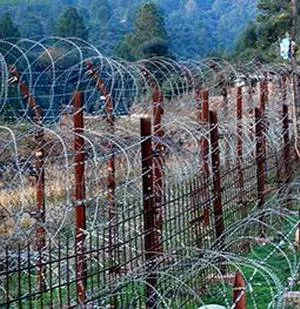
The kashmir gambit
A short history of ‘out of the box’ formulae to find a political solution in Jammu and KashmirIn September 1960, Jawaharlal Nehru travelled to Pakistan for a visit amid high expectations all around for the resolution of Kashmir. The visit followed the resolution of some major bilateral issues including sharing of Indus waters, and as former High Commissioner to Pakistan T.C.A. Raghavan recounts in his book The People Next Door , Nehru and Ayub Khan were going to give the impasse over Jammu and Kashmir a personal push. However, matters came to a full stop after Nehru suggested that the “status quo” at the ceasefire line was the only solution. For Ayub Khan, this was a non-starter, as he felt the ceasefire line would never be accepted by Pakistan given that it had no political or religious underpinnings.
Forty years later, as Prime Minister, Atal Bihari Vajpayee and then Manmohan Singh started a similar conversation with Pakistan’s Pervez Musharraf. The four-step formula, as their version of the talks from 2000-2008 was called, came around to the idea that eventually “borders cannot be redrawn”. As Musharraf wrote in his memoirs, and the Prime Minister’s special envoy Satinder Lambah outlined in a speech in 2014, the “out of the box” solution on Kashmir would require greater freedoms and interactions for Kashmiris on both sides of the Line of Control (LoC), leading to a lasting peace. The cross-LoC bus, which allowed Indian Kashmiris and Pakistani Kashmiris to visit each other, seemed the logical first step forward. On the Indian side, the period saw a greater level of engagement between New Delhi and Srinagar, and of the mainstream with separatist thought, even including an abortive attempt for talks with the militant group, Hizbul Mujahideen, in 2000.
Fast forward to the present In 2017, the landscape in Kashmir seems far removed from a decade ago and certainly from half a century ago. But as the government begins another attempt to tackle the Kashmir issue with the appointment of an interlocutor, former Intelligence Bureau Director Dineshwar Sharma this week, it is clear that some things have not changed. To begin with, the move acknowledges that the solution of the problems in J&K lies in the realm of politics, and not security. Home Minister Rajnath Singh’s announcement was preceded by statements from Army Chief General Bipin Rawat and police officers in Kashmir that even with all the gains made on the military and counter-insurgency front, a political solution is needed, and urgently.
Second, the open mandate to speak to all parties implicitly indicates that the government is willing to speak to separatists for a “sustained dialogue”, a considerable turn from the hardline policy of the Modi government thus far. That the government is now aligning closer to the policy of its predecessors indicates that the Centre could also consider talks with Pakistan, as outlined in the Agenda of Alliance document of the PDP-BJP coalition in J&K. Mr. Sharma’s success in reaching out to all stakeholders in the Valley depends on confidence in the Modi government’s seriousness in a long-lasting dialogue process in the State, with a view to effecting an enduring peace — one envisaged but not achieved by so many earlier governments.



Top court quashes FIRs against Gen Z protesters
Sep 04, 2026






Stay updated with The Hindu Editorial Vocab24 app, your definitive source for breaking news and comprehensive coverage from India and around the globe. Whether it's political developments, business updates, sports highlights, the latest technology trends, or current events, The Hindu brings live, accurate, and reliable news directly to your device.
Don’t fall for sensationalized or fake news shared online. Read and share accurate updates with friends and family through The Hindu Editorial Vocab24 app. Download it today!
News Coverage in The Hindu Editorial Vocab24 App
Breaking News: Receive instant notifications on breaking news stories as they unfold. Stay informed about major events and developments in India and around the world with live blogs, news in shorts videos, and concise articles.
Politics: Get the latest updates on Indian politics, including elections, policy changes, government decisions, and political events that shape the nation.
Business and Economy: Stay ahead in the economic landscape with detailed business news and market analysis. Learn about stock market trends, financial reports, corporate news, and economic developments to make informed investment decisions.
Current Events: Follow stories on social issues, policy changes, global events, and daily current affairs, tailored for UPSC and other competitive exam preparations.
Technology: Keep up with the latest gadgets, innovations, and tech trends. Read expert reviews and analyses in short, concise updates on cutting-edge technology from India and beyond.
Sports: Never miss a moment of your favorite sports. Get live scores, match reports, and expert analysis on cricket, football, tennis, and more.
International News: Stay informed about global events and geopolitical developments, including the Russia-Ukraine war, Israel-Palestine conflict, and other key international stories.
Local News: Stay connected to your community with the latest updates on city events, issues, and local news. Coverage includes hyperlocal updates from cities like Bangalore, Chennai, Delhi, Hyderabad, Mumbai, Kolkata, and more.
Trending Topics: Discover what's trending today with the most talked-about stories and hot topics across India and the world.
Experience journalism that values integrity, accuracy, and reliability. Download The Hindu Editorial Vocab24 app today and stay connected with the world.
Subscribe to our newsletter!







