

The judicial presumption of non citizenship
In further strengthening the Foreigners Tribunal, the judiciary has failed to fulfil its duty as the last protector of rights.On May 17, in a very short hearing, a three-judge Bench of the Supreme Court (the Chief Justie of India Ranjan Gogoi and Justices Deepak Gupta and Sanjiv Khanna) decided a batch of 15 petitions under the title Abdul Kuddus v Union of India. Innocuously framed as resolving a “perceived conflict” between two paragraphs of the Schedule to the Citizenship (Registration of Citizens and Issue of National Identity Cards) Rules, 2003, the judgment — little reported in the media — nonetheless had significant consequences for the ongoing events in Assam surrounding the preparation of the National Register of Citizens (“the NRC”).
Two parallel processes
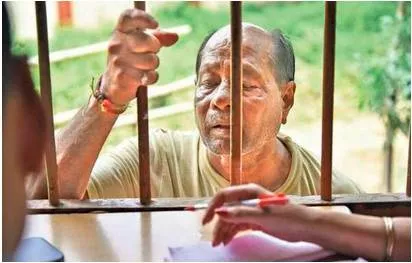
What was the issue in Abdul Kuddus? In short, it involved the status of an “opinion” rendered by a Foreigners Tribunal, as to the citizenship (or the lack thereof) of any individual. The issue arose because, in the State of Assam, there are two ongoing processes concerning the question of citizenship. The first includes proceedings before the Foreigners Tribunals, which have been established under an executive order of the Central government. The second is the NRC, a process overseen and driven by the Supreme Court. While nominally independent, both processes nonetheless bleed into each other, and have thus caused significant chaos and confusion for individuals who have found themselves on the wrong side of one or both.
The petitioners in Abdul Kuddus argued that an opinion rendered by the Foreigners Tribunal had no greater sanctity than an executive order. Under the existing set of rules, this meant that an adverse finding against an individual would not automatically result in their name being struck off the NRC. Furthermore, the Tribunal’s opinion could be subsequently reviewed, if fresh materials came to light. This was particularly important because, as had been observed repeatedly, citizenship proceedings were riddled with administrative (and other kinds of) errors, which often came to light much later, and often by chance. And finally, the petitioners argued that if the opinion of the Foreigners Tribunal was used to justify keeping an individual out of the NRC, then that decision could be challenged and would have to be decided independently of the decision arrived at by the Tribunal. In short, the petitioners’ case was that the two processes — that of the Foreigners Tribunal and of the NRC — should be kept entirely independent of each other, and without according primacy to one over the other.
Flawed tribunals
The Supreme Court rejected the petitioners’ arguments, and held that the “opinion” of the Foreigners Tribunal was to be treated as a “quasi-judicial order”, and was therefore final and binding on all parties including upon the preparation of the NRC. There are, however, serious problems with this holding, which will severely impact the rights of millions of individuals.
To start with, neither in their form nor in their functioning do Foreigners’ Tribunals even remotely resemble what we normally understand as “courts”. First, Foreigners Tribunals were established by a simple executive order. Second, qualifications to serve on the Tribunals have been progressively loosened and the vague requirement of “judicial experience” has now been expanded to include bureaucrats. And perhaps, most importantly, under the Order in question (as it was amended in 2012), Tribunals are given sweeping powers to refuse examination of witnesses if in their opinion it is for “vexatious” purposes, bound to accept evidence produced by the police, and, most glaringly, not required to provide reasons for their findings, “... as it is not a judgment; a concise statement of the facts and the conclusion will suffice” (although the Court, as an offhand remark, also added “reasons” to “facts” and “conclusions”). Subject to provisions of this manner, Tribunals are left free to “regulate [their] own procedure for disposal of cases.”
Unsurprisingly, over the last few months, glaring flaws in the working of the Foreigners Tribunals have come to light. Questions in Parliament showed that as many as 64,000 people have been declared non-citizens in ex-parte proceedings, i.e., without being heard.
Testimonies reveal these people are often not even served notices telling them that they have been summoned to appear. Alarmingly, an investigative media report featured testimony by a former Tribunal member who stated that his compatriots competed to be what was jokingly referred to as “the highest wicket-taker”, i.e. the one who could declare the highest number of individuals “foreigners”.
When adjudicating upon a person’s citizenship — a determination that can have the drastic and severe result of rendering a human being stateless — only the highest standards of adjudication can ever be morally or ethically justifiable. But in further strengthening an institution — the Foreigners Tribunal — that by design and by practice manifestly exhibits the exact opposite of this principle, the Supreme Court failed to fulfil its duty as the last protector of human rights under the Constitution.
Unwelcome departure
The Court attempted to justify this by observing that “fixing time limits and recording of an order rather than a judgment is to ensure that these cases are disposed of expeditiously and in a time bound manner”. This, however, is the reasoning of a company CEO, not that of the highest Court of the land, adjudicating upon a matter that involves the rights of millions of people. When the stakes are so high, when the consequences entail rendering people stateless, then to allow such departures from the most basic principles of the rule of law is morally grotesque.
The Court’s observations in the Kuddus case, and indeed, the manner in which it has conducted the NRC process over the last few months, can be traced back to two judgments delivered in the mid-2000s, known as Sarbananda Sonowal I and II. In those judgments, relying upon unvetted and unreviewed literature, without any detailed consideration of factual evidence, and in rhetoric more reminiscent of populist demagogues than constitutional courts, the Court declared immigration to be tantamount to “external aggression” upon the country; more specifically, it made the astonishing finding that constitutionally, the burden of proving citizenship would always lie upon the person who was accused of being a non-citizen. A parliamentary legislation that sought to place the burden upon the state was struck down as being unconstitutional.
What the rhetoric and the holdings of the Sonowal judgments have created is a climate in which the dominant principle is the presumption of non-citizenship. Apart from the absurdity of imposing such a rule in a country that already has a vast number of marginalised and disenfranchised people, it is this fundamental dehumanisation and devaluation of individuals that has enabled the manner in which the Foreigners Tribunals operate, the many tragedies that come to light every week in the context of the NRC, and judgments such as Abdul Kuddus. It is clear that if Article 21 of the Constitution, the right to life, is to mean anything at all, this entire jurisprudence must be reconsidered, root and branch.




Top court quashes FIRs against Gen Z protesters
Sep 04, 2026







Stay updated with The Hindu Editorial Vocab24 app, your definitive source for breaking news and comprehensive coverage from India and around the globe. Whether it's political developments, business updates, sports highlights, the latest technology trends, or current events, The Hindu brings live, accurate, and reliable news directly to your device.
Don’t fall for sensationalized or fake news shared online. Read and share accurate updates with friends and family through The Hindu Editorial Vocab24 app. Download it today!
News Coverage in The Hindu Editorial Vocab24 App
Breaking News: Receive instant notifications on breaking news stories as they unfold. Stay informed about major events and developments in India and around the world with live blogs, news in shorts videos, and concise articles.
Politics: Get the latest updates on Indian politics, including elections, policy changes, government decisions, and political events that shape the nation.
Business and Economy: Stay ahead in the economic landscape with detailed business news and market analysis. Learn about stock market trends, financial reports, corporate news, and economic developments to make informed investment decisions.
Current Events: Follow stories on social issues, policy changes, global events, and daily current affairs, tailored for UPSC and other competitive exam preparations.
Technology: Keep up with the latest gadgets, innovations, and tech trends. Read expert reviews and analyses in short, concise updates on cutting-edge technology from India and beyond.
Sports: Never miss a moment of your favorite sports. Get live scores, match reports, and expert analysis on cricket, football, tennis, and more.
International News: Stay informed about global events and geopolitical developments, including the Russia-Ukraine war, Israel-Palestine conflict, and other key international stories.
Local News: Stay connected to your community with the latest updates on city events, issues, and local news. Coverage includes hyperlocal updates from cities like Bangalore, Chennai, Delhi, Hyderabad, Mumbai, Kolkata, and more.
Trending Topics: Discover what's trending today with the most talked-about stories and hot topics across India and the world.
Experience journalism that values integrity, accuracy, and reliability. Download The Hindu Editorial Vocab24 app today and stay connected with the world.
Subscribe to our newsletter!







