

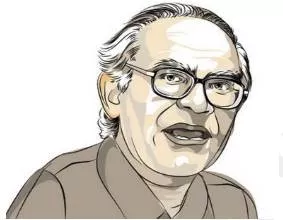
The illusion of participation
By promoting the culture of mass ‘following’, social media are shaking the foundations of democracy.The Canadian economist and philosopher Harold Innis comes to mind as an aid to reflect on Facebook’s silent leap from being regarded as social media to having been proved a powerful political media. Its CEO Mark Zuckerberg has quickly apologised, but that cannot be of much use when the outcome of Facebook’s involvement in elections has proved to be so vitally naughty as to help smuggle (convey (someone or something) somewhere secretly and illicitly) into the highest office in the U.S. a man like Donald Trump. Of course, we will never know what proportion of the credit for this achieving this can be given to Facebook or Cambridge Analytica. Perhaps we need not worry about fair distribution of credits in this case. Assessing the seismic jolt (a sudden feeling of shock, surprise, or disappointment) America’s democracy has suffered is more important. And why worry only about American democracy? We too seem to have been rendered vulnerable, and our record of self-correction is not great. In its moment of embarrassment, Facebook has given the entire world a reason to pause and ponder.
Bias of communication
Innis is best known for his book, The Bias of Communication, first published in 1951. As the title indicates, he was interested in examining the nature of a medium or technology of communication as a factor of social order. He studied the history of ancient empires and their decline by focussing on the technology of communication they used. Innis used ‘space’ and ‘time’ as basic sources of bias in different media of communication developed down the ages. Some, like rock inscriptions, manuscripts copied by hand, and orally stored epics were biased, in Innis’s view, towards stability over long periods of time.
On the other hand, newspapers, radio and television were examples of space-bias technology. They reach out to vast territories, but the content or message does not last long. He studied different empires and concluded that the ones that developed a balance between space and time attained higher civilisational goals.
The Internet and the mobile phone seem heavily ‘space-biased’ in Innisian terms. Their reach is extraordinarily wide and fast, but the messages conveyed through them need relentless repetition, suggesting ephemeral (lasting a very short time) value. This disbalance gets magnified in social media such as Facebook and Twitter. They provide huge followings to users, and, in the same measure, they create short-lived ripples that titillate (to excite pleasurably: arouse by stimulation) and excite the public space on a constant basis. This duality explains the attraction they exercise despite the risk their users face of being manipulated.
The rise of these social media companies has coincided with major changes in the nature of the state and its duties towards citizens. Surveillance as a means of providing safety has gained acceptability — even legitimacy — in many parts of the world. In the industrially advanced bastions (a fortified area or position) of liberal democracy, a sharp change in public willingness to put up with, even appreciate, the state’s ominous (giving the worrying impression that something bad is going to happen; threateningly inauspicious) presence in every sphere of life has come about. This accommodating public mood has prompted the tendency among political leaders to seek more and more authority and means to create a centralised system to wield it. Advances in communication technology have encouraged systems of governance to concentrate decision-making power at the higher rungs, leaving compliance and implementation to people placed at the lower rungs.
Innis would have seen this as a sign of increase in space-bias. He would also have related this increase to the diminution (the act, process, or an instance of becoming gradually less (as in size or importance)) of memory and continuity. Parallel and rapid growth of these two tendencies can be expected to cause significant amounts of disbalance, which might lead to the collapse of institutions that play a balancing role. Democracy is one such institution. It is based on the idea of participation of the largest number of people, even if that slows down decision-making. On the face of it (without knowing all of the relevant facts; apparently), social media creates the illusion of maximal participation, but in reality it promotes the culture of mass ‘following’. The millions who comprise the ‘following’ of leaders can hardly be called participants in decision-making.
This model of communication has smoothly pushed American democracy towards an unfamiliar wilderness. Its electoral process compromised by manipulation of voters’ minds — by use of authentic data they have themselves provided — the U.S. faces a deep vulnerability, from within itself. Signs of political neurosis are all too obvious.
Centripetal energies
In our own case, the use of digital technology to give every citizen a unique identity number is creating new daily challenges for stemming the centralisation of authority. Whatever the highest court decides in the Aadhaar case, it can hardly avoid noticing the centripetal energies fast grabbing our democracy. Of course, these wider tendencies can’t be attributed to Aadhaar. Long before Nandan Nilekani had gifted this shiny toy to the nation, ostensibly meant to improve the the state’s capacity to serve the poor, the problem of handling data about common people with integrity was quite familiar to the lower functionaries managing elections.
In all likelihood, both Facebook and American democracy will survive the rough weather they are facing. It is equally likely that they will learn little from this experience. This is because their financial investments in the new communication order are heavy and will not allow withdrawal or slowdown in use. An element of destiny has already crept in. As an institution, social media is in its infancy (the early stage in the development or growth of something), but it has already acquired an ideological temper. It wields the power of crowds that are ready to lynch (punish/kill by hanging someone for claimed offence without legal trail by the group of people) its critics. A substantial part of the population of youth across the world inhabits social media platforms, giving companies like Facebook and Twitter an amount of cultural power rather unique in corporate history. The use of these platforms by office-holding politicians adds to their mighty claim to neutrality.
Looking for sanity
However, their disbalancing force is equally strong and harder to hide than it was earlier. Therefore, it is reasonable to hope that revelations of the kind made recently about misuse of personal data by Facebook and Cambridge Analytica will continue to rock the established systems of public communication, on one hand, and, on the other, the exercise of command by those in authority. An eventual opportunity for a new equilibrium and sanity to prevail is imminent.




Top court quashes FIRs against Gen Z protesters
Sep 04, 2026







Stay updated with The Hindu Editorial Vocab24 app, your definitive source for breaking news and comprehensive coverage from India and around the globe. Whether it's political developments, business updates, sports highlights, the latest technology trends, or current events, The Hindu brings live, accurate, and reliable news directly to your device.
Don’t fall for sensationalized or fake news shared online. Read and share accurate updates with friends and family through The Hindu Editorial Vocab24 app. Download it today!
News Coverage in The Hindu Editorial Vocab24 App
Breaking News: Receive instant notifications on breaking news stories as they unfold. Stay informed about major events and developments in India and around the world with live blogs, news in shorts videos, and concise articles.
Politics: Get the latest updates on Indian politics, including elections, policy changes, government decisions, and political events that shape the nation.
Business and Economy: Stay ahead in the economic landscape with detailed business news and market analysis. Learn about stock market trends, financial reports, corporate news, and economic developments to make informed investment decisions.
Current Events: Follow stories on social issues, policy changes, global events, and daily current affairs, tailored for UPSC and other competitive exam preparations.
Technology: Keep up with the latest gadgets, innovations, and tech trends. Read expert reviews and analyses in short, concise updates on cutting-edge technology from India and beyond.
Sports: Never miss a moment of your favorite sports. Get live scores, match reports, and expert analysis on cricket, football, tennis, and more.
International News: Stay informed about global events and geopolitical developments, including the Russia-Ukraine war, Israel-Palestine conflict, and other key international stories.
Local News: Stay connected to your community with the latest updates on city events, issues, and local news. Coverage includes hyperlocal updates from cities like Bangalore, Chennai, Delhi, Hyderabad, Mumbai, Kolkata, and more.
Trending Topics: Discover what's trending today with the most talked-about stories and hot topics across India and the world.
Experience journalism that values integrity, accuracy, and reliability. Download The Hindu Editorial Vocab24 app today and stay connected with the world.
Subscribe to our newsletter!







