

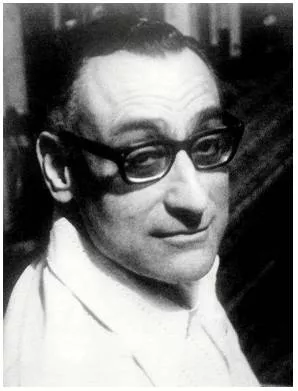
The gentleman spymaster who had india enthralled
Those serving the R&AW would do well to note the principles that Rameshwar Nath Kao practised with aplomb.January 20, 2022 marked the 20th anniversary of the passing of Rameshwar Nath Kao, founding Head of the Research & Analysis Wing (R&AW) and, arguably, one of the most accomplished and influential intelligence chiefs of all time.
From 2007 till 2019, the R&AW used to hold the annual Kao Memorial Lecture at its headquarters in the last week of January but the outbreak of the novel coronavirus pandemic meant that the event has had to be kept on hold since then. This tribute is a modest attempt to give expression to the collective sense of excitement and pride that members of India’s intelligence community experience when the lecture is held.
Encomiums aplenty have been showered — and rightly so — on Kao for his unparalleled contributions to Indian intelligence. Instead of repeating what has already been said, I propose to highlight some of the qualities that made him such a formidable and successful intelligence chief. That he was a Kashmiri Pandit like several of former Prime Minister Indira Gandhi’s closest advisers, that she knew him from the time that he began looking after the arrangements for her father Jawaharlal Nehru’s security as a young assistant director in the Intelligence Bureau and that he enjoyed her complete confidence were, of course, factors central to Kao’s meteoric rise. But what were some of the other ingredients of the Kao formula for success as the Head of R&AW (1968-77)?
There was a line
The first was the scrupulous distinction that he maintained between external and internal intelligence. In recent decades, following the rise of international terrorism as a major intelligence concern worldwide, it became somewhat fashionable to say that the dividing line between external and internal threats had blurred and it was no longer possible to treat the two as separate phenomena. There may be some merit in this contention in as much as threats from without become relevant only insofar as they have an impact within. But the distinction is fundamental and none was more conscious of this fact than Kao. This was, perhaps, understandable and inevitable considering the raison d’etre of the formation of the R&AW as an organisation responsible for the collection of intelligence pertaining to developments abroad.
On Kao’s watch, the R&AW steered conspicuously clear of dabbling in domestic intelligence collection. Whenever inquiries needed to be conducted on some matter or the other within the country, Kao invariably turned to the Intelligence Bureau for assistance. The benefits were twofold: the R&AW focused its energies, without any distraction, on the collection of intelligence about India’s external adversaries and the Intelligence Bureau could not complain about being bypassed in the discharge of its core responsibility, viz. intelligence collection on developments within the country.
The Emergency and after
The second ingredient — a corollary of the first — was Kao’s sagacious policy of insulating the R&AW from the vicissitudes of domestic politics. Despite his untrammeled access to the highest levels of the political leadership, Kao studiously avoided the temptation of getting involved in internal political matters. Never was the sagacity of Kao’s approach more evident than during the Emergency. The Janata Party government that came to power following the elections of 1977 was suspicious of the role played by Kao and R&AW during the Emergency and there was an attempt to cut the organisation down to size, but no inquiry or investigation could unearth any evidence of the R&AW being even remotely involved in any of the excesses committed during the Emergency. The result was that, after some temporary setbacks, the organisation recovered its self-confidence and went back to playing its designated role in upholding national security.
The third was Kao’s uncommon ability to see the big picture while, at the same time, paying what can only be described as extreme attention to detail. Be it the liberation war of Bangladesh or the denouement in Sikkim in the 1970s or the historic opening to the United States in the early 1980s during his second coming (1981-84) as Senior Adviser in the Cabinet Secretariat, Kao kept his sights firmly on the big picture, effectively translating the broad vision of the political leadership into concrete reality on the ground. Equally, the R&AW’s sober and balanced assessments shaped the making of policy, helping to ensure that it was grounded in reality and not based on idealistic preferences or wishful thinking.
The fourth was his ability to spur his officers to greater heights without being overbearing or micromanaging tasks best left to ground-level operatives. As the head of R&AW, Kao was ably assisted by a fine band of lieutenants, several of whom, like him, had been handpicked to man the Intelligence Bureau before being drafted into the external intelligence set-up. Without them, Kao would not have been half as successful as he was and he knew it. He gave them his full trust and backing and they, in turn, delivered the results that made the R&AW the formidable machine that it was to become so early in its existence.
The fifth was his disinclination, bordering on abhorrence, to engage in any form of self-projection. This attitude was best brought out by his response to the ill-informed criticism directed against the R&AW, and against him personally, for failing to prevent the assassination of Sheikh Mujibur Rahman in August 1975. The criticism pained him, especially since he had personally warned the Bangladeshi leader more than once about the threat to his life. It was in this context that he propounded the dictum that those engaged in the profession of intelligence must never expect to be rewarded for their successes but must always be prepared to be punished for their failures.
Old world
Added to these ingredients were an exquisite old-world courtesy, refinement and innate humaneness that shone through his dealings with all, from the mightiest in the land to the lowest. Such, in fact, was the generosity of spirit that characterised Kao’s dealings with his subordinates that, at times, it made him blind to the failings of some of them.
In the years ahead, India’s external intelligence agency will have to grapple with a complex array of challenges; from correctly anticipating the moves of an assertive China to countering the ever-mutating threats from the forces of radicalism and terrorism emboldened by developments in our immediate neighbourhood to safeguarding the expanding digital infrastructure that is likely to increasingly underpin our security and prosperity. To be able to rise to the occasion, those serving the R&AW will do well to hew to the first principles that the organisation’s founding father laid down and practised with such aplomb.




Top court quashes FIRs against Gen Z protesters
Sep 04, 2026






Stay updated with The Hindu Editorial Vocab24 app, your definitive source for breaking news and comprehensive coverage from India and around the globe. Whether it's political developments, business updates, sports highlights, the latest technology trends, or current events, The Hindu brings live, accurate, and reliable news directly to your device.
Don’t fall for sensationalized or fake news shared online. Read and share accurate updates with friends and family through The Hindu Editorial Vocab24 app. Download it today!
News Coverage in The Hindu Editorial Vocab24 App
Breaking News: Receive instant notifications on breaking news stories as they unfold. Stay informed about major events and developments in India and around the world with live blogs, news in shorts videos, and concise articles.
Politics: Get the latest updates on Indian politics, including elections, policy changes, government decisions, and political events that shape the nation.
Business and Economy: Stay ahead in the economic landscape with detailed business news and market analysis. Learn about stock market trends, financial reports, corporate news, and economic developments to make informed investment decisions.
Current Events: Follow stories on social issues, policy changes, global events, and daily current affairs, tailored for UPSC and other competitive exam preparations.
Technology: Keep up with the latest gadgets, innovations, and tech trends. Read expert reviews and analyses in short, concise updates on cutting-edge technology from India and beyond.
Sports: Never miss a moment of your favorite sports. Get live scores, match reports, and expert analysis on cricket, football, tennis, and more.
International News: Stay informed about global events and geopolitical developments, including the Russia-Ukraine war, Israel-Palestine conflict, and other key international stories.
Local News: Stay connected to your community with the latest updates on city events, issues, and local news. Coverage includes hyperlocal updates from cities like Bangalore, Chennai, Delhi, Hyderabad, Mumbai, Kolkata, and more.
Trending Topics: Discover what's trending today with the most talked-about stories and hot topics across India and the world.
Experience journalism that values integrity, accuracy, and reliability. Download The Hindu Editorial Vocab24 app today and stay connected with the world.
Subscribe to our newsletter!







