

The future of old times in india
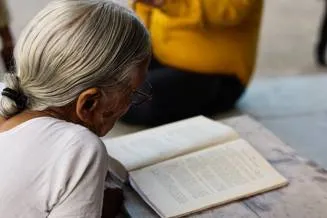
Near-universal social security pensions would be a good start to a radical expansion of public support for the elderly.Life expectancy in India has more than doubled since Independence — from around 32 years in the late 1940s to 70 years or so today. Many countries have done even better, but this is still a historical achievement. Over the same period, the fertility rate has crashed from about six children per woman to just two, liberating women from the shackles of repeated child-bearing and child care. All this is good news, but it also creates a new challenge — the ageing of the population.
The share of the elderly (persons aged 60 years and above) in India’s population, close to 9% in 2011, is growing fast and may reach 18% by 2036 according to the National Commission on Population. If India is to ensure a decent quality of life for the elderly in the near future, planning and providing for it must begin today.
Pensions help
Recent work on mental health among the elderly in India sheds new light on their dire predicament. Evidence on depression from a collaborative survey of the Abdul Latif Jameel Poverty Action Lab (J-PAL) and the Government of Tamil Nadu is particularly telling. Among persons aged 60 and above, 30% to 50% (depending on gender and age group) had symptoms that make them likely to be depressed. The proportion with depression symptoms is much higher for women than men, and rises sharply with age. In most cases, depression remains undiagnosed and untreated.
As one might expect, depression is strongly correlated with poverty and poor health, but also with loneliness. Among the elderly living alone, in the Tamil Nadu sample, 74% had symptoms that would classify them as likely to be mildly depressed or worse on the short-form Geriatric Depression Scale. A large majority of elderly persons living alone are women, mainly widows.
The hardships of old age are not related to poverty alone, but some cash often helps. Cash can certainly help to cope with many health issues, and sometimes to avoid loneliness as well. The first step towards a dignified life for the elderly is to protect them from destitution and all the deprivations that may come with it. That is why old-age pensions are a vital part of social security systems around the world.
India has important schemes of non-contributory pensions for the elderly, widowed women and disabled persons under the National Social Assistance Programme (NSAP), administered by the Ministry of Rural Development. Alas, eligibility for NSAP is restricted to “below poverty line” (BPL) families, based on outdated and unreliable BPL lists, some of them are 20 years old. Further, the central contribution to old-age pensions under NSAP has stagnated at a tiny ₹200 per month since 2006, with a slightly higher but still paltry amount (₹300 per month) for widows.
Many States have enhanced the coverage and/or amount of social-security pensions beyond NSAP norms using their own funds and schemes. Some have even achieved “near-universal” (say 75%-80%) coverage of widows and elderly persons. That is now the norm, for instance, in all the southern States except Tamil Nadu — an odd exception since Tamil Nadu has been a pioneer in the field of social security.
Beyond targets
“Targeting” social benefits is always difficult. Restricting them to BPL families has not worked well: there are huge exclusion errors in the BPL lists. When it comes to old-age pensions, targeting is not a good idea in any case. For one thing, targeting tends to be based on household rather than individual indicators. A widow or elderly person, however, may experience major deprivations even in a relatively well-off household. A pension can help them to avoid extreme dependence on relatives who may or may not take good care of them, and it may even lead relatives to be more considerate.
For another, targeting tends to involve complicated formalities such as the submission of BPL certificates and other documents. That has certainly been the experience with NSAP pensions. The formalities can be particularly forbidding for elderly persons with low incomes or little education, who are in greatest need of a pension. In the Tamil Nadu sample, eligible persons who had been left out of pension schemes were found to be much poorer than the pension recipients (by more than just the pension). Moreover, even when lists of left-out, likely-eligible persons were submitted to the local administration, very few were approved for a pension, confirming that they face resilient barriers in the current scheme of things.
The problem is generally not a lack of effort or goodwill on the part of the government officials. Rather, many have absorbed the idea that their job is to save the government money by making sure that no ineligible person qualifies by mistake. In Tamil Nadu this often means, for example, that if the applicant has an able-bodied son in the city, they may be disqualified, regardless of whether they get any support from their son. In their quest to avoid inclusion errors, many officials are less concerned about exclusion errors.
A better approach is to consider all widows and elderly or disabled persons as eligible, subject to simple and transparent “exclusion criteria”. Eligibility can even be self-declared, with the burden of time-bound verification being placed on the local administration or gram panchayat. Some cheating may happen, but it is unlikely that many privileged households will risk trouble for the sake of a small monthly pension. And it is much preferable to accommodate some inclusion errors than to perpetuate the massive exclusion errors we are seeing today in targeted pension schemes.
Widening the net
The proposed move from targeted to near-universal pensions is not particularly new. As mentioned earlier, it has already happened in several States. Of course, it requires larger pension budgets, but additional expenditure is easy to justify. India’s social assistance schemes have low budgets and make a big difference to large numbers of people (about 40 million under NSAP). They are well worth expanding.
An example may help. In Tamil Nadu, social security pensions (typically ₹1,000 per month) are targeted and cover about a third of all elderly persons and widowed women, at a cost of around ₹4,000 crore per year. If, instead, 20% were to be excluded and the rest eligible by default, the cost would rise to ₹10,000 crore per year. That would be a modest price to pay to ensure a modicum of economic security in old age to everyone. It would be a fraction of the ₹40,000 crore Tamil Nadu is expected to spend this year on pensions and retirement benefits for government employees – barely 1% of the population. If the transition cannot be made in one go, there is a strong case for starting with women (the widowed or the elderly), who often face special disadvantages. This would also be a step towards the fulfilment of the Tamil Nadu government’s promise of a “home grant” of ₹1,000 per month for women.
The southern States are relatively well-off, but even some of India’s poorer States (such as Odisha and Rajasthan) have near-universal social security pensions. It would be much easier for all States to do the same if the central government were to revamp the NSAP. The NSAP budget this year is just ₹9,652 crore — more or less the same as 10 years ago in money terms, and much lower in real terms. This is not even 0.05% of India’s GDP!
Social security pensions, of course, are just the first step towards a dignified life for the elderly. They also need other support and facilities such as health care, disability aids, assistance with daily tasks, recreation opportunities and a good social life. This is a critical area of research, policy and action for the near future.
Jean Drèze is Visiting Professor at the Department of Economics, Ranchi University. Esther Duflo, a Nobel Laureate (2019), is Professor of Poverty Alleviation and Development Economics at the Massachusetts Institute of Technology

Atiqa records two top-four finishes in WSK Final Cup
Sep 05, 2026









Stay updated with The Hindu Editorial Vocab24 app, your definitive source for breaking news and comprehensive coverage from India and around the globe. Whether it's political developments, business updates, sports highlights, the latest technology trends, or current events, The Hindu brings live, accurate, and reliable news directly to your device.
Don’t fall for sensationalized or fake news shared online. Read and share accurate updates with friends and family through The Hindu Editorial Vocab24 app. Download it today!
News Coverage in The Hindu Editorial Vocab24 App
Breaking News: Receive instant notifications on breaking news stories as they unfold. Stay informed about major events and developments in India and around the world with live blogs, news in shorts videos, and concise articles.
Politics: Get the latest updates on Indian politics, including elections, policy changes, government decisions, and political events that shape the nation.
Business and Economy: Stay ahead in the economic landscape with detailed business news and market analysis. Learn about stock market trends, financial reports, corporate news, and economic developments to make informed investment decisions.
Current Events: Follow stories on social issues, policy changes, global events, and daily current affairs, tailored for UPSC and other competitive exam preparations.
Technology: Keep up with the latest gadgets, innovations, and tech trends. Read expert reviews and analyses in short, concise updates on cutting-edge technology from India and beyond.
Sports: Never miss a moment of your favorite sports. Get live scores, match reports, and expert analysis on cricket, football, tennis, and more.
International News: Stay informed about global events and geopolitical developments, including the Russia-Ukraine war, Israel-Palestine conflict, and other key international stories.
Local News: Stay connected to your community with the latest updates on city events, issues, and local news. Coverage includes hyperlocal updates from cities like Bangalore, Chennai, Delhi, Hyderabad, Mumbai, Kolkata, and more.
Trending Topics: Discover what's trending today with the most talked-about stories and hot topics across India and the world.
Experience journalism that values integrity, accuracy, and reliability. Download The Hindu Editorial Vocab24 app today and stay connected with the world.
Subscribe to our newsletter!







