

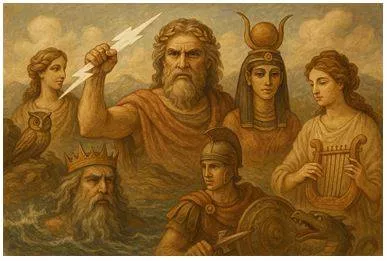
The enduring power of mythology understanding human beliefs through ancient tales
IntroductionMythology is more than a collection of ancient stories—it is a reflection of the human psyche, an attempt to explain the mysteries of existence, and a cultural legacy passed down through generations. Whether through Greek, Norse, Indian, Egyptian, or African myths, humanity has always sought to understand creation, morality, nature, and the divine through allegorical narratives. Mythology offers not only entertainment and spiritual depth but also insight into how civilizations perceived themselves and their place in the universe. In today’s modern, rational world, myths may seem outdated, yet their influence persists in our art, literature, and even psychology.
________________________________________ What is Mythology?
The term ‘mythology’ originates from the Greek word mythos, meaning ‘story’ or ‘speech,’ and logos, meaning ‘discourse.’ Broadly, mythology refers to a body of myths associated with a particular culture, religion, or region. Myths are traditional narratives that often involve gods, supernatural beings, heroes, and cosmic events. Unlike history, which seeks to record factual events, mythology communicates symbolic truths and cultural values.
Each mythological system typically addresses foundational themes: the creation of the world (cosmogony), the origins of humans and nature, the struggle between good and evil, life after death, and divine intervention in human affairs. These stories serve both explanatory and instructive purposes, shaping moral conduct and social norms.
________________________________________ Mythology as a Cultural Mirror
Every culture’s mythology reflects its environment, beliefs, and experiences. For example:
• Greek Mythology emphasized humanism and rationality. The gods were anthropomorphic and often flawed, mirroring human emotions. Myths such as the Odyssey and the Iliad explore themes of honor, destiny, and the consequences of pride.
• Hindu Mythology, with texts like the Ramayana and Mahabharata, combines devotion, dharma (duty), and karma (action). The gods represent cosmic principles, and the stories are deeply intertwined with philosophical doctrines.
• Norse Mythology emerging from harsh Nordic climates, is infused with fatalism, warfare, and heroism. Stories of Ragnarök (the end of the world) depict a cyclical universe and the inevitability of death.
• Egyptian Mythology, anchored by the Nile’s life-giving force, centers on rebirth, the afterlife, and divine kingship, as seen in the myth of Osiris and Isis.
Despite these cultural differences, common archetypes—such as the hero’s journey, the great flood, or the trickster figure—appear universally, demonstrating a shared psychological framework among human societies.
________________________________________ Mythology’s Role in Society
In ancient times, mythology played multiple roles:
1. Religious Function: Myths explained the nature of gods and the cosmos. They were the foundation for rituals, festivals, and worship. Temples were often built based on mythic narratives.
2. Moral and Ethical Instruction: Myths provided moral lessons. For instance, the story of Prometheus warned against overreaching human ambition, while the story of Sita in the Ramayana emphasized virtue and devotion.
3. Political Legitimization: Rulers often claimed divine ancestry or favor from gods to justify their authority. Pharaohs, Roman emperors, and even some Indian kings were considered divine or semi-divine figures.
4. Entertainment and Art: Mythological stories were recited in epic poetry, performed in dramas, and painted on temple walls. They were the lifeblood of storytelling traditions across civilizations.
5. Psychological Insight: According to psychoanalysts like Carl Jung and Joseph Campbell, myths reveal the workings of the unconscious mind. Archetypes like the ‘wise old man’ or ‘shadow self’ are symbolic of internal psychological states.
________________________________________ The Relevance of Mythology in the Modern World
One might question the relevance of mythology in today’s age of science and reason. However, mythology remains deeply embedded in modern consciousness:
• Literature and Cinema: From The Lord of the Rings to Harry Potter, modern fiction draws heavily on mythic themes and archetypes. The concept of the hero's journey, outlined by Joseph Campbell, underpins countless narratives in books, films, and games.
• Psychology and Self-Discovery: Carl Jung’s idea of the ‘collective unconscious’ posits that myths and dreams share a symbolic language that can aid in understanding one’s inner self. Modern therapy sometimes uses mythic frameworks to help individuals confront fears and desires.
• Cultural Identity and Revivalism: Indigenous communities and postcolonial nations are increasingly revisiting their mythologies to reclaim heritage and resist cultural erasure.
• Symbolism in Religion and Rituals: Even in organized religion today, many mythic elements remain foundational. Stories of miracles, divine intervention, creation, and salvation continue to guide millions.
• Moral Frameworks and Values: Myths still provide models of ideal behavior, dilemmas of choice, and consequences of ethical or unethical actions.
Myth vs. History vs. Science
It is crucial to differentiate mythology from history and science. While history is evidence-based and seeks objective truth, and science explains natural phenomena through empirical data, mythology operates in the realm of meaning and metaphor. It is not meant to be taken literally but understood symbolically.
The conflict arises when myths are interpreted dogmatically or misused for political or sectarian ends. For instance, using mythology to justify social hierarchies or communal tensions undermines its philosophical essence. Modern society must therefore approach mythology with both reverence and critical inquiry.
________________________________________ Challenges to Mythology Today
Despite its continued relevance, mythology faces certain challenges: • Literalism and Fundamentalism: Taking myths at face value can breed intolerance and blind faith.
• Misrepresentation in Popular Culture: Myths are often oversimplified or distorted in movies and media.
• Loss of Oral Traditions: With modernization, many indigenous mythologies risk extinction as oral storytellers die out and traditional practices fade.
• Scientific Skepticism: A purely materialist worldview often dismisses myths as irrational or obsolete, ignoring their psychological and cultural value.
________________________________________ Conclusion
Mythology, though ancient, continues to shape the modern world in profound ways. It is a rich tapestry of human thought, fear, aspiration, and creativity. By exploring myths, we do not merely revisit the past—we engage with timeless questions of existence, purpose, and morality. Whether as symbols in literature, insights in psychology, or echoes in religious thought, myths remain vital tools for self-understanding and cultural continuity. As long as humans seek meaning in their lives, mythology will never lose its power.






Stay updated with The Hindu Editorial Vocab24 app, your definitive source for breaking news and comprehensive coverage from India and around the globe. Whether it's political developments, business updates, sports highlights, the latest technology trends, or current events, The Hindu brings live, accurate, and reliable news directly to your device.
Don’t fall for sensationalized or fake news shared online. Read and share accurate updates with friends and family through The Hindu Editorial Vocab24 app. Download it today!
News Coverage in The Hindu Editorial Vocab24 App
Breaking News: Receive instant notifications on breaking news stories as they unfold. Stay informed about major events and developments in India and around the world with live blogs, news in shorts videos, and concise articles.
Politics: Get the latest updates on Indian politics, including elections, policy changes, government decisions, and political events that shape the nation.
Business and Economy: Stay ahead in the economic landscape with detailed business news and market analysis. Learn about stock market trends, financial reports, corporate news, and economic developments to make informed investment decisions.
Current Events: Follow stories on social issues, policy changes, global events, and daily current affairs, tailored for UPSC and other competitive exam preparations.
Technology: Keep up with the latest gadgets, innovations, and tech trends. Read expert reviews and analyses in short, concise updates on cutting-edge technology from India and beyond.
Sports: Never miss a moment of your favorite sports. Get live scores, match reports, and expert analysis on cricket, football, tennis, and more.
International News: Stay informed about global events and geopolitical developments, including the Russia-Ukraine war, Israel-Palestine conflict, and other key international stories.
Local News: Stay connected to your community with the latest updates on city events, issues, and local news. Coverage includes hyperlocal updates from cities like Bangalore, Chennai, Delhi, Hyderabad, Mumbai, Kolkata, and more.
Trending Topics: Discover what's trending today with the most talked-about stories and hot topics across India and the world.
Experience journalism that values integrity, accuracy, and reliability. Download The Hindu Editorial Vocab24 app today and stay connected with the world.
Subscribe to our newsletter!







