

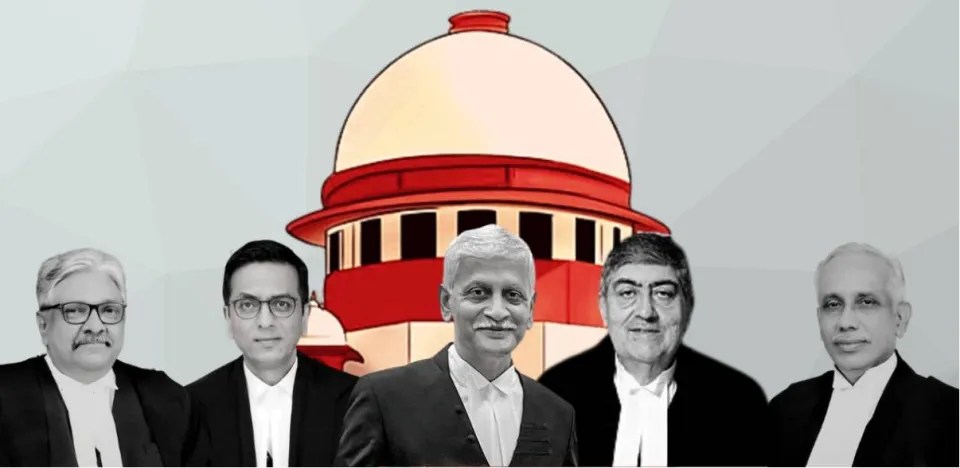
The court and the problem with its collegium
Once again the collegium of the Supreme Court of India is in the news, and once again for the wrong reasons. This time, it is because of the difficulty that its five judges have in getting together for one meeting. The Chief Justice of India, Justice U.U. Lalit, assumed office on August 27, 2022. He has a short tenure and demits office on November 8, 2022. Nevertheless, he tries to set a scorching pace. He constitutes as many as five Constitution Benches to hear extremely important matters which his predecessors put on the back burner. The CJI also takes it upon himself to fill six vacancies in the apex court. He sets in motion the procedure contemplated for the collegium of the Supreme Court which is enshrined in the Memorandum of Procedure of 1999.A meeting was held on September 26 at which all the five members of the collegium were present. They decided affirmatively on one candidate, Justice Dipankar Datta, now Chief Justice of the Bombay High Court. There are several other names under consideration for the remaining slots, and these include four Chief Justices of High Courts and one lawyer practising in the Supreme Court. This is deferred to September 30. However, the meeting on September 30 is not held because Justice D.Y. Chandrachud, the seniormost puisne judge and in line to be the next CJI, sits in court till 9.30 p.m. Since the meeting cannot be held as scheduled, the CJI tries to obtain approval by circulation. Two judges accord approval but Justice Chandrachud and Justice Nazeer withhold approval. Apparently they do not object to the names but object to the procedure of circulation. In the meantime there is a letter from the Law Minister asking the CJI’s view on the appointment of his successor. With that the curtain is brought down on the proposed appointments. For some reason no one can fathom, the CJI’s collegium becomes a lame duck during his last month, while his court retains every power till the last minute of his last day in office.
Relevant questions
If this was any other body conducting business for selecting the highest officers for the organisation, those in charge would face both questions and flak. Simply put, since the matter is of obvious importance, why could not five people who work in the same building meet the next day, or the day after, to conclude the business? If meeting in person was so difficult, surely we are all used to online conduct of business. The court itself has been quite proficient in conducting judicial work online for many months after COVID-19 struck us. If any of the names are not good enough, why not say so in circulation? If they were good enough, then why not just make the appointments by following any procedure feasible, whether personal meeting, circulation or online meeting? If business has to be done, then there appears to be no good reason why it did not get done.
The problem, as has been the problem with the collegium, is that there is nobody in it to ask these questions. Time and again, it has been widely commented that this is an extra-constitutional or non-constitutional body brought in force by judgments of the Supreme Court virtually wresting the power of appointment of judges. The Constitution of India gave the last word to the President of India but mandated consultation with the Court. These judgments give the last word to the Court mandating consultation with the government. Not only that, what makes the problem even worse is that there is no seat in the collegium for any non judge — neither from the executive, the Bar or anywhere else. In other words, there is no one to offer suggestions or raise questions or even to observe what is going on.
In 2014, Parliament by unanimity — mark the word unanimity — backed by State legislatures enacted the National Judicial Appointments Commission (NJAC); it comprised three judges, the Law Minister and two eminent persons to handle the task of appointing judges. By a 4:1 majority, the Supreme Court struck that down, setting at naught the entire legislative will of the country which was trying to reverse a constitutional coup. If the Court was concerned about being overruled in appointments, it could have just tinkered with and read down the Act, deleted the second eminent person and thus secured a situation where the judges were in the majority. This would have secured judicial primacy, provided for some executive involvement as well as had one person representing a larger public constituency. The point is that this will at least provide a place at the table for the question why and the question why not to be asked. There can be accountability and perceived performance only when these questions can be asked and have to be answered. Otherwise there will be insularity and opacity.
On judicial appointments
In recent times, the Government seems to have given up on pursuing the commission for judicial appointments. One wonders why. Perhaps the answer partly lies in successive collegiums not putting forth names anathema to the Government, notably that of Justice Akil Kureshi (he retired in March as the Chief Justice of the Rajasthan High Court). This is hardly a satisfactory solution. It is time to revisit this question and secure a better, broad-based and transparent method of appointing senior judges to the High Courts and the Supreme Court. While doing so, we may also ask why there have been no appointments from the category of distinguished jurists which Article 124 of the Constitution contemplates. Appointments to the top court seem to be the preserve of judges from the High Courts with a handful of appointments from the Bar. Surely some nodding acknowledgement should be given to a specific provision made by the founding fathers in the Constitution. Or is it the view that in all these years we have produced no distinguished jurist worth the name?

Atiqa records two top-four finishes in WSK Final Cup
Sep 05, 2026










Stay updated with The Hindu Editorial Vocab24 app, your definitive source for breaking news and comprehensive coverage from India and around the globe. Whether it's political developments, business updates, sports highlights, the latest technology trends, or current events, The Hindu brings live, accurate, and reliable news directly to your device.
Don’t fall for sensationalized or fake news shared online. Read and share accurate updates with friends and family through The Hindu Editorial Vocab24 app. Download it today!
News Coverage in The Hindu Editorial Vocab24 App
Breaking News: Receive instant notifications on breaking news stories as they unfold. Stay informed about major events and developments in India and around the world with live blogs, news in shorts videos, and concise articles.
Politics: Get the latest updates on Indian politics, including elections, policy changes, government decisions, and political events that shape the nation.
Business and Economy: Stay ahead in the economic landscape with detailed business news and market analysis. Learn about stock market trends, financial reports, corporate news, and economic developments to make informed investment decisions.
Current Events: Follow stories on social issues, policy changes, global events, and daily current affairs, tailored for UPSC and other competitive exam preparations.
Technology: Keep up with the latest gadgets, innovations, and tech trends. Read expert reviews and analyses in short, concise updates on cutting-edge technology from India and beyond.
Sports: Never miss a moment of your favorite sports. Get live scores, match reports, and expert analysis on cricket, football, tennis, and more.
International News: Stay informed about global events and geopolitical developments, including the Russia-Ukraine war, Israel-Palestine conflict, and other key international stories.
Local News: Stay connected to your community with the latest updates on city events, issues, and local news. Coverage includes hyperlocal updates from cities like Bangalore, Chennai, Delhi, Hyderabad, Mumbai, Kolkata, and more.
Trending Topics: Discover what's trending today with the most talked-about stories and hot topics across India and the world.
Experience journalism that values integrity, accuracy, and reliability. Download The Hindu Editorial Vocab24 app today and stay connected with the world.
Subscribe to our newsletter!







