

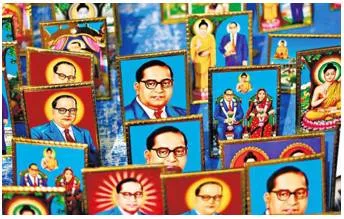
The atrophy of the neo buddhist movement in india
Every year in October, thousands of people assemble at Nagpur’s Deekshabhoomi to pay homage to B.R. Ambedkar and remember the historic day of October 14, 1956, when he and half a million of his followers embraced Buddhism. Ambedkar chose Buddhism after examining various religions to understand the suitability of each to liberate socially marginalised communities from the exploitative caste order. He found that Buddhism is rooted in India’s civilization, supplements modern ethical values and is averse to social hierarchies and patriarchal domination. Neo-Buddhism was proposed as a mass movement that would elevate former ‘Untouchables’ and help them achieve self-respect. He hoped that Buddhist principles would mobilise them into a robust community to battle the ruling Brahmanical elites.Struggles of neo-Buddhism
Neo-Buddhism emerged as a maverick phenomenon that offered strong psychological solace to the struggling Dalit masses. However, Ambedkar’s grand hopes remain unfulfilled. Today, the Buddhist population in India is one of the smallest minorities, its ideological challenge against the Hindu social order has not been taken seriously, and even within the Dalit community, conversion to Buddhism is not perceived as a suitable path to achieve social emancipation. Instead, it is the BJP that often fashions itself as the new torchbearer of Buddhist identity.
A large majority (close to 80%) of Indian Buddhists resides in Maharashtra. The neo-Buddhists have established social and educational institutions, initiated cultural movements, and organised popular public festivals to make Buddhism a visible force in Maharashtra’s public sphere. However, it is mainly the Mahar caste and recently, smaller sections within the Matang and the Maratha castes which have identified themselves as neo-Buddhists. Other socially marginalised groups are still defined by Hindu caste nomenclatures and traditional occupations.
The Dalit sociopolitical movements in States including Uttar Pradesh, Bihar, Tamil Nadu and Karnataka have also not promoted conversion to Buddhism. In U.P., during the Bahujan Samaj Party (BSP)’s regime, cultural symbols related to Buddhism, such as the Rashtriya Dalit Prerna Sthal and Green Garden, were erected in public spaces, but there was still hesitation in suggesting religious conversion as an alternative to fight the battle for social justice. Even in States where the Scheduled Caste population is relatively high, such as in Punjab, West Bengal and Odisha, Dalits have shown restraint in adopting Buddhism to challenge their social location.
Importantly, India’s neighbouring Buddhist countries also have not identified neo-Buddhists as significant partners in their theological engagements. Several Buddhist countries have built their own pagodas and temples in Bodh Gaya and are more concerned with adding new sites in India’s Buddhist Circuit. Certain individuals and Buddhist associations from Japan, Thailand and the U.K. have established some close links with the neo-Buddhists of Maharashtra, but this is small support.
Appropriation by the right wing
Interestingly, it is the Narendra Modi-led government at the Centre that has often presented itself as the promoter of Buddhist cultural heritage at the national and international levels. In overseas diplomatic gatherings, Mr. Modi has frequently invoked India’s ancient Buddhist identity, especially in China, Nepal, Myanmar and Japan. Mr. Modi has made a conscious effort to emphasise shared Buddhist heritage with these countries. He also visited Deekshabhoomi in 2017, paid rich tributes to Ambedkar and announced multiple developmental projects. It is his government that proposed a Buddhist Circuit.
Theoretically, the neo-Buddhist movement is seen as an ideological and intellectual challenge to the dominant social and political ideas of the ruling elites. Interestingly, within the Hindutva discourse, Buddhism has been appropriated as an integral part of greater ‘Indic Civilization’ and the Buddhist conversion movement has not been seen as antithetical to the Hindu cultural pantheon. Further, Hindutva forces, using assertive cultural strategies, overtly appropriate crucial Dalit-Bahujan icons and underplay the fierce ideological antagonism that the early Dalit movement had against the Hindu social order.
When right-wing forces are asserting their Hindu identity to build a monolithic majoritarian community, a popular deliberation on Ambedkar’s logic of conversion to Buddhism would have helped the Opposition, including the popular Dalit political class, to challenge such hegemonic appropriation. Independent cultural and religious strategies are crucial in building a challenge to the dominant narrative of Hindutva.
However, the current Opposition lacks effective cultural strategies to challenge right-wing assertion. Instead, it still uses the same old formal electoral strategies, as we are seeing in Congress leader Rahul Gandhi’s current Bharat Jodo Yatra. In this context, revisiting the ideals of Ambedkar’s neo-Buddhist movement can be helpful in building fierce ideological challenges to Hindutva’s understanding of history and culture.



Top court quashes FIRs against Gen Z protesters
Sep 04, 2026






Stay updated with The Hindu Editorial Vocab24 app, your definitive source for breaking news and comprehensive coverage from India and around the globe. Whether it's political developments, business updates, sports highlights, the latest technology trends, or current events, The Hindu brings live, accurate, and reliable news directly to your device.
Don’t fall for sensationalized or fake news shared online. Read and share accurate updates with friends and family through The Hindu Editorial Vocab24 app. Download it today!
News Coverage in The Hindu Editorial Vocab24 App
Breaking News: Receive instant notifications on breaking news stories as they unfold. Stay informed about major events and developments in India and around the world with live blogs, news in shorts videos, and concise articles.
Politics: Get the latest updates on Indian politics, including elections, policy changes, government decisions, and political events that shape the nation.
Business and Economy: Stay ahead in the economic landscape with detailed business news and market analysis. Learn about stock market trends, financial reports, corporate news, and economic developments to make informed investment decisions.
Current Events: Follow stories on social issues, policy changes, global events, and daily current affairs, tailored for UPSC and other competitive exam preparations.
Technology: Keep up with the latest gadgets, innovations, and tech trends. Read expert reviews and analyses in short, concise updates on cutting-edge technology from India and beyond.
Sports: Never miss a moment of your favorite sports. Get live scores, match reports, and expert analysis on cricket, football, tennis, and more.
International News: Stay informed about global events and geopolitical developments, including the Russia-Ukraine war, Israel-Palestine conflict, and other key international stories.
Local News: Stay connected to your community with the latest updates on city events, issues, and local news. Coverage includes hyperlocal updates from cities like Bangalore, Chennai, Delhi, Hyderabad, Mumbai, Kolkata, and more.
Trending Topics: Discover what's trending today with the most talked-about stories and hot topics across India and the world.
Experience journalism that values integrity, accuracy, and reliability. Download The Hindu Editorial Vocab24 app today and stay connected with the world.
Subscribe to our newsletter!







