

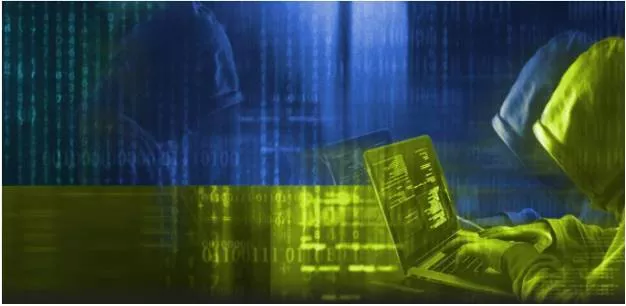
The ‘c’ factor in the russia ukraine war
Well into the second 100 days of the Russia-Ukraine conflict, the world is awash with speculation about reasons for the so-called failure of the Russian armed forces to deal a decisive blow against a much smaller Ukrainian army. This may appear to be a one-sided viewpoint, but Russia is yet to achieve what can be termed as a decisive victory in any sector of the current conflict.Analysing Russia’s response
Several reasons have been adduced by experts in the West for the lacklustre performance of the Russian army. Frequently mentioned are: lack of motivation and the poor morale of the Russian forces sent to Ukraine, many of whom were conscripts who had little desire to participate in a bloody conflict; absence of trust between the higher and the middle/lower rungs of the Russian armed forces, leading to a hiatus at the operational level; Russian weaponry being outdated and ineffective to fight an informationalised war under modern conditions, such as the one that Ukraine was waging at present with generous help from the North Atlantic Treaty Organization (NATO) and western powers.
Admittedly, Russian commanders have also proved inept in devising plans and taking appropriate decisions in battlefield conditions against a determined enemy. Viewed against the perspective when the conflict started, that Ukraine would capitulate within a matter of weeks, all this has contributed to a feeling in the West that Russia’s armed forces are overrated, and that the threat they pose to the democratic West is greatly exaggerated.
A word of caution is, however, called for. Russia’s spending on its military over several decades has been far higher than that of every other country in Europe, including the two most highly militarised countries, viz., the United Kingdom and France. Russia’s armed arsenal which has been on public display on several occasions in the recent past, can hardly be written off, even if questions are now being raised about the invincibility of Russia’s armed forces. The reality is that much of Russia’s advanced weaponry has not been employed in the Ukraine conflict — for reasons best known to the Kremlin — and, hence, the West should not read the ‘tea leaves’ wrongly, and write off Russia’s military strength, lest it encourages misguided elements to embark on any hazardous ‘misadventure’.
The role of ‘cyber’
Reasons for Russia’s lacklustre performance need to be found elsewhere. Given that cyber is often touted as the Fifth Dimension of warfare, it may be worthwhile to examine whether this indeed is the first major conflict in which ‘cyber’ is playing a crucial role, allowing a weaker nation with cyber capabilities to use it to its advantage. Public memory tends to be short, for it was only a decade ago that a distinguished President of the United States, Barack Obama, had warned that in the event of a conflict or otherwise, cyberattacks would plunge ‘entire cities into darkness’.
A former Chief of the National Security Agency of the U.S., which has responsibility for cyber in the military domain, in his memoirs had said that although cyberspace is a man-made domain, it had become critical to military operations on land, sea, air and in space. A former U.S. Secretary of Defence a few years ago,, even talked of a possible ‘cyber Pearl Harbour to paralyze nations and create a profound sense of vulnerability’. Likewise, some years ago, the U.S. intelligence community had put out a warning that their nation was under threat as North Korean operatives were in a position to pre-position ‘cyber munitions’ inside America’s critical infrastructure, and detonate them in the event of a conflict. Today, the West regularly portrays Russians using cyber-tactics to destroy nations.
The Russian military oligarchy is indeed among the world leaders in digital disruption and cyber-methodology, and one could have reasonably presumed that even before the conflict commenced, Russia would have swamped Ukraine with an avalanche of digital attacks. Ukraine, for its part, has its own digital army, including a corps of digital weapons. Several weeks into the war, however, there is little clarity as to the extent to which both sides have deployed cyberweapons.
Earlier attacks
There are several publicised instances earlier, of alleged Russian operatives waging a cyberwar against Ukraine. An instance that captured public imagination some years ago was Russia’s cyberattack on Ukraine’s electric grid, leaving many parts of the country without power for several days, in the midst of a grim winter. Ukrainian cyber security experts have also claimed to have prevented a major cyber operation — linked to the Kremlin — to derail the Ukrainian presidential election some years ago. These were, however, only the tip of the iceberg of Russia’s cyber offensive capabilities, vis-à-vis Ukraine.
Both sides now possess and use malware such as data-wipers which have proved highly effective. On the day the Russian invasion of Ukraine began, Russian cyber units are believed to have successfully deployed destructive malware against several Ukrainian military targets. The Ukrainian Satellite Internet Provider, for instance, was the target of one such cyberattack, leading to widespread communications outages. A series of distributed denial-of-service (DDoS) attacks against Ukrainian banking and defence websites occurred simultaneously. In addition, Wiper malware was introduced into several Ukraine Government networks, while the websites of the Ukrainian Defence Ministry and military targets faced a series of DDoS and phishing attacks.
But no Armageddon
None of these, however, is tantamount to what can be described as large-scale cyberattacks. As far as the conduct of the war is concerned, the string of small-scale cyberattacks cannot be said to have had any material impact on the conduct or outcome of the conflict. Hence, the cardinal question is why given that Ukraine has put up such a heroic defence — and to a considerable extent stalled the Russian offensive — Russia has not embarked on a massive all-out cyber-offensive.
It is very likely, and possibly a fact, that there are major difficulties in planning and executing massive cyberattacks on a short timeline to ensure higher efficacy of kinetic attacks. If that be the case, then much of the speculation that cyberattacks in the event of a war provide a perpetrator the capability to enact another ‘Pearl Harbour’ seems highly unrealistic. The fact that both Russia and Ukraine, which have powerful armies of cyber-specialists, more so hackers (Ukraine even tried to create an international army of hackers to target critical Russian systems), have not succeeded in causing a cyber Armageddon can possibly be seen as a reprieve. But there are possibly other underlying reasons. There has always been a view among cyber experts that ‘Cyber Space is not a war zone’, and that it is fundamentally a civilian space — but without doubt leading to a ‘new exciting age in human experience, exploration and development’. Thus, it would seem that for all its potential to disrupt civilian targets such as power grids, hospitals, banks and industries, cyber-power is yet to achieve its so-called threat potential in terms of decisive impacts in battlefield situations. As of now, cyberattacks have an impact that is well below the threshold of what a nuclear war, even a limited one, could produce.
The West’s line
Meanwhile, the West is currently busy floating some ‘red herrings’, viz., that Moscow is possibly considering raising the stakes further given that the offensive in Ukraine has stalled. Implicit in this warning is that Moscow may be planning to embark on a nuclear conflict. The West believes that Russia could in such a situation, possibly employ tactical/battlefield nuclear weapons to drive home to Ukrainian defenders the high price of resistance to Russia’s offensive. It is not for the first time that the West is peddling such a view, for it has from time to time observed that Russia is a firm believer in ‘the value of nuclear weapons as a tool of statecraft’; and that a showdown in Ukraine, employing low-yield nuclear weapons, would help send a clear message not only to Ukraine but also to NATO and the United States as well, in regard to the extent of Russia’s determination not to allow any further extension of NATO to the east.
Conjuring up such a scenario with little evidence to support this argument could be dangerous. It could well turn into a self-fulfilling prophecy. There are inherent dangers attached to all such speculation.




Top court quashes FIRs against Gen Z protesters
Sep 04, 2026







Stay updated with The Hindu Editorial Vocab24 app, your definitive source for breaking news and comprehensive coverage from India and around the globe. Whether it's political developments, business updates, sports highlights, the latest technology trends, or current events, The Hindu brings live, accurate, and reliable news directly to your device.
Don’t fall for sensationalized or fake news shared online. Read and share accurate updates with friends and family through The Hindu Editorial Vocab24 app. Download it today!
News Coverage in The Hindu Editorial Vocab24 App
Breaking News: Receive instant notifications on breaking news stories as they unfold. Stay informed about major events and developments in India and around the world with live blogs, news in shorts videos, and concise articles.
Politics: Get the latest updates on Indian politics, including elections, policy changes, government decisions, and political events that shape the nation.
Business and Economy: Stay ahead in the economic landscape with detailed business news and market analysis. Learn about stock market trends, financial reports, corporate news, and economic developments to make informed investment decisions.
Current Events: Follow stories on social issues, policy changes, global events, and daily current affairs, tailored for UPSC and other competitive exam preparations.
Technology: Keep up with the latest gadgets, innovations, and tech trends. Read expert reviews and analyses in short, concise updates on cutting-edge technology from India and beyond.
Sports: Never miss a moment of your favorite sports. Get live scores, match reports, and expert analysis on cricket, football, tennis, and more.
International News: Stay informed about global events and geopolitical developments, including the Russia-Ukraine war, Israel-Palestine conflict, and other key international stories.
Local News: Stay connected to your community with the latest updates on city events, issues, and local news. Coverage includes hyperlocal updates from cities like Bangalore, Chennai, Delhi, Hyderabad, Mumbai, Kolkata, and more.
Trending Topics: Discover what's trending today with the most talked-about stories and hot topics across India and the world.
Experience journalism that values integrity, accuracy, and reliability. Download The Hindu Editorial Vocab24 app today and stay connected with the world.
Subscribe to our newsletter!







