

Syria faced with brutal legacy of assad regime as it staggers back to ‘normalcy’
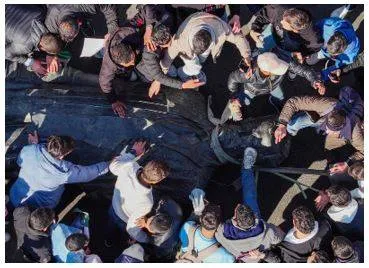
In the week since militants took Damascus, each day has seen more light shed on depths of the despair visited upon Syria’s people over the past five decades; but calm is slowly returning to the streets, with dozens of children streaming back to school on Sunday for the first time since Assad fled.A week after a lightning offensive toppled longtime leader Bashar al-Assad, Syrians are only beginning to scratch the surface of the atrocities committed under his rule, as the country’s new rulers seek to reassure the international community.
Calm is slowly returning to the streets of the Syrian capital, with dozens of children streaming back to school on Sunday for the first time since Mr. Assad fled.
“The school has asked us to send middle and upper pupils back to class,” said mother of three Raghida Ghosn, 56.
“The younger ones will go back in two days,” she said.
An official at one Damascus school said “no more than 30%” were back on Sunday, but that “these numbers will rise gradually”.
Mr. Assad fled Syria last weekend following an 11-day offensive led by the Islamist militant group Hayat Tahrir al-Sham (HTS), bringing more than 50 years of brutal Assad clan rule to a dramatic end.
His fall comes over 13 years into the civil war sparked by Mr. Assad’s violent crackdown on pro-democracy protests in 2011.
The war has killed upwards of 5,00,000 people and displaced more than half the country’s population.
In the week since the militants took Damascus, each day has seen more light shed on the depths of the despair visited upon Syria’s people over the past five decades.
Recalling horror
Journalist Mohammed Darwish was one of those held in the so-called Palestine Branch, or Branch 235, a jail that was run by Syria’s feared intelligence services.
“I was one of those they interrogated the most,” Mr. Darwish said as he returned to the prison years after his ordeal in 2018. He said he was questioned “every day, morning and night” for 120 days.
On Saturday, U.S. State Secretary Antony Blinken said Washington had “been in contact with HTS and with other parties,” without specifying how this contact occurred.
Meanwhile Western and Arab states along with Turkiye — key backers of anti-Assad militants — called for a united peaceful Syria following a meeting between Mr. Blinken and top diplomats in Jordan.
In a joint statement, diplomats from the United States, Turkiye, the European Union, and Arab countries called for a Syrian-led transition to “produce an inclusive, non-sectarian, and representative government formed through a transparent process”, with respect for human rights.
United Nations special envoy for Syria Geir Pedersen arrived in Damascus on Sunday, his spokesperson said, declining to give details of his agenda.
A Qatari delegation was due in Syria on Sunday to meet transitional government officials for talks on aid and reopening its embassy.
Unlike other Arab states, Qatar never restored diplomatic ties with Mr. Assad after a rupture in 2011.
Sunni Muslim HTS is rooted in Syria’s branch of al-Qaeda and is designated a “terrorist” organisation by many Western governments.
Widespread concerns
Although it has sought to moderate its rhetoric in recent years, its seizure of power has sparked concerns both domestically and internationally over the protection of religious and ethnic minorities.
The interim government insists that the rights of all Syrians will be protected, as will the rule of law.
On Sunday, Syrian Christians attended their first church service since Mr. Assad’s fall.
Pubs and stores selling alcohol in Damascus initially closed following the militant victory, but are now tentatively reopening.
Safi, landlord of the Papa bar in the Old City, said the militants told him: “You have the right to work and live your life as you did before”.
Mr. Assad was propped up by Russia — to where a former aide said he had fled — as well as Iran, and Lebanon’s Hezbollah militant group.
The militants began their offensive on November 27, the same day a ceasefire took effect in the Israel-Hezbollah war in Lebanon, in which Mr. Assad’s ally suffered staggering losses.
Naim Qassem, the leader of Iran-backed Hezbollah, admitted on Saturday that with Mr. Assad’s fall, his group could no longer be supplied militarily through Syria. He also said he hoped Syria’s new rulers saw Israel “as an enemy” and do not normalise ties with the country.
More strikes
Both Israel and Turkiye have carried out military strikes inside Syria since Mr. Assad’s fall.
The Syrian Observatory for Human Rights on Sunday reported fresh Israeli strikes near Damascus, after 60 strikes across Syria on Saturday.
The Britain-based observatory, which relies on a network of sources in Syria, reported strikes on Syrian army tunnels and arms depots in the Damir area near Damascus on Sunday.
Israel has also ordered troops into a UN-patrolled buffer zone separating Israeli and Syrian forces on the Golan Heights, a move the UN said violated a 1974 armistice.
HTS leader Abu Mohammed al-Jolani said the Israeli move “threatens a new unjustified escalation in the region”.
But “the general exhaustion in Syria after years of war and conflict does not allow us to enter new conflicts,” he said in an online statement.

Atiqa records two top-four finishes in WSK Final Cup
Sep 05, 2026










Stay updated with The Hindu Editorial Vocab24 app, your definitive source for breaking news and comprehensive coverage from India and around the globe. Whether it's political developments, business updates, sports highlights, the latest technology trends, or current events, The Hindu brings live, accurate, and reliable news directly to your device.
Don’t fall for sensationalized or fake news shared online. Read and share accurate updates with friends and family through The Hindu Editorial Vocab24 app. Download it today!
News Coverage in The Hindu Editorial Vocab24 App
Breaking News: Receive instant notifications on breaking news stories as they unfold. Stay informed about major events and developments in India and around the world with live blogs, news in shorts videos, and concise articles.
Politics: Get the latest updates on Indian politics, including elections, policy changes, government decisions, and political events that shape the nation.
Business and Economy: Stay ahead in the economic landscape with detailed business news and market analysis. Learn about stock market trends, financial reports, corporate news, and economic developments to make informed investment decisions.
Current Events: Follow stories on social issues, policy changes, global events, and daily current affairs, tailored for UPSC and other competitive exam preparations.
Technology: Keep up with the latest gadgets, innovations, and tech trends. Read expert reviews and analyses in short, concise updates on cutting-edge technology from India and beyond.
Sports: Never miss a moment of your favorite sports. Get live scores, match reports, and expert analysis on cricket, football, tennis, and more.
International News: Stay informed about global events and geopolitical developments, including the Russia-Ukraine war, Israel-Palestine conflict, and other key international stories.
Local News: Stay connected to your community with the latest updates on city events, issues, and local news. Coverage includes hyperlocal updates from cities like Bangalore, Chennai, Delhi, Hyderabad, Mumbai, Kolkata, and more.
Trending Topics: Discover what's trending today with the most talked-about stories and hot topics across India and the world.
Experience journalism that values integrity, accuracy, and reliability. Download The Hindu Editorial Vocab24 app today and stay connected with the world.
Subscribe to our newsletter!







