

Sudanese seek underground refuge in besieged darfur as civil war drags on
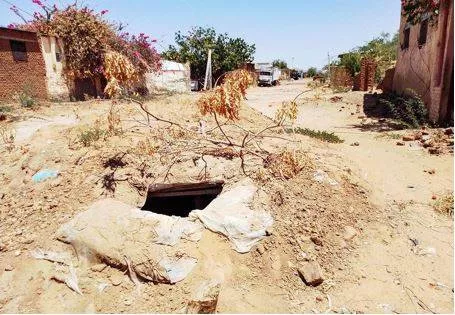
El-Fasher, the capital of North Darfur State, is the only major city in Darfur still under Army control, making it a strategic prize eyed by paramilitary RSF for months; residents, desperate for safety from intensified artillery and drone strikes by the paramilitary, have turned to makeshift bunkers.Beneath the broken earth of the besieged Sudanese city of El-Fasher in the western region of Darfur, Nafisa Malik clutches her five children close.
As shells rain down, the 45-year-old mother tries to shield her children in a cramped hole barely big enough to crouch in.
“Time slows down here,” Ms. Malik said, from her home near El-Fasher’s Hajer Gadou market.
“We sit in the darkness, listening, trying to guess when it’s over,” she said over phone.
For almost two years, the paramilitary Rapid Support Forces (RSF) and Sudan’s Army have waged a war that has killed tens of thousands.
United Nations Secretary-General Antonio Guterres on Friday called it a “crisis of staggering scale and brutality”.
Sudanese paramilitary shelling of El-Obeid on Friday killed six persons, including a child, a doctor said, just weeks after the Army broke a prolonged siege of the key southern city.
El-Obeid, the State capital of North Kordofan, has been under relentless bombardment for eight consecutive days El-Fasher, the capital of North Darfur State, is the only major city in Darfur still under Army control, making it a strategic prize.
The RSF has tried for months to seize it.
Ms. Malik’s crude shelter, held up by splintered wooden planks and scraps of rusted metal, is one of thousands in the war-battered city, according to residents.
The Army regained much of the capital Khartoum this year, but the RSF has intensified its attacks on El-Fasher.
Desperate for safety from artillery and drone strikes, residents have built makeshift bunkers.
Some are hurriedly excavated foxholes; others are more solid and reinforced with sandbags.
Mohammed Ibrahim, 54, once believed hiding under beds would be enough, “until houses were hit”.
“We lost neighbours,” he said over phone. “The children were terrified.”
Determined to protect his family, Mr. Ibrahim dug a hole in his yard. He covered it with sacks of soil with only a narrow entrance.
Despite the RSF’s siege cutting off supply lines, the Army and an allied coalition of armed groups known as the Joint Forces still hold most of the city.
Yale University’s Humanitarian Research Lab, which uses satellite and other data to track the conflict, has identified “clusters of damage”.
It details destruction from munitions and fires including near the airport, market, and in the city’s east and south.
The researchers reported bombardment of “residential structures”, and said its findings are consistent with Sudanese Army air strikes as well as RSF artillery and ground attacks.
Staff at the Saudi Hospital, one of the last functioning medical facilities in the city, carved out an underground shelter last October.
“We use it as an operating room during the strikes, lit only by our phones,” one doctor said, requesting anonymity for his safety.
Every explosion sends tremors through the shelter walls, shaking surgical instruments and rattling nerves.
El-Fasher was historically the seat of the Darfur sultanate and has long been a centre of power in Darfur.
Now, it is all that stands between total RSF control of Darfur, whose gold resources provide the paramilitaries with vital revenue, according to the United States Treasury Department.
The African Union warned last week that Sudan risks partition.
“The Army is well entrenched in El-Fasher, making it exceedingly difficult for the RSF to capture the city,” said Marc Lavergne, a Sudan expert at France’s University of Tours.
Crucial to the Army’s war effort in El-Fasher is its support from the Zaghawa, a non-Arab ethnic group.
The UN says the Zaghawa are among those targeted by RSF and allied Arab militias, exacting “a horrific toll”.
‘Existential threat’
Forces from prominent Zaghawa figures, Darfur Governor Minni Minnawi and Finance Minister Gibril Ibrahim, have joined the city’s defence after being neutral at the war’s beginning.
“The Zhagawa see the fall of El-Fasher as an existential threat,” said Sudanese political analyst Kholood Khair.
“They are concerned that the RSF would commit reprisal attacks against them for breaking their neutrality — if they capture the city,” she said.
But as the RSF tightens its grip, the army and its allies face a dilemma: hold the city at immense human cost or risk ceding a stronghold that Khair said could shift the war’s balance.
“Holding the city depletes resources,” she said. “But losing it would be catastrophic.”
A UN-backed assessment declared famine in three displacement camps around El-Fasher. Famine is expected to spread to five more areas, including El-Fasher itself, by May.
Aid is practically non-existent.
Remaining humanitarian agencies have suspended operations as the RSF attempts to break through, attacking camps and villages around El-Fasher.
“Bringing goods in has become nearly impossible,” shop owner Ahmed Suleiman said. “Even if you take the risk, you have to pay bribes at checkpoints, which drives up prices.”
Leni Kinzli from the World Food Programme warned of dire consequences.
“If aid continues to be cut off, the fallout will be catastrophic”, she said.


U k budget increases child welfare allowance taxes
Nov 29, 2025







Stay updated with The Hindu Editorial Vocab24 app, your definitive source for breaking news and comprehensive coverage from India and around the globe. Whether it's political developments, business updates, sports highlights, the latest technology trends, or current events, The Hindu brings live, accurate, and reliable news directly to your device.
Don’t fall for sensationalized or fake news shared online. Read and share accurate updates with friends and family through The Hindu Editorial Vocab24 app. Download it today!
News Coverage in The Hindu Editorial Vocab24 App
Breaking News: Receive instant notifications on breaking news stories as they unfold. Stay informed about major events and developments in India and around the world with live blogs, news in shorts videos, and concise articles.
Politics: Get the latest updates on Indian politics, including elections, policy changes, government decisions, and political events that shape the nation.
Business and Economy: Stay ahead in the economic landscape with detailed business news and market analysis. Learn about stock market trends, financial reports, corporate news, and economic developments to make informed investment decisions.
Current Events: Follow stories on social issues, policy changes, global events, and daily current affairs, tailored for UPSC and other competitive exam preparations.
Technology: Keep up with the latest gadgets, innovations, and tech trends. Read expert reviews and analyses in short, concise updates on cutting-edge technology from India and beyond.
Sports: Never miss a moment of your favorite sports. Get live scores, match reports, and expert analysis on cricket, football, tennis, and more.
International News: Stay informed about global events and geopolitical developments, including the Russia-Ukraine war, Israel-Palestine conflict, and other key international stories.
Local News: Stay connected to your community with the latest updates on city events, issues, and local news. Coverage includes hyperlocal updates from cities like Bangalore, Chennai, Delhi, Hyderabad, Mumbai, Kolkata, and more.
Trending Topics: Discover what's trending today with the most talked-about stories and hot topics across India and the world.
Experience journalism that values integrity, accuracy, and reliability. Download The Hindu Editorial Vocab24 app today and stay connected with the world.
Subscribe to our newsletter!







