

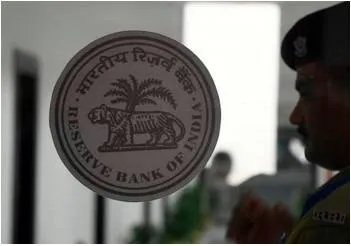
Spelling out the government’s rbi windfall
The final impact of such infusions on the bank’s independence would depend upon the future course of such transfers.The transfer of Reserve Bank of India (RBI) surplus to the government is a routine matter. Every year after the finalisation of the accounts of the RBI its surplus is transferred to the Central government sometime in end-August; this augments the non-tax revenue of the Central government. Normally, an estimate of such a transfer is decided informally between the RBI and the Central government by January and finds a place in the Budget estimate, typically announced in early February. But this year is an exception. The announcement of a huge transfer of RBI surplus, earlier this week, of ₹1.76 lakh crore to the Central government, seems to have generated quite a bit of media attention.
The two narratives
There are perhaps two caricatured folklore narratives about this increased transfer of RBI surplus.
The first one goes as follows: the government, facing a resource crunch, has arm-twisted the RBI to transfer some of its reserves, which is almost in the nature of family silver. This is not good for the economy. As when and if the economy faces a crisis, the RBI may not have adequate money to protect it. Also it denotes an erosion of the RBI’s independence. This assumes credence in view of the perceived difference of opinion between the RBI and the Central government, that has been highlighted in recent media reports, as well as the resignation of the former RBI Governor, Urjit Patel in 2018. The second one, on the contrary, runs on the following lines: the central bank is a unique institution; it is backed by the faith reposed on it by the the Central government, and therefore, a huge amount of reserves with the central bank is in the nature of idle cash which could have been utilised more productively in the economy. This year, the Central government has done precisely this. The RBI decided to transfer this increased surplus after following due process and after accepting the recommendations of the Jalan Committee (i.e., the expert committee to review the extant economic capital framework of the RBI, headed by the former RBI Governor, Bimal Jalan and with eminent central bankers, bureaucrats, economists and accountants as its members).
Are these competing narratives reflective of the political priorities of the exponent? Or, are there more differences in substance?
Notes on the RBI
The narrative that the RBI is an overcapitalised institution has been in currency for some time. The Economic Survey of 2016-17 found that the RBI is one of the most capitalised central banks in the world and noted, “There is no particular reason why this extra capital should be kept with the RBI”. Later, the former Chief Economic Adviser, Arvind Subramanian in his book Of Counsel: The Challenges of the Modi-Jaitley Economy (2018) has caricatured the syndrome of treating the government’s capital at the RBI by RBI officials as “prudence or paranoia” . Folklore estimates of excess capital of the RBI in the range of ₹4.5 lakh crore to ₹7 lakh crore seemed to have been blowing in the wind. The issue became all the more controversial after the resignation of Mr. Patel in December 2018 citing personal reasons.
Against this backdrop, the RBI, in consultation with the Government of India, constituted the Jalan Committee to assess the quantum of economic capital of the RBI (in end-November 2018). The committee submitted its report on August 14 and the RBI’s Central Board in its meeting held on August 26, 2019 accepted all the recommendations of the committee; accordingly it finalised its accounts for 2018-19 using the revised framework. According to the accounts, the RBI has ended with an overall surplus of ₹1,759.87 billion in 2018-19 as against ₹500 billion in 2017-18, representing an increase of more than 250%.
But what are the constituents or purposes of the RBI’s excess capital? There are two distinct types of items under it. While “Contingency Fund (CF) and Asset Development Fund (ADF) represent provisions made for unforeseen contingencies and amount set aside for investment in subsidiaries and internal capital expenditure respectively”, components such as, “Currency and Gold Revaluation Account (CGRA), Investment Revaluation Account (IRA) and Foreign Exchange Forward Contracts Valuation Account (FCVA), represent unrealised marked to market gains/losses” (RBI, Annual Report, 2017-18).
In assessing the economic capital framework (ECF) of the RBI, the Jalan Committee justifiably went by the key premise, “As a central bank is a part of the Sovereign, ensuring the credibility of the RBI is as important, if not more, to the Government as it is to the RBI itself”. Insofar as the methodology is concerned, the committee adopted the Expected Shortfall methodology (instead of the existing Stressed Value-at-Risk) for measuring market risk.
An outlook
But what are the risks to the RBI? In view of the RBI’s function as a lender of last resort, it needs to maintain some Contingent Risk Buffer (CRB) to insure the economy against any tail risk of financial stability crisis. The Jalan Committee recommended that the CRB needs to be “maintained at a range of 5.5 per cent to 6.5 per cent of the RBI’s balance sheet which is above the available level of 2.4 per cent of balance sheet as on June 30, 2018”. Applying its recommendations to the RBI’s 2017-18 balance sheet would result in RBI’s risk equity levels in a range of 25.4% to 20.8% of balance sheet. In line with the methodology of the Jalan Committee, the amount of transfer of the RBI’s surplus to the government has been placed at ₹1.76 lakh crore this year.
In the lingo of a caricatured two-handed economist, several pointers can be flagged towards deciphering the folklore narratives. First, the Jalan committee does not seem to have compromised on arriving at the economic capital framework of the RBI and has calculated the extent of excess capital of the RBI under a set of fairly standard and conservative assumptions. Second, at this juncture of the Indian economy — when the spectre of a slowdown is looming large and when channels of credit disbursements are choked because of a lack of capital with the commercial banks — a transfer of such additional money to the government could enable the government to go in for bank recapitalisation in a big way and would be good for the economy. Third, the transfer of the additional surplus from the RBI could enable the government to pursue efforts towards stimulating the economy while maintaining budget discipline. Remember, in pursuing the fiscal stimulus of 2007-08, fiscal deficit went up from 2.5% to 6%. Of course, the final impact of such actions on the independence of the RBI would crucially depend upon the future course of such transfers. After all, we all know the story of the goose that laid the golden eggs.

Atiqa records two top-four finishes in WSK Final Cup
Sep 05, 2026










Stay updated with The Hindu Editorial Vocab24 app, your definitive source for breaking news and comprehensive coverage from India and around the globe. Whether it's political developments, business updates, sports highlights, the latest technology trends, or current events, The Hindu brings live, accurate, and reliable news directly to your device.
Don’t fall for sensationalized or fake news shared online. Read and share accurate updates with friends and family through The Hindu Editorial Vocab24 app. Download it today!
News Coverage in The Hindu Editorial Vocab24 App
Breaking News: Receive instant notifications on breaking news stories as they unfold. Stay informed about major events and developments in India and around the world with live blogs, news in shorts videos, and concise articles.
Politics: Get the latest updates on Indian politics, including elections, policy changes, government decisions, and political events that shape the nation.
Business and Economy: Stay ahead in the economic landscape with detailed business news and market analysis. Learn about stock market trends, financial reports, corporate news, and economic developments to make informed investment decisions.
Current Events: Follow stories on social issues, policy changes, global events, and daily current affairs, tailored for UPSC and other competitive exam preparations.
Technology: Keep up with the latest gadgets, innovations, and tech trends. Read expert reviews and analyses in short, concise updates on cutting-edge technology from India and beyond.
Sports: Never miss a moment of your favorite sports. Get live scores, match reports, and expert analysis on cricket, football, tennis, and more.
International News: Stay informed about global events and geopolitical developments, including the Russia-Ukraine war, Israel-Palestine conflict, and other key international stories.
Local News: Stay connected to your community with the latest updates on city events, issues, and local news. Coverage includes hyperlocal updates from cities like Bangalore, Chennai, Delhi, Hyderabad, Mumbai, Kolkata, and more.
Trending Topics: Discover what's trending today with the most talked-about stories and hot topics across India and the world.
Experience journalism that values integrity, accuracy, and reliability. Download The Hindu Editorial Vocab24 app today and stay connected with the world.
Subscribe to our newsletter!







