

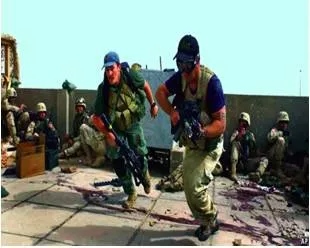
Soldiers of no flag carry no allegiance
In the wake of the US pullback from Afghanistan, there is clear and present danger of the ‘contract combatants' industry getting a fillip.Retreat of the US forces from Afghanistan will bring back focus on ‘contract combatants’, despite their inefficacy, governance and lack of morality that accompanies their shadowy usage. ‘Soldier of Fortune’ is an established phenomenon that goes with popular terms as mercenaries, hired guns and legionnaires, wherein they are not members of any official military but fight for money in an increasingly corporatised framework. Since antiquity, foreign mercenaries have fought in distant lands (Greek mercenaries were described as Yavanas in Indian texts). Arguably, the East India Company was among the earliest renditions of corporate contractors (‘Company’) who further hired local mercenaries. In the 20th century, the fragile regimes of Africa and Latin America became the favoured playing grounds for mercenaries, especially the white architypes. The recently concluded US operations in Afghanistan (and the ongoing operations in the Iraq-Syrian swathes) have seen an extensive use of ‘contract combatants’ with names like Blackwater (now rechristened, Academi), KBR, Titan and Northbridge. While the usage results have hardly been encouraging, the ambiguous nature of their legality, oversight, accountability and presence makes it extremely convenient for authorities to push in higher numbers, and thereby bypass awkward congressional, public, multilateral or any other form of sovereign ‘questioning’. Once, an unprecedented 1,60,000 contractuals were working in tandem with the parallel ‘surged’ numbers of matching 1,60,000 US Military personnel in the Iraqi-Syrian region.
Given the need to fight but without blood, pain or accountability — outsourcing of security has developed a global market and unleashed a dark industry where personnel are trained and armed with the latest weaponry. Importantly, their deployment numbers, actions or even fatalities committed/suffered, need not get recorded on the official tally. Conversely, it can lead to situations like the infamous 2007 Nisour Square (Baghdad) massacre of 14 civilians by security guards from Blackwater, which led to an international outcry over the use of flagrant mercenaries. The incident became symbolic of America’s consistent inability to comprehend why the ‘liberated’ populace hated the American presence, albeit under the guise of ‘contract combatants’ like Blackwater, who refused to comply by the laws and restraints in civic life that the US was trying to project, but failing. As Blackwater contractors had initially tried to wriggle out of justice citing inapplicability of local laws, the locals perceived this highhandedness as that of not just the contractors themselves, but of sovereign US’s selfishness and unconcernedness. The ‘divide’ in opinions about the US military’s foreign intervention and intention never bridged between the ground perceptions in conflict zones and mainland USA, as both sides imagined a different reality. The contractors were often considered far more ruthless and insensitive towards local sentiments than professional soldiers, and they got emboldened by the deliberate impunity afforded onto their conduct.
Erik Prince, founder of Blackwater, later proposed a brazen $5 billion plan in 2018 that envisaged replacing US Military with private forces — while that plan got shot down, today he is accused of profiting off desperate people who were trying to get out of Afghanistan by selling inflated tickets on chartered flights. Profit-motive that is inherent in any corporatised setup showed its cold face even amid such humiliating retreat. A former distinguished soldier who served in Trump’s Cabinet, Gen James Mattis, had presciently warned: “When Americans put their nation’s credibility on the line, privatising it is probably not a wise idea.” The idea of contract war policy is fraughtv with the risk of getting ‘sold out’ in case a better deal comes along — there is no place for patriotism or ideology for a ‘Soldier of Fortune’.
Russia’s Wagner Group is a similar ‘Company’ which offers plausible deniability to the Russian expansionism across continents. As the battlegrounds of Middle East and Central Asia get sneakier and asymmetric, the utility of mercenaries to operate got irresistible and, perceptively, cost effective. Today, there are specialist contractors who cater to specific clients, such as Malhama Tactical, the first-of-its-kind Jihadi private military contractor and consultant, whose services are available to any terror group or puritanical regime! The global security market is awash with products and services that can theoretically do the needful without attracting international attention, legality or opprobrium.
The post-Afghanistan world will introspect many existing models and options of conducting the ‘interventionist’ roles in a discreet and cost-effective manner — sadly, the mushrooming industry of corporatised security solutions will get an inevitable fillip, irrespective of the downside of this phenomenon. This can metastasise the already complex domain of the terror industry as the ‘control lever’ in such operations is either very limited or susceptible to fleeting ‘counter-opportunities’. The failure of conventional forces, foreign policy or even domestic political compulsions should not give rise to even more surreptitious, reckless and uncontrolled corporate options. By its inherent construct, it can also be misused towards diminishing the tenets of democracy and blunting internal opposition as the services of such entities are domain agnostic — only, profit is king. Prevailing global security situation warrants lesser weaponry in private hands; privatising combatants only adds to the complexity.
Can quad restrain wayward china
May 29, 2022
Concerns over finland sweden joining nato
May 22, 2022
Sustainability road to a better future
May 16, 2022
Aap lays out its goal
May 11, 2022
Shanghai covid crisis a test for xi’s leadership
May 09, 2022
The idea of universal equality
May 06, 2022





Stay updated with The Hindu Editorial Vocab24 app, your definitive source for breaking news and comprehensive coverage from India and around the globe. Whether it's political developments, business updates, sports highlights, the latest technology trends, or current events, The Hindu brings live, accurate, and reliable news directly to your device.
Don’t fall for sensationalized or fake news shared online. Read and share accurate updates with friends and family through The Hindu Editorial Vocab24 app. Download it today!
News Coverage in The Hindu Editorial Vocab24 App
Breaking News: Receive instant notifications on breaking news stories as they unfold. Stay informed about major events and developments in India and around the world with live blogs, news in shorts videos, and concise articles.
Politics: Get the latest updates on Indian politics, including elections, policy changes, government decisions, and political events that shape the nation.
Business and Economy: Stay ahead in the economic landscape with detailed business news and market analysis. Learn about stock market trends, financial reports, corporate news, and economic developments to make informed investment decisions.
Current Events: Follow stories on social issues, policy changes, global events, and daily current affairs, tailored for UPSC and other competitive exam preparations.
Technology: Keep up with the latest gadgets, innovations, and tech trends. Read expert reviews and analyses in short, concise updates on cutting-edge technology from India and beyond.
Sports: Never miss a moment of your favorite sports. Get live scores, match reports, and expert analysis on cricket, football, tennis, and more.
International News: Stay informed about global events and geopolitical developments, including the Russia-Ukraine war, Israel-Palestine conflict, and other key international stories.
Local News: Stay connected to your community with the latest updates on city events, issues, and local news. Coverage includes hyperlocal updates from cities like Bangalore, Chennai, Delhi, Hyderabad, Mumbai, Kolkata, and more.
Trending Topics: Discover what's trending today with the most talked-about stories and hot topics across India and the world.
Experience journalism that values integrity, accuracy, and reliability. Download The Hindu Editorial Vocab24 app today and stay connected with the world.
Subscribe to our newsletter!







