

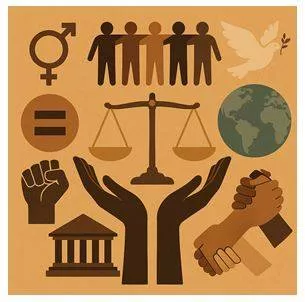
Social justice building an equitable society
IntroductionSocial justice is a foundational principle of a fair and harmonious society. It refers to the fair distribution of opportunities, resources, and privileges, ensuring that every individual—regardless of caste, religion, gender, race, or economic status—can live with dignity. In essence, it is about leveling the playing field so that no one is disadvantaged because of circumstances beyond their control.
The concept is deeply rooted in the values of equality, human rights, and non-discrimination. In the Indian context, social justice is embedded in the Constitution, especially in the Preamble, Fundamental Rights, and Directive Principles of State Policy. Globally, it is recognized as essential for sustainable development, peace, and social cohesion.
________________________________________ Historical Background
The roots of social justice can be traced back to ancient civilizations where codes of law attempted to ensure fairness in society. However, historical realities such as slavery, caste systems, patriarchy, and colonialism perpetuated inequality. In India, social reformers like Raja Ram Mohan Roy, Jyotirao Phule, B.R. Ambedkar, and Mahatma Gandhi fought against social evils like untouchability, gender inequality, and caste discrimination, laying the foundation for a more inclusive society.
________________________________________ Principles of Social Justice
1. Equality – Everyone should have equal access to rights and opportunities.
2. Equity – Distribution of resources should be based on individual needs, not uniformity.
3. Access – Removing barriers that prevent people from availing education, healthcare, or employment.
4. Participation – Every section of society should have a voice in decision-making processes.
5. Human Rights – Protecting the inherent dignity of every individual.
________________________________________ Social Justice in the Indian Constitution
• Preamble: Promises justice—social, economic, and political—to all citizens.
• Fundamental Rights (Articles 14–18): Ensure equality before the law, prohibit discrimination, and abolish untouchability.
• Directive Principles of State Policy: Guide the State to promote welfare, reduce inequalities, and ensure equitable distribution of resources.
• Reservation Policy: Provides representation to Scheduled Castes, Scheduled Tribes, and Other Backward Classes in education, employment, and politics.
________________________________________ Dimensions of Social Justice
1. Economic Justice – Reducing income disparities, ensuring fair wages, land reforms, and access to resources.
2. Political Justice – Equal political rights, fair representation, and protection of democratic freedoms.
3. Legal Justice – Equal protection and benefit of the laws without discrimination.
4. Gender Justice – Eliminating gender-based discrimination and empowering women.
5. Environmental Justice – Fair distribution of environmental benefits and burdens, protecting vulnerable communities from exploitation.
________________________________________ Challenges to Social Justice
• Caste-based discrimination and untouchability in rural areas.
• Gender inequality in employment, education, and wages.
• Economic disparities due to unequal resource distribution.
• Regional imbalances in development.
• Corruption and weak governance affecting fair policy implementation.
• Prejudice against marginalized communities like LGBTQ+, persons with disabilities, and religious minorities.
________________________________________ Measures to Promote Social Justice
1. Legal Reforms – Strengthening anti-discrimination laws and ensuring effective enforcement.
2. Educational Access – Universal quality education to empower marginalized sections.
3. Economic Empowerment – Skill development, entrepreneurship promotion, and financial inclusion.
4. Inclusive Policies – Reservation, welfare schemes, and targeted subsidies for vulnerable groups.
5. Awareness and Sensitization – Promoting social harmony through education and media.
6. Strengthening Institutions – Independent judiciary, active National/State Human Rights Commissions, and proactive civil society.
________________________________________ Global Perspective
International bodies like the United Nations and International Labour Organization (ILO) advocate social justice through conventions and frameworks such as the Universal Declaration of Human Rights and the Sustainable Development Goals (SDGs). Goals like No Poverty (SDG 1), Gender Equality (SDG 5), and Reduced Inequalities (SDG 10) align with the principles of social justice.
________________________________________ Way Forward
• From Welfare to Empowerment: Move beyond charity-driven approaches to capability-building.
• Intersectional Approach: Address overlapping forms of discrimination.
• Participatory Governance: Involve communities in policy-making to ensure their needs are represented.
• Technology for Inclusion: Use digital tools to ensure transparency, access to information, and delivery of welfare benefits.
• Cultural Change: Promote values of empathy, respect, and tolerance to reduce prejudice.
________________________________________ Conclusion
Social justice is not a static goal but a continuous process of reforming laws, policies, and societal attitudes to ensure fairness for all. A truly just society is one where an individual’s potential is not limited by their birth, identity, or socio-economic background. The commitment to social justice strengthens democracy, fosters unity, and builds a foundation for sustainable peace and prosperity.
In the words of B.R. Ambedkar, “Justice has always evoked ideas of equality, of proportion, of compensation. Justice is another name of liberty, equality and fraternity.”






Stay updated with The Hindu Editorial Vocab24 app, your definitive source for breaking news and comprehensive coverage from India and around the globe. Whether it's political developments, business updates, sports highlights, the latest technology trends, or current events, The Hindu brings live, accurate, and reliable news directly to your device.
Don’t fall for sensationalized or fake news shared online. Read and share accurate updates with friends and family through The Hindu Editorial Vocab24 app. Download it today!
News Coverage in The Hindu Editorial Vocab24 App
Breaking News: Receive instant notifications on breaking news stories as they unfold. Stay informed about major events and developments in India and around the world with live blogs, news in shorts videos, and concise articles.
Politics: Get the latest updates on Indian politics, including elections, policy changes, government decisions, and political events that shape the nation.
Business and Economy: Stay ahead in the economic landscape with detailed business news and market analysis. Learn about stock market trends, financial reports, corporate news, and economic developments to make informed investment decisions.
Current Events: Follow stories on social issues, policy changes, global events, and daily current affairs, tailored for UPSC and other competitive exam preparations.
Technology: Keep up with the latest gadgets, innovations, and tech trends. Read expert reviews and analyses in short, concise updates on cutting-edge technology from India and beyond.
Sports: Never miss a moment of your favorite sports. Get live scores, match reports, and expert analysis on cricket, football, tennis, and more.
International News: Stay informed about global events and geopolitical developments, including the Russia-Ukraine war, Israel-Palestine conflict, and other key international stories.
Local News: Stay connected to your community with the latest updates on city events, issues, and local news. Coverage includes hyperlocal updates from cities like Bangalore, Chennai, Delhi, Hyderabad, Mumbai, Kolkata, and more.
Trending Topics: Discover what's trending today with the most talked-about stories and hot topics across India and the world.
Experience journalism that values integrity, accuracy, and reliability. Download The Hindu Editorial Vocab24 app today and stay connected with the world.
Subscribe to our newsletter!







