


Shining bright
The clearance from the Cabinet Committee on Economic Affairs for a plan to double the capacity of solar power installed in dedicated solar parks to 40 gigawatts by 2020, with partial government fiscal assistance, is in line with the goal of creating a base of 100 gigawatts by 2022. Expansion of solar power capacity is among the more efficient means to meet the commitment to keep carbon emissions in check under the Paris Agreement on climate change, and it can provide the multiplier effect of creating additional employment, with overall economic dividends. As the International Renewable Energy Agency notes in its report titled Rethinking Energy 2017: Accelerating the global energy transformation, globally, jobs in solar energy have witnessed the fastest growth since 2011 among various renewable energy sectors. Asia has harnessed the potential the most, providing 60% of all renewable energy employment, while China enjoys the bulk of this with a thriving solar photovoltaic and thermal manufacturing industry, besides installations. Apart from measures to scale up generating capacity, India should take a close look at competitive manufacturing of the full chain of photovoltaics and open training facilities to produce the human resources the industry will need in the years ahead. Renewables and new energy storage technologies are on course to overshadow traditional fossil fuel-based sources of power as the costs decline. Low-cost financing channels hold the key to quick augmentation of solar generating capacity. The trend in some emerging economies, including India, has been a reduction in public financing of renewable energy projects over the last five years. This has implications for equity in the long run, and electricity regulators should fix tariffs taking into account the reduction in the levelised cost of electricity (the average break-even price over a project’s lifetime). Yet, recourse to other funding options, including regulated debt instruments such as green bonds, would be necessary to achieve early, ambitious targets. Without realistic purchase prices, utilities could resort to curtailment of renewable power sources on non-technical considerations, affecting investments. Tamil Nadu, a solar leader in the country, resorted to curtailments last year, a phenomenon that has perhaps muted industry interest in its recent 500 MW tender. The funding mix for renewables, therefore, should give climate financing an important role. At the Paris UN Climate Change Conference, developed countries pledged to raise $100 billion a year by 2020 for mitigation, and more in later years, a promise that needs to be vigorously pursued. Besides promoting phase two of the solar parks plan, and powering public facilities such as railway stations and stadia using solar power, the Centre should put in place arrangements that make it easier for every citizen and small business to adopt rooftop solar. This is crucial to achieving the overall goal of 100 GW from this plentiful source of energy by 2022, and to raise the share of renewables in the total energy mix to 40 per cent in the next decade.


Economic Survey promises, impact of new labour codes
Mar 16, 2026
Preparing India for a true innovation-led economy
Mar 15, 2026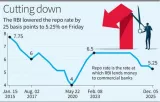
Cheaper loans likely as repo rate cut by 25 bps
Dec 08, 2025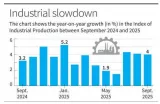
Iip growth dips to three month low of 4 in sept
Oct 31, 2025





Stay updated with The Hindu Editorial Vocab24 app, your definitive source for breaking news and comprehensive coverage from India and around the globe. Whether it's political developments, business updates, sports highlights, the latest technology trends, or current events, The Hindu brings live, accurate, and reliable news directly to your device.
Don’t fall for sensationalized or fake news shared online. Read and share accurate updates with friends and family through The Hindu Editorial Vocab24 app. Download it today!
News Coverage in The Hindu Editorial Vocab24 App
Breaking News: Receive instant notifications on breaking news stories as they unfold. Stay informed about major events and developments in India and around the world with live blogs, news in shorts videos, and concise articles.
Politics: Get the latest updates on Indian politics, including elections, policy changes, government decisions, and political events that shape the nation.
Business and Economy: Stay ahead in the economic landscape with detailed business news and market analysis. Learn about stock market trends, financial reports, corporate news, and economic developments to make informed investment decisions.
Current Events: Follow stories on social issues, policy changes, global events, and daily current affairs, tailored for UPSC and other competitive exam preparations.
Technology: Keep up with the latest gadgets, innovations, and tech trends. Read expert reviews and analyses in short, concise updates on cutting-edge technology from India and beyond.
Sports: Never miss a moment of your favorite sports. Get live scores, match reports, and expert analysis on cricket, football, tennis, and more.
International News: Stay informed about global events and geopolitical developments, including the Russia-Ukraine war, Israel-Palestine conflict, and other key international stories.
Local News: Stay connected to your community with the latest updates on city events, issues, and local news. Coverage includes hyperlocal updates from cities like Bangalore, Chennai, Delhi, Hyderabad, Mumbai, Kolkata, and more.
Trending Topics: Discover what's trending today with the most talked-about stories and hot topics across India and the world.
Experience journalism that values integrity, accuracy, and reliability. Download The Hindu Editorial Vocab24 app today and stay connected with the world.
Subscribe to our newsletter!







