


Seeing the divine in digital technologies
Hinduism sees divinity everywhere and hence, finds everything in the universe as sacred, worthy of worship. Hindus pray to trees, stones, mountains, fire, sun, rivers, animals, and more. The objectification of divinity is not superstition. What is worshipped is not the object, but the divinity immanent in it. We also venerate tools and technologies that add value to our lives, creating prosperity and promoting happiness. During Diwali, in ‘Chopada Puja’, businessmen worship their account books. In ‘Saraswati Puja’, students worship their school books. Many farmers across India begin their workday by offering prayers to their ploughs and cattle.I have always perceived something profoundly divine in digital technologies. If human beings are the highest form of God’s creation, the internet is the highest creation of the human mind. Unlike pen or plough, it does not belong to, nor is it exclusively used by, its owner. It is simultaneously used by the entire global community.
When the Covid-19 pandemic unexpectedly disrupted our lives and shook us out of our comfort zones, something paradoxical happened. Despite the constraints of lockdowns, we have become more closely connected – globally and locally – thanks to the magic of digital technologies. The virus has confined many of us to our homes. But it has not stopped us from working out of our homes. More people are now learning online, more subjects of their choice, with greater ease and freedom, than in the past.
Undoubtedly, we live in the most blessed time in human history. Never before has our world been as interconnected, interdependent and interactive as it is now. In addition to the familiar realm of physical interactions, digital technologies have gifted us a new space of virtual living, thereby multiplying the possibilities of human accomplishment – not for a privileged few, but for most people. ‘Bahujan Hitaya, Bahujan Sukhaya’ – the wellbeing and happiness of all – is an ancient aspiration and prayer. Internet, the most democratic and equitable tool in history, answers to that prayer. True, the misuse of digi-tech for destructive ends cannot be overlooked. But the tool itself is neither moral nor immoral; how we use it is up to us; hence we offer prayers to tools to avoid their wrongful use.
Tech futurologist George Gilder says, the internet is born with a spiritual mission. Comparing the microchip to a grand Gothic cathedral, he writes: “Wrought of sand and glass and air, both structures epitomise the supreme technologies of their eras. Today people still throng to cathedrals in awe. They still respond to the moral purpose suffusing the spires and towers and iridescent glass. Those who built cathedrals were not embarrassed to make moral claims. Far more than most of the art and literature of our day, our science and technology resonate with moral purpose and importance.” Ray Kurtzweil, another famous techno-futurist who is now associated with Google as its director of engineering, makes a similar argument in one of his many bestselling books, The Age of Spiritual Machines: When Computers Exceed Human Intelligence.
Each religion has its own distinguishing mode of prayer. But now, with the Internet era evolving towards a grander era of Artificial General Intelligence (AGI) – when mind-machine fusion can immensely expand human consciousness in the foreseeable future – we need to reflect not only on the awesome power, but also on the ethical principles and sacred source, of this technological evolution.






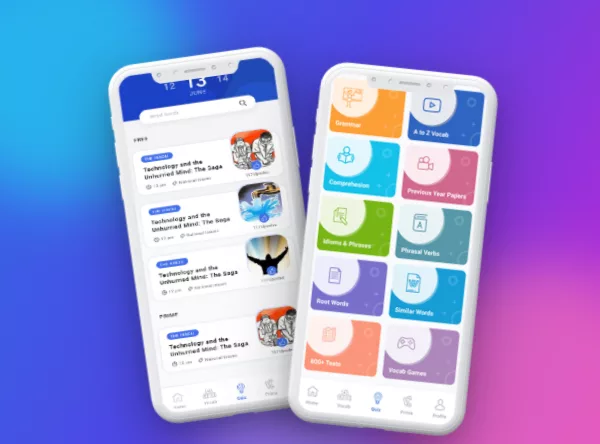





Stay updated with The Hindu Editorial Vocab24 app, your definitive source for breaking news and comprehensive coverage from India and around the globe. Whether it's political developments, business updates, sports highlights, the latest technology trends, or current events, The Hindu brings live, accurate, and reliable news directly to your device.
Don’t fall for sensationalized or fake news shared online. Read and share accurate updates with friends and family through The Hindu Editorial Vocab24 app. Download it today!
News Coverage in The Hindu Editorial Vocab24 App
Breaking News: Receive instant notifications on breaking news stories as they unfold. Stay informed about major events and developments in India and around the world with live blogs, news in shorts videos, and concise articles.
Politics: Get the latest updates on Indian politics, including elections, policy changes, government decisions, and political events that shape the nation.
Business and Economy: Stay ahead in the economic landscape with detailed business news and market analysis. Learn about stock market trends, financial reports, corporate news, and economic developments to make informed investment decisions.
Current Events: Follow stories on social issues, policy changes, global events, and daily current affairs, tailored for UPSC and other competitive exam preparations.
Technology: Keep up with the latest gadgets, innovations, and tech trends. Read expert reviews and analyses in short, concise updates on cutting-edge technology from India and beyond.
Sports: Never miss a moment of your favorite sports. Get live scores, match reports, and expert analysis on cricket, football, tennis, and more.
International News: Stay informed about global events and geopolitical developments, including the Russia-Ukraine war, Israel-Palestine conflict, and other key international stories.
Local News: Stay connected to your community with the latest updates on city events, issues, and local news. Coverage includes hyperlocal updates from cities like Bangalore, Chennai, Delhi, Hyderabad, Mumbai, Kolkata, and more.
Trending Topics: Discover what's trending today with the most talked-about stories and hot topics across India and the world.
Experience journalism that values integrity, accuracy, and reliability. Download The Hindu Editorial Vocab24 app today and stay connected with the world.
Subscribe to our newsletter!







