

Russia’s war the impracticality of violence
The world must forgo any attempt to place ‘heroes’ of wars on higher pedestals than the apostles of non-violence.Russia’s violent war on Ukraine has isolated it from the global community. Public attention has been diverted from Russia’s long-standing fears of suppression by the United States and western European nations to the misery of innocent Ukrainian citizens who are an inevitable collateral damage of war. Even countries with colonial histories, who could sympathise with Russia’s concerns of encirclement by an alliance of economically and militarily stronger nations, felt morally compelled to rally against Russia. India has been caught between a rock and a hard place. Across India’s long and insecure borders sits Pakistan, an implacable foe, and the mighty China, with an economy six times larger than India’s and more self-reliant in defence equipment. India is wary of relying on a distant U.S.: it needs continuing Russian support for high-tech defence needs.
Leading the way
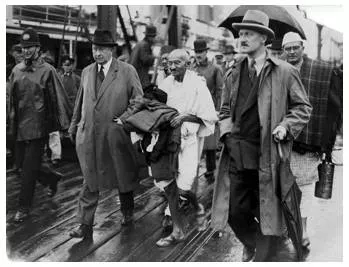
India must never condone violence, no matter how just the cause. India is a global champion of non-violence; Mahatma Gandhi, the “father of the nation” is a global icon. “An eye for an eye will only make the whole world blind,” Gandhi said. He even called off the civil disobedience movement when Indian citizens, fighting for freedom from British injustice, turned violent.
Gandhi advocated non-violence not only as a moral principle in fights for justice: whether in the struggles of colonised peoples against foreign rulers, or internal conflicts to correct structural injustices, such as the oppression of lower castes by upper castes and the poor by the rich. He was also a practical man. He also honed methods of non-violent resistance whereby the weaker masses, united for a just cause, could prevail against entrenched powers. Gandhi’s example was followed, with success, by leaders of the civil rights movement in the U.S., uprisings against Communist regimes in Eastern Europe, and the anti-apartheid struggle in South Africa which won support around the world.
The dynamics
Strategies which work in ‘set piece’ conflicts and ‘bounded’ games, in which the opponents are clearly identifiable, cannot work in asymmetrical wars where the sources of power of the antagonists are very different: on one side, “organised” power, and on the other, a diffused mass. Even leaders fighting for justice for powerless masses can lose the support of citizens if the movement turns violent. They must enrol citizens who neither have arms to fight with nor wish to risk their lives in violence. In The Politics of Nonviolent Action, Gene Sharp, a great admirer of Mahatma Gandhi, and one of the world’s foremost scholars of non-violent movements, distils the dynamics and methods of non-violent struggles from the histories of many countries. Attitudes and activities of wider populations associated with the struggle are critical because, if sympathetic, they may provide facilities and supplies. Gandhi’s strategy of non-violent civil disobedience was founded.
Even leaders of invading armies need the support of civilian populations for the safety and supplies of their troops. They need support from their own civilian populations at home also. “Non-violent action is capable of striking at the availability of sources of political power of the ruling authority,” said Sharp. “Over-reacting on repression may, instead of weakening the resistance, react against sources of an opponent’s own power”. The deaths caused by its military action in Vietnam lost the U.S. government the support of its own citizens. In a war to end all wars neither Russia nor the U.S. can claim the moral high ground.
Before Americans rose up in arms against the British, several civil resistance movements and the boycott of British goods were underway in the American colonies. Americans refused to comply with the Stamp Act. The New York General Assembly and the people’s Council of Boston refused to make provisions for the quartering of the King’s troops. The British were discovering that it is difficult to rule uncooperative people. Though they had a strong army; they did not have weapons to win hearts and minds. On the other side, the non-violent resisters had to be patiently resolute while they wore the British down. Gandhi applied this strategy courageously and effectively to win India’s independence from the British, though he faced opprobrium from within — that he abjured arms because he was weak. Subhas Chandra Bose broke with Gandhi and joined the Japanese to create an Indian army to fight the British.
Leaders of non-violent resistance against the British had a hard time restraining hot heads chafing against British rule. When the Minutemen fired on British troops in Lexington in April 1775, the British called out more troops to crush the armed uprising. Then the revolutionaries, less equipped and less organised, had to fight the British in the conventional way. They suffered several defeats and many casualties before they won their War of Independence, with George Washington as their leader.
Histories of conflicts valorise wars and generals, even when they are defeated; not the non-violent movers of change. Cities and streets are named after George Washington, Nathanael Greene, Henry Knox, and the Marquis de Lafayette; their statues are raised on pedestals—even Robert Lee who lost the Civil War. Dates of major battles are memorised and war plans analysed for lessons in strategy. Nowadays, children grow up playing violent games on videos but which rake in millions for their creators. In real life too, the makers of weapons nudge leaders towards violent wars. It is good for their business, whichever side wins or loses, so long as the wars last long.
Soft power icon
Mahatma Gandhi stood out in the 20th century. He led a massive movement of freedom non-violently in one of the most violent periods of human history, with two World Wars within 50 years and bloody battles that continue to be themes of popular movies a century later. He demonstrated there was a better, non-violent way to shake off oppression. “Generations to come will scarce believe that such a one as this ever in flesh and blood walked upon this earth, said Albert Einstein on Mahatma Gandhi’s 70th birthday.
Both Subhas Chandra Bose and Mahatma Gandhi were great men who dedicated their lives to the freedom of their country. They disagreed about methods to free India from the British. Bose collaborated with the Japanese army to fight the British with arms. He lost because the Japanese lost. One may wonder what would have happened had he succeeded and India had a government propped up by the Japanese when the Allies finally won the War. Years of further struggles would have followed for a friendless India. Fortunately, India won its freedom the other way and became a beacon of hope for a world wearied by violence. Gandhi’s way became the greatest source of India’s soft power — greater than its ancient culture, yoga, and Bollywood. We weaken ourselves when we do not stand up against violence anywhere.



Top court quashes FIRs against Gen Z protesters
Sep 04, 2026






Stay updated with The Hindu Editorial Vocab24 app, your definitive source for breaking news and comprehensive coverage from India and around the globe. Whether it's political developments, business updates, sports highlights, the latest technology trends, or current events, The Hindu brings live, accurate, and reliable news directly to your device.
Don’t fall for sensationalized or fake news shared online. Read and share accurate updates with friends and family through The Hindu Editorial Vocab24 app. Download it today!
News Coverage in The Hindu Editorial Vocab24 App
Breaking News: Receive instant notifications on breaking news stories as they unfold. Stay informed about major events and developments in India and around the world with live blogs, news in shorts videos, and concise articles.
Politics: Get the latest updates on Indian politics, including elections, policy changes, government decisions, and political events that shape the nation.
Business and Economy: Stay ahead in the economic landscape with detailed business news and market analysis. Learn about stock market trends, financial reports, corporate news, and economic developments to make informed investment decisions.
Current Events: Follow stories on social issues, policy changes, global events, and daily current affairs, tailored for UPSC and other competitive exam preparations.
Technology: Keep up with the latest gadgets, innovations, and tech trends. Read expert reviews and analyses in short, concise updates on cutting-edge technology from India and beyond.
Sports: Never miss a moment of your favorite sports. Get live scores, match reports, and expert analysis on cricket, football, tennis, and more.
International News: Stay informed about global events and geopolitical developments, including the Russia-Ukraine war, Israel-Palestine conflict, and other key international stories.
Local News: Stay connected to your community with the latest updates on city events, issues, and local news. Coverage includes hyperlocal updates from cities like Bangalore, Chennai, Delhi, Hyderabad, Mumbai, Kolkata, and more.
Trending Topics: Discover what's trending today with the most talked-about stories and hot topics across India and the world.
Experience journalism that values integrity, accuracy, and reliability. Download The Hindu Editorial Vocab24 app today and stay connected with the world.
Subscribe to our newsletter!







