

Row over sedition
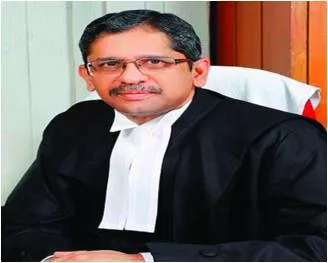
The Chief Justice of India has quietly nudged the Centre towards scrapping the ‘colonial’ law.The cat is out of the bag. By asking the Union Government why the “colonial” law of sedition is necessary after 75 years of Independence, the Chief Justice of India (CJI), Justice NV Ramana, has driven the unending debate over the controversial legislation in a direction that can only lead to closure. CJI Ramana’s observations help lay bare all the options before the executive or the judiciary to conclusively deal with the issue of sedition. There is a discernible pattern to the judicial build-up against the misuse of the sedition law by the Government and the police. CJI Ramana opened his innings by underlining the need to stop infringing on the fundamental and human rights of citizens, with a special emphasis on sedition. In the last two years, in particular, it has been used to incarcerate journalists, activists, protesters, academics, and farmers on charges unrelated to incitement for violence. It has fuelled a civil society demand for scrapping it. In May, the apex court stayed action against two Telugu-language news channels by the Andhra Pradesh Police on charges of sedition and remarked that “it is time to define the limits of sedition”. The next month, the court quashed sedition charges against journalist Vinod Dua by a BJP leader for making comments critical of the Prime Minister. On June 30, CJI Ramana, delivering the Justice PD Desai Memorial Lecture, made a general observation without reference to any particular law: “An ‘unjust law’ might not have the same moral legitimacy as a ‘just law’, but it might still command the obedience of some sections of the society to the detriment of others.”
In the latest instance, the SC agreed to examine a plea questioning the constitutionality of Section 124(A) and the CJI wondered: “We do not know why the Government is not taking a decision. Your Government has been getting rid of stale laws.” This can be construed as the broadest hint, ever, from the judiciary to the Government to scrap the controversial law. If the Government was looking for a push from the judiciary, it has got it now. If the Government acts on the hint, it will have taken a bold step but at the cost of the credibility of its police apparatus which will then be unable to defend charging hundreds of people with sedition. The Government can also choose to allow the judiciary to take the initiative and scrap the law. There are two important precedents in the form of the Supreme Court’s scrapping of Section 377 of the Indian Penal Code which criminalised “unnatural sex” between consenting adults, and striking down Section 66A of the Information Technology Act because it “arbitrarily, excessively and disproportionately invades the right of free speech”. In the case of sedition, the SC has two options. One, to examine the pending pleas for scrapping the law. Two, review its 1962 decision in the Kedar Nath Singh case in which it upheld the constitutionality of the sedition law.

Can quad restrain wayward china
May 29, 2022
Concerns over finland sweden joining nato
May 22, 2022
Sustainability road to a better future
May 16, 2022
Aap lays out its goal
May 11, 2022
Shanghai covid crisis a test for xi’s leadership
May 09, 2022
The idea of universal equality
May 06, 2022





Stay updated with The Hindu Editorial Vocab24 app, your definitive source for breaking news and comprehensive coverage from India and around the globe. Whether it's political developments, business updates, sports highlights, the latest technology trends, or current events, The Hindu brings live, accurate, and reliable news directly to your device.
Don’t fall for sensationalized or fake news shared online. Read and share accurate updates with friends and family through The Hindu Editorial Vocab24 app. Download it today!
News Coverage in The Hindu Editorial Vocab24 App
Breaking News: Receive instant notifications on breaking news stories as they unfold. Stay informed about major events and developments in India and around the world with live blogs, news in shorts videos, and concise articles.
Politics: Get the latest updates on Indian politics, including elections, policy changes, government decisions, and political events that shape the nation.
Business and Economy: Stay ahead in the economic landscape with detailed business news and market analysis. Learn about stock market trends, financial reports, corporate news, and economic developments to make informed investment decisions.
Current Events: Follow stories on social issues, policy changes, global events, and daily current affairs, tailored for UPSC and other competitive exam preparations.
Technology: Keep up with the latest gadgets, innovations, and tech trends. Read expert reviews and analyses in short, concise updates on cutting-edge technology from India and beyond.
Sports: Never miss a moment of your favorite sports. Get live scores, match reports, and expert analysis on cricket, football, tennis, and more.
International News: Stay informed about global events and geopolitical developments, including the Russia-Ukraine war, Israel-Palestine conflict, and other key international stories.
Local News: Stay connected to your community with the latest updates on city events, issues, and local news. Coverage includes hyperlocal updates from cities like Bangalore, Chennai, Delhi, Hyderabad, Mumbai, Kolkata, and more.
Trending Topics: Discover what's trending today with the most talked-about stories and hot topics across India and the world.
Experience journalism that values integrity, accuracy, and reliability. Download The Hindu Editorial Vocab24 app today and stay connected with the world.
Subscribe to our newsletter!







