

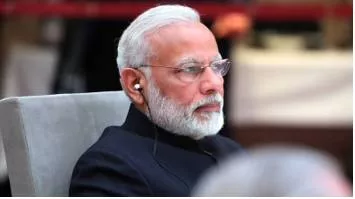
Revadi jibe shows modi govt letting its insecurities do the talking not economics
Prime Minister Narendra Modi’s recent remark warning about the revdi (freebie) culture, arguably being practised at the state level, has been heralded in some quarters as a welcome step in the national interest in shifting state government expenditures away from their misplaced focus on quantity towards quality. “If you give things for free, then how can you build airports or roads?” the PM asked his audience rhetorically at the inauguration of the Bundelkhand Expressway. Although the Prime Minister did not name any particular state government, subsequent political developments have clearly revealed a partisan interest in targeting the Aam Aadmi Party and the welfare model it has honed in its stronghold, Delhi.But, why exactly should the Prime Minister be worried about the welfare model of an opposition party that barely controls two state governments and is only beginning to register itself in a third major state, although the ruling party’s citadel? Furthermore, the Bharatiya Janata Party (BJP) has its own electorally tested welfare model i.e., the “new welfarism” policies – the public provisioning of essential private goods – that were arguably game-changers in the Uttar Pradesh assembly elections.
Much has, however, changed on the economic front since the UP elections earlier this year. India’s post-pandemic recovery, compounded by the war in Ukraine, has been shallow. Against this backdrop comes the news that the economy is beset by a deep structural problem: the multitudes of low-skilled labour migrating to cities are being absorbed into poorly-paying construction jobs with very little chances of intergenerational social mobility. Now consider the poor voter in this setting who has to choose between a welfare model that promises a basic minimum level of healthcare free of cost and a welfare model that provides subsidised healthcare. It is clear that this voter will gravitate towards the free healthcare model because under the present circumstances, the promise of unconditional welfare is more appealing than the “nudge” economics of the BJP’s new welfarism. In any case, it is morally wrong to expect poor Indians to carry the burden of “self-reliance” when the rich are exiting the political system in large numbers and the Modi government has made little headway in combatting the accumulation of toxic assets in public banks.
Lacking a compelling narrative
As the recent India Today-CVoter Mood of the Nation survey shows, the Prime Minister continues to be India’s most popular politician by a comfortable distance. A big part of his success stems from his ability to offer narratives and policies that insulate bad economic news from voter scrutiny. But the revdi remark is, in fact, a signal that the ruling party does not have a compelling narrative for these changed economic circumstances, which are likely to persist in the near future. The reproachful tone of the remark notwithstanding, it actually comes from a place of deep insecurity.
What are the implications of these emerging developments for Indian democracy? The ability of voters, at least in theory, to throw out incumbents who preside over imprudent economic policy choices is perhaps the one attribute that confers on democracy a moral legitimacy that its competitors lack. Of course, in some cases, voters may misjudge the extent to which the incumbent is actually responsible for macroeconomic outcomes, but the very fact that such a mechanism is available means that democracies can exit economic crises more easily than non-democracies. The NDA sought reelection in 2004 on the basis of a pro-growth agenda that was voted down by the electorate. The UPA successfully sought reelection in 2009 on a growth with redistribution agenda, but lost its bid for reelection in 2014 to a pro-growth and anti-corruption agenda. The current regime has thus far avoided voter scrutiny of demonetisation or its pandemic management policies, the two main domains where its actions and choices clearly affected the national economy. Does the fact that it no longer has a compelling narrative mean that 2019 was an aberration and we will revert to the mean in 2024?
Sadly, for Indian democracy, it is more likely that the Modi government will let its insecurities, rather than economics do the talking in the days ahead. Take, for example, the Prime Minister’s response to the Congress party’s protests on inflation and unemployment. He picked on the black clothes worn by the protesters and accused them of performing “black magic.” The home minister went even further, using the satirical choice of the protesters and the date of the protest – 5 August marked the second anniversary of the shilanyas (foundation laying ceremony) for the Ram Mandir being built in Ayodhya – to accuse the Congress of “minority appeasement.” In each case, the messenger was attacked to detract attention from the message. Hence, 2024 promises to be another in a series of post-truth elections, with inflation, unemployment, and pandemic management all taking a backseat to majoritarian anxiety as campaign issues.



Top court quashes FIRs against Gen Z protesters
Sep 04, 2026






Stay updated with The Hindu Editorial Vocab24 app, your definitive source for breaking news and comprehensive coverage from India and around the globe. Whether it's political developments, business updates, sports highlights, the latest technology trends, or current events, The Hindu brings live, accurate, and reliable news directly to your device.
Don’t fall for sensationalized or fake news shared online. Read and share accurate updates with friends and family through The Hindu Editorial Vocab24 app. Download it today!
News Coverage in The Hindu Editorial Vocab24 App
Breaking News: Receive instant notifications on breaking news stories as they unfold. Stay informed about major events and developments in India and around the world with live blogs, news in shorts videos, and concise articles.
Politics: Get the latest updates on Indian politics, including elections, policy changes, government decisions, and political events that shape the nation.
Business and Economy: Stay ahead in the economic landscape with detailed business news and market analysis. Learn about stock market trends, financial reports, corporate news, and economic developments to make informed investment decisions.
Current Events: Follow stories on social issues, policy changes, global events, and daily current affairs, tailored for UPSC and other competitive exam preparations.
Technology: Keep up with the latest gadgets, innovations, and tech trends. Read expert reviews and analyses in short, concise updates on cutting-edge technology from India and beyond.
Sports: Never miss a moment of your favorite sports. Get live scores, match reports, and expert analysis on cricket, football, tennis, and more.
International News: Stay informed about global events and geopolitical developments, including the Russia-Ukraine war, Israel-Palestine conflict, and other key international stories.
Local News: Stay connected to your community with the latest updates on city events, issues, and local news. Coverage includes hyperlocal updates from cities like Bangalore, Chennai, Delhi, Hyderabad, Mumbai, Kolkata, and more.
Trending Topics: Discover what's trending today with the most talked-about stories and hot topics across India and the world.
Experience journalism that values integrity, accuracy, and reliability. Download The Hindu Editorial Vocab24 app today and stay connected with the world.
Subscribe to our newsletter!







