

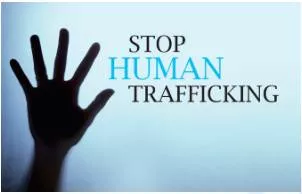
Rethinking trafficking
India should not follow the raid-rescue-rehabilitation model.Last year, India protested against the release of a report, ‘Global estimates of modern slavery: forced labour and forced marriage’, a collaborative effort of the International Labour Organisation (ILO), the Walk Free Foundation, and the International Organisation for Migration. The report estimated that there were 40.3 million “modern slaves” worldwide in 2016, with 24.9 million in forced labour and 15.4 million in forced marriages. It did not name countries, but the writing on the wall was clear as 17,000 interviews had been conducted in India, and 61.78% of the “modern slaves” were in Asia and the Pacific. Registering its protest with the ILO, India vowed to undertake its own surveys. The Chairman of the Economic Advisory Council to the Prime Minister, and member of NITI Aayog, Bibek Debroy, was scathing (to attack with severe criticism.),) in his critique. He called the estimates on forced marriage “confused and fuddled (to make confused)” and urged reliance on the government’s reports on child marriage.
Falling into a trap
However, as the report forms the baseline for achieving Sustainable Development Goal 8.7 (eradicate forced labour, end modern slavery and human trafficking, and end child labour by 2025), and since NITI Aayog is the body entrusted with the task of overseeing implementation of the SDGs in the country, India’s desire to protect its international image by measuring “more” and “better” is wholly inadequate. Rather than succumb (fail to resist pressure, temptation, or some other negative force) to the numbers game played by international organisations and philanthrocapitalists, India could be more ambitious. It could assert a leadership role in the global fight against exploitation by countering the influence of neoabolitionism, a discourse (communication of thought by words; talk; conversation) that perpetuates sensationalist accounts of “modern slaves” as victims tricked by unscrupulous (having or showing no moral principles; not honest or fair) traffickers and whose only hope is to be rescued by law-enforcing heroes. After all, long before neoabolitionist groups and indeed Western countries set the global policy agenda on “trafficking”, in the 1970s and 1980s India and Brazil had developed a rich, indigenous jurisprudence (the part of philosophy that focuses on the origins of the law and the decisions made by the judicial systems) on exploitation. This had a structural understanding of coercion and exploitation in labour markets and was backed by a creative regulatory response. But sadly today, the Indian government is set to introduce the Trafficking of Persons (Prevention, Protection and Rehabilitation) Bill, 2016, which exemplifies neoabolitionism.
India has a complex patchwork of anti-trafficking laws, ranging from the Indian Penal Code and the Immoral Traffic Prevention Act (ITPA), 1986, to social welfare legislation on contract and bonded labour, and inter-state migrant work. While criminal laws like the ITPA target ‘bad men’ traffickers, labour laws presume endemic (native to a specific area or group of individuals) exploitation in labour markets. In India, a combination of penal, labour and contract laws are used to impose obligations for better working conditions. Unfortunately, as the topic of trafficking gained international prominence (the state of being important, famous, or noticeable), the government understood trafficking to be equivalent to sex trafficking and sex work.
The current definition of trafficking in Section 370 of the IPC is not limited to sex work; yet, the Trafficking Bill is patently neoabolitionist. It pursues the classic raid-rescue-rehabilitation model, with stringent penalties for trafficking, including life imprisonment for its aggravated forms, reversals of burden of proof, and provisions for stripping traffickers of their assets. It creates a plethora (an amount that is much greater than what is necessary) of new institutions with unclear roles, capacious powers (including for surveillance) and no accountability, alongside a parallel adjudication machinery with special courts and special public prosecutors. There is no clarity on how the Bill relates to the ITPA and to labour laws.
What should India do?
In a recent statement, scholars, activists and workers’ rights groups argued against extending a criminal law, raid-rescue-rehabilitation model beyond sex work to other labour sectors. They called instead for a multi-faceted legal and economic strategy; robust implementation of labour laws; a universal social protection floor; self-organisation of workers; improved labour inspection, including in the informal economy; and corporate accountability for decent work conditions. They also reiterated the need for systemic reforms to counter distress migration, end caste-based discrimination, enforce the rural employment guarantee legislation, avoid the indiscriminate rescue of voluntary sex workers, and protect migrants’ mobility and rights. As the introduction of the Trafficking Bill in Parliament appears imminent, only a bold, holistic response to what is a socioeconomic problem of labour exploitation can help India realise SDG 8.7.




Top court quashes FIRs against Gen Z protesters
Sep 04, 2026







Stay updated with The Hindu Editorial Vocab24 app, your definitive source for breaking news and comprehensive coverage from India and around the globe. Whether it's political developments, business updates, sports highlights, the latest technology trends, or current events, The Hindu brings live, accurate, and reliable news directly to your device.
Don’t fall for sensationalized or fake news shared online. Read and share accurate updates with friends and family through The Hindu Editorial Vocab24 app. Download it today!
News Coverage in The Hindu Editorial Vocab24 App
Breaking News: Receive instant notifications on breaking news stories as they unfold. Stay informed about major events and developments in India and around the world with live blogs, news in shorts videos, and concise articles.
Politics: Get the latest updates on Indian politics, including elections, policy changes, government decisions, and political events that shape the nation.
Business and Economy: Stay ahead in the economic landscape with detailed business news and market analysis. Learn about stock market trends, financial reports, corporate news, and economic developments to make informed investment decisions.
Current Events: Follow stories on social issues, policy changes, global events, and daily current affairs, tailored for UPSC and other competitive exam preparations.
Technology: Keep up with the latest gadgets, innovations, and tech trends. Read expert reviews and analyses in short, concise updates on cutting-edge technology from India and beyond.
Sports: Never miss a moment of your favorite sports. Get live scores, match reports, and expert analysis on cricket, football, tennis, and more.
International News: Stay informed about global events and geopolitical developments, including the Russia-Ukraine war, Israel-Palestine conflict, and other key international stories.
Local News: Stay connected to your community with the latest updates on city events, issues, and local news. Coverage includes hyperlocal updates from cities like Bangalore, Chennai, Delhi, Hyderabad, Mumbai, Kolkata, and more.
Trending Topics: Discover what's trending today with the most talked-about stories and hot topics across India and the world.
Experience journalism that values integrity, accuracy, and reliability. Download The Hindu Editorial Vocab24 app today and stay connected with the world.
Subscribe to our newsletter!







