

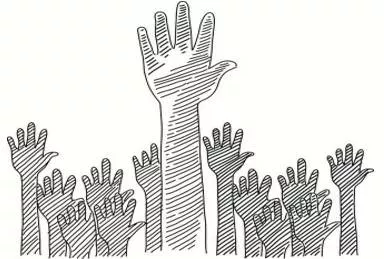
Reclaiming the space of non violence
Civil society must reinvent Gandhi as a political philosopher in the struggle against violence that has crushed solidarities.The Bharatiya Janata Party government took over barely a month ago, and already a spate of attacks on the minority community, particularly the horrific incident in Jharkhand, have further scarred the body politic. Citizens who have some notion of what we owe other people merely because they are human, have protested in words, verse, and deed. I am not positing a causal relationship between this government and rising incidents of crime against minorities: merely pointing out a striking coincidence.
A handful of criminals hold the minorities to ransom. They hold our society to ransom. The poet Gulzar had written: ‘Phir giri gardan, sar katne lage/Log bat te hi, khuda batne lagey/Naam jo poochey koi..dar lagta hai/Ab kise pooje koi… dar lagta hai/Kitni baar sooli par mujhe tangaa hai chand logon ne’. Once again necks have fallen/once again heads are hacked off/People have been divided/now Gods are also divided/If someone asks my name I am petrified/Who shall I now worship? I am frightened/How many times will a handful of people string me up on a stake?
There was a time when beef politics was used as an excuse to target and murder. The ban on beef was satirised by the poet Saghar Khayyami thus; ‘Nafraton ki jung mein dekho to kya-kya hogaya/Sabziyan Hindu huin, bakra musalman ho gaya’. Just see what has happened in this war of hate, vegetables have become Hindu and the goat is now Muslim. Today these vicious hoodlums do not need an excuse. They lynch, injure and murder at will.
Time for contemplation
It is time to reflect on what these everyday incidents of violence do to us. It is time to reclaim the space of non-violence that has been under relentless attack by murderers who take the name of lord Ram to kill, photograph and celebrate killings. It is time to ask this: What exactly does violence do to a society? Why is violence bad politics?
When the ‘finger of violence writes the alphabet of power in blood on peoples’ bodies, the script is ineffaceable; the imprint it leaves on the body politic is indelible. Violence leaves stigmata much like the murder of Duncan left blood on Lady Macbeth’s hands’: ‘Will these hands ne’er be clean?’ The power of violence over human beings cannot be underrated. It is not a weapon that we pick up and discard at will. It is a ‘quagmire that relentlessly sucks people into its murky depths. From here there is no escape. When violence holds individuals and groups in thrall, moral disintegration follows’. We, the people of India become helpless spectators of violent acts committed on our fellow citizens.
We are not the cowards that surround a vulnerable human being, bully and lynch him to death. Violence is the spectacle, we are the consumers of these nauseating acts even if we do not want to. These acts belong to the world of Marquis de Sade; the sexual impulse is indisputably connected to violence. Today these acts have become our world. And we have become as defenceless as the victim.
Recreating Satyagraha
Some of us protest, write petitions, assemble, record our disgust, abhorrence, and pain. Does the government listen? It is time that we in civil society stand up and recreate Gandhi’s notion of Satyagraha. Satyagraha differs from methods of violent action, because it emphasises self-suffering. The eyes of our people might be opened, as Gandhi suggested, by the suffering of the satyagrahi. Gandhi opts for self-suffering rather than make another person suffer, for many reasons. This mode of politics impacts the collective consciousness.
As people begin to reflect on and analyse the injustice to which they and their fellow citizens have been subjected to, an injustice that needs to be battled, they also come to think about the methods that should be used to battle these injustices. In the process, they are politicised and motivated to act. And this Gandhi felt was revolutionary because public opinion becomes a vital force, challenges injustice, and challenges the government for its acts of omission.
This course of action demands courage. Distinguishing satyagraha from passive resistance and other forms of civil disobedience, Gandhi suggested that the philosophy is not a weapon of the weak. It demands tremendous moral strength and fortitude because it commands that we relentlessly battle with injustice with steadfastness, commitment, fearlessness, and willingness to accept punishment.
The philosophy of satyagraha enlightens the mind, but, more importantly, it gives to us a theory of action. In the process, the agent becomes aware of the distinction between what is right and what is wrong, gets sensitised to injustice and the need to fight for justice against the abuse of power. She becomes aware of the virtues of non-violence. She makes the transition from an audience that consumes violence to an agent of change. It is only then that the Indian people will come into their own, and we will recreate the freedom struggle as a second freedom struggle.
For this we must realise that if we wish to lead a good life, we can only do so in a good society, a society that understands the value of the human being irrespective of her religion. But violence diminishes us in many ways; it reduces our humanity. Violence befuddles and reduces us to inaction. Non-violence illumines our minds. It is only then that we the people of India can transit from being spectators to participants in the second freedom struggle Gandhi rejects violence for two reasons. Violence stems from the conviction that the perpetrators of violence are right, or that they know the truth. Their truth — whether this truth is what the world is about, or what the position of different individuals in this world should be, or how the world should be organised, or how relationships in this world should be patterned, or how the world should be perceived — has to be imposed on others. The logical corollary of this premise is that the other appears before them as a lesser human being, or as not fully human.
Search for truth
But we can never know what the truth is. We have to search for the truth, because truth or in Hindi, sat, is not an object, it is a state of being. Since none of us know the truth, we have to search together. None of us has the competence to punish other people through violent words, deeds, or even thoughts.
There is a stronger argument that Gandhi makes for negating violence. In the western tradition, we ought to treat others in the same way as we would like to be treated. According to the Hindu doctrine of Advaita or non-dualism, Gandhi argued that those who hurt others assault their own integrity. Others are ourselves in a different form. Let us reflect on this.
Gandhi negated violence, because he saw it as reducing citizens to consumers, because it presupposes a flawed conception of the truth, and because it ultimately harms the perpetrator. Civil society has to reinvent Gandhi, we have to make him relevant not as the Mahatma but as a political philosopher who guides us in our struggle against the senseless violence that has crushed our sentiments and our solidarities. This is the objective of the second freedom struggle.




Top court quashes FIRs against Gen Z protesters
Sep 04, 2026






Stay updated with The Hindu Editorial Vocab24 app, your definitive source for breaking news and comprehensive coverage from India and around the globe. Whether it's political developments, business updates, sports highlights, the latest technology trends, or current events, The Hindu brings live, accurate, and reliable news directly to your device.
Don’t fall for sensationalized or fake news shared online. Read and share accurate updates with friends and family through The Hindu Editorial Vocab24 app. Download it today!
News Coverage in The Hindu Editorial Vocab24 App
Breaking News: Receive instant notifications on breaking news stories as they unfold. Stay informed about major events and developments in India and around the world with live blogs, news in shorts videos, and concise articles.
Politics: Get the latest updates on Indian politics, including elections, policy changes, government decisions, and political events that shape the nation.
Business and Economy: Stay ahead in the economic landscape with detailed business news and market analysis. Learn about stock market trends, financial reports, corporate news, and economic developments to make informed investment decisions.
Current Events: Follow stories on social issues, policy changes, global events, and daily current affairs, tailored for UPSC and other competitive exam preparations.
Technology: Keep up with the latest gadgets, innovations, and tech trends. Read expert reviews and analyses in short, concise updates on cutting-edge technology from India and beyond.
Sports: Never miss a moment of your favorite sports. Get live scores, match reports, and expert analysis on cricket, football, tennis, and more.
International News: Stay informed about global events and geopolitical developments, including the Russia-Ukraine war, Israel-Palestine conflict, and other key international stories.
Local News: Stay connected to your community with the latest updates on city events, issues, and local news. Coverage includes hyperlocal updates from cities like Bangalore, Chennai, Delhi, Hyderabad, Mumbai, Kolkata, and more.
Trending Topics: Discover what's trending today with the most talked-about stories and hot topics across India and the world.
Experience journalism that values integrity, accuracy, and reliability. Download The Hindu Editorial Vocab24 app today and stay connected with the world.
Subscribe to our newsletter!







